
Key Takeaway
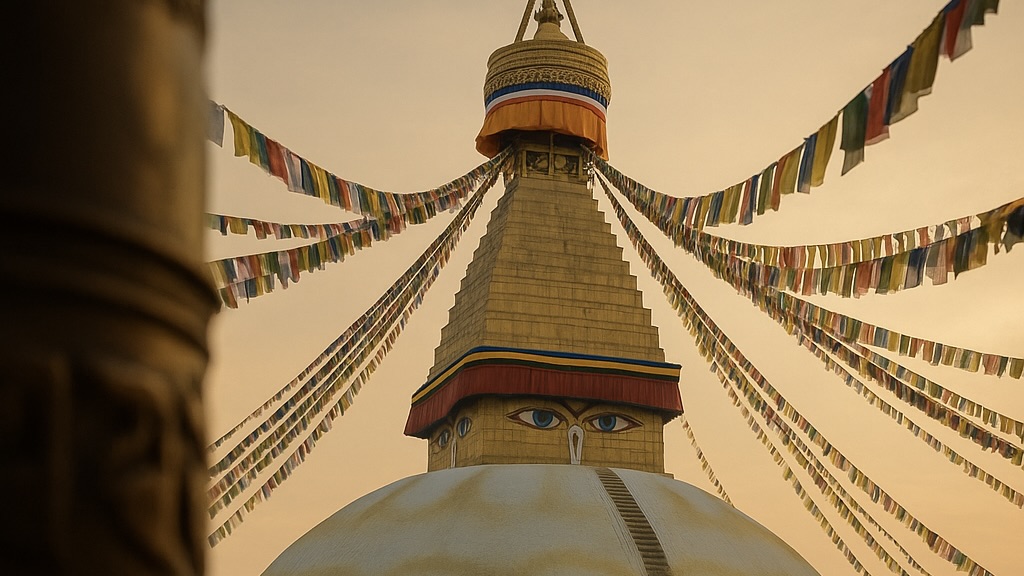
Boudhanath Stupa is one of the most sacred Buddhist sites in Nepal, located in Kathmandu. This immense white dome, adorned with the all-seeing eyes of the Buddha, is a pilgrimage site, a spiritual hub, and a place of daily prayer for Tibetan Buddhists and Himalayan communities. It’s where ancient traditions meet modern life, creating a peaceful yet powerful atmosphere of devotion, stillness, and cultural richness.
Introduction
When you first step into Boudha, there is a moment,a hush. The sound of traffic softens. The air feels different. Prayer flags flutter like silent whispers across the sky. And at the center of it all stands the immense white dome of Boudhanath Stupa, like the heart of the valley itself.
For many, Boudhanath isn’t just a sacred site. It’s a place to return to. To walk in circles. To light a lamp. To breathe. It’s where monks chant, pilgrims prostrate, and seekers pause between journeys. Whether you come for peace, practice, or photography, Boudha welcomes you with presence.
What Is Boudhanath Stupa?
Boudhanath Stupa (also spelled Bouddhanath or Boudha) is one of the largest spherical stupas in the world and arguably the most important Tibetan Buddhist site outside of Tibet. Located in Kathmandu, it is both a spiritual magnet and a daily place of practice.
The structure itself is rich with symbolism:
– A massive white dome symbolizing the vastness of the universe
– The harmika and the 13-tiered spire representing the stages of enlightenment
– The Buddha’s eyes painted on all four sides, watching in compassion
– The base ringed with prayer wheels and mandalas, inviting movement and meditation
– It is not just a monument. It is a living, breathing site of devotion.
Historical Origins of Boudhanath
The origins of Boudhanath are wrapped in both legend and historical record. According to local myth, the stupa was built by an old woman who asked the king for permission to construct a shrine to enshrine the relics of Kassapa Buddha. Her devotion was so deep that even the king granted her land.
Historically, the stupa dates back to the Licchavi period, likely built in the 5th century CE. After the 1959 Chinese invasion of Tibet, thousands of Tibetan refugees settled in Boudha, turning it into the epicenter of Tibetan culture in Nepal.
In 1979, UNESCO recognized Boudhanath as a World Heritage Site, cementing its global spiritual and cultural importance.
Spiritual Significance: The Soul of Tibetan Buddhism in Nepal
For Vajrayana Buddhists, Boudhanath holds immense spiritual power.
It is said that circumambulating the stupa with a pure heart accumulates merit and purifies negative karma.
Around the stupa are over 50 Tibetan monasteries, many of them built after the Tibetan diaspora. Monks, nuns, lamas, and lay practitioners all engage in daily rituals:
– Kora (circumambulation): Always done clockwise, often with mala beads
– Offering butter lamps: A symbolic act of lighting the path to wisdom
– Hanging prayer flags: Sending blessings across space and wind
– Prostrations: Seen early in the morning and late in the evening, with deep reverence
Boudhanath is not just about belief,it’s about spiritual practice lived daily.
What to Expect When You Visit
Visiting Boudhanath is an experience that touches all senses:
– Sounds: Tibetan horns, chants, bells, and soft footsteps
– Scents: Incense, juniper, butter lamps
– Sights: Golden spires, maroon-robed monks, spinning prayer wheels
– Feeling: A deep, palpable calm
You can join the kora, sit on a rooftop cafe with a view, or simply observe. Vendors around the stupa sell thangka paintings, prayer beads, butter lamps, and ceremonial items. But unlike many tourist sites, the spiritual atmosphere stays intact.
At dawn and dusk, the stupa glows. Pilgrims arrive in hundreds, walking quietly or whispering mantras. The whole space feels like a mandala in motion.
Best Time to Visit Boudhanath
Time of Day:
– Sunrise: Ideal for quiet photography and observing morning prostrations
– Sunset: When butter lamps light the kora path and chants echo across the dome
Festivals:
– Losar (Tibetan New Year): Colorful, crowded, and deeply devotional
– Buddha Jayanti: Commemorating Buddha’s birth, enlightenment, and parinirvana
– Lhabab Duchen: Celebrating Buddha’s descent from heaven
Each festival fills Boudha with vibrant energy, but also reverent discipline.
How to Visit with Respect and Awareness
– Dress Modestly: Cover shoulders and knees
– Walk Clockwise: When circumambulating the stupa, always go clockwise
– No Loud Talking or Music: It’s a space for reverence
– Photography: Allowed, but not during rituals or too close to monks
– Participate Gently: Light a butter lamp or spin a prayer wheel with intention
Remember, Boudhanath is not a museum. It’s a sacred site still lived in and loved.
Staying Near the Stupa: A Spiritual Base for Slow Travel
Staying in Boudha allows you to experience the rhythm of stupa life:
– Morning kora with locals
– Afternoons reading in peaceful courtyards
– Evenings watching monks light lamps
For long-stay travelers, retreat-goers, or digital nomads seeking peace, it’s an ideal alternative to Thamel. You’ll find vegetarian cafes, organic bakeries, yoga spaces, and hidden gompas just steps away.
If you’re looking for a peaceful, spiritually aligned place to stay, Boudha Mandala Hotel offers stupa-view rooms, a calming rooftop, and long-stay comfort just 10 seconds from the stupa.
Personal Reflections: A Place That Changes You
I came to Boudhanath thinking I would see something. But I left having felt something.
Maybe it was the rhythm of the footsteps around the stupa. Maybe it was the silence inside the monastery. Maybe it was a little old woman, eyes closed, whispering Om Mani Padme Hum like a prayer to the sky.
Conclusion
Boudhanath is more than bricks, more than relics, more than tradition. It is a space of remembering. Of turning inward while walking outward. Of realizing that sometimes, the sacred isn’t something you find, but something you return to.
When you walk around Boudhanath, you don’t walk alone. You walk with centuries of seekers, saints, and silent prayers.
And when you leave, part of you stays.
Make your journey to Boudha deeper by staying close. Boudha Mandala Hotel is a spiritually aligned boutique hotel just steps from the stupa,perfect for retreat, reflection, or mindful work.