
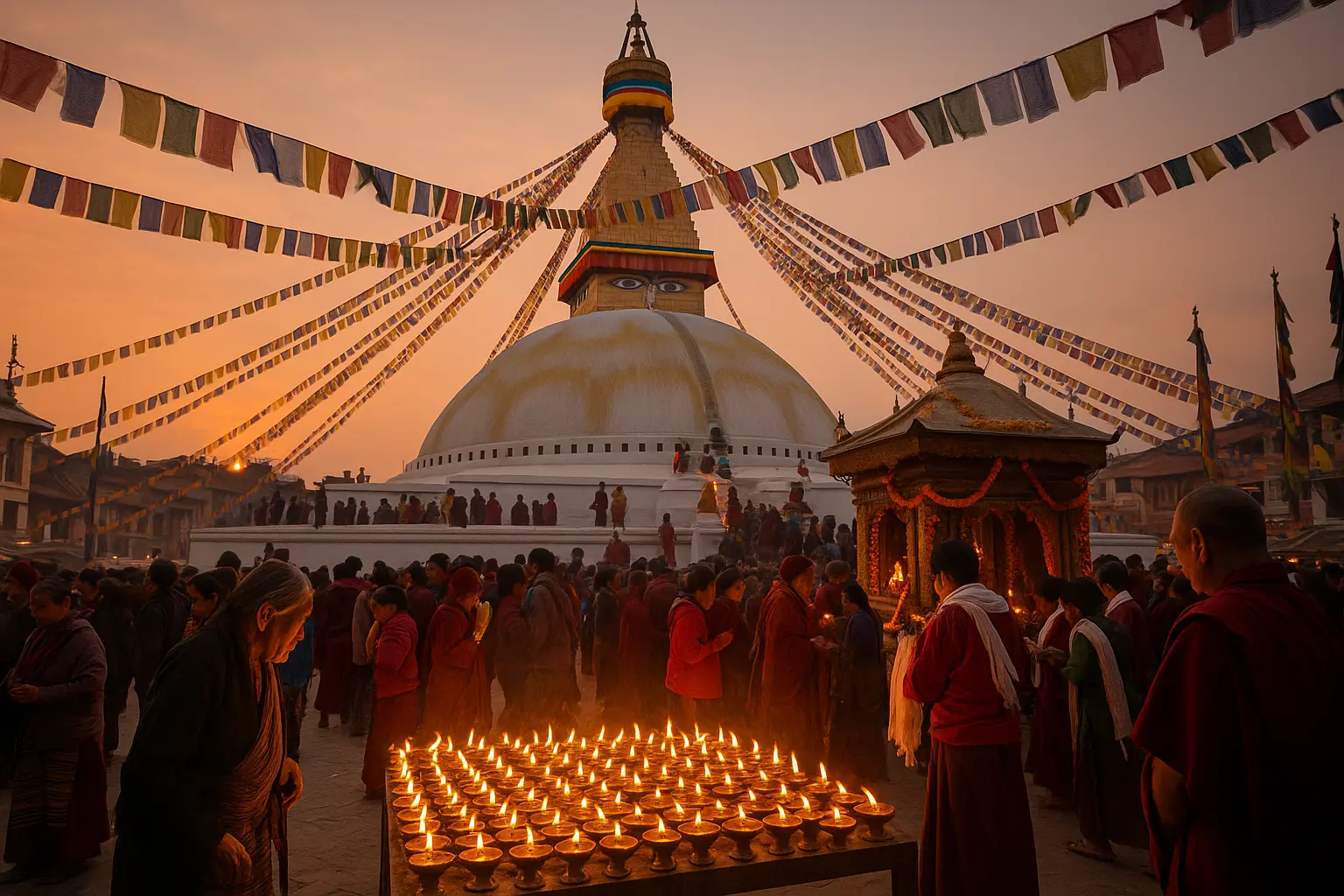
If you’re planning to visit Boudhanath, don’t just come for the view, come for the feeling. The festivals celebrated here are not tourist spectacles; they are sacred, vibrant moments that reveal the beating heart of Tibetan Buddhist life in Nepal. Walk the kora during Losar and you’ll feel it: incense in the air, chants echoing from monastery walls, every step soaked in centuries of devotion.
This guide offers a clear, heartfelt path to experiencing the most important Buddhist festivals at Boudhanath and how you can witness them meaningfully.
Key Takeaways:
If you want to experience the living heart of Buddhist culture in Kathmandu, time your visit to Boudhanath during a local festival. From the vibrant colors of Losar to the quiet devotion of Gunla, each celebration offers a window into centuries-old traditions and the deep spirituality that surrounds the stupa. Come not just to watch, but to listen, learn, and feel the pulse of this sacred place.
The Magic of Boudhanath During Festival Season
I still remember my first Losar at Boudhanath. The air smelled like juniper smoke. The stupa shimmered with rows of butter lamps, each flame flickering a silent prayer. Children darted between pilgrims. Monks chanted late into the night. It wasn’t just beautiful, it was deeply moving.
Festivals at Boudhanath aren’t tourist events. They’re living rituals that shape the rhythm of the community. They mark time, honor ancestors, call blessings, and bring people together. If you’re planning a visit to Boudha, aligning it with one of these festivals can turn your stay into something unforgettable.
1. Losar (Tibetan New Year)
- When: Usually February or March, depending on the lunar calendar
– Why It Matters: Losar is the most important festival in Tibetan Buddhism. It marks the beginning of a new year, and with it, a deep spiritual reset.
During Losar, Boudhanath becomes a vibrant sea of color, movement, and sound. Monks perform traditional Cham dances in the monasteries. Families clean their homes and offer khatas (white scarves) at the stupa. Butter lamps are lit by the thousands, sending prayers into the coming year.
Local Tip: Arrive early on the main day to witness monks at Shechen Monastery perform the intricate Vajrakilaya rituals.
2. Buddha Jayanti (Buddha Purnima)
– When: Full moon of Baisakh (April–May)
– Why It Matters: This day celebrates the birth, enlightenment, and parinirvana (passing) of the Buddha, all in one.
At Boudhanath, thousands gather to offer prayers, chant sutras, and circumambulate the stupa in silence and reverence. It’s one of the most peaceful yet powerful days of the year.
I once watched a young boy offer a single marigold with both hands, eyes closed in sincerity. That tiny moment said more than any ceremony could.
3. Gunla (Sacred Month for Newar Buddhists)
– When: August–September
– Why It Matters: Gunla is a month-long devotional period where Newar Buddhists walk to Boudha from different parts of the valley, often at dawn, playing traditional Gunla Bajan music.
The atmosphere is rich with the sound of dhime drums and long flutes. Sacred art and scriptures are displayed publicly, and daily rituals intensify in monasteries.
Don’t Miss: The morning processions. They’re humble, musical, and deeply rooted in local devotion.
4. Mamla Jatra
– When: Full moon of Magh (January–February)
Why It Matters: Unique to the Boudha area, this jatra (festival) honors Mamo Pukasi, a protective deity. A chariot procession encircles the stupa, invoking her blessings.
You’ll see offerings made in every corner, rice, flowers, and torma (ritual cakes). There’s a quiet sense of protection woven through the day.
5. Chechyu Puja (Guru Rinpoche Day)
– When: 10th day of each lunar month; major celebration in January
– Why It Matters: This puja honors Padmasambhava (Guru Rinpoche), who brought Vajrayana Buddhism to Tibet. It’s especially important to the Nyingma school.
Monks chant long-form texts like the Seven-Line Prayer. Butter sculptures and torma are created. Laypeople offer kataks and seek blessings.
Reflection: During one Chechyu, I sat for hours just watching an elder repeat his mantra bead by bead. He wasn’t performing. He was communing.
6. Tamu Lhosar (Gurung New Year)
– When: December–January
– Why It Matters: Though not traditionally Tibetan, Tamu Lhosar is celebrated widely at Boudhanath by the Gurung community, who are also Buddhists.
Expect lively processions, traditional dress, and flag hoisting at the stupa. It’s a joyful, family-centered celebration.
How to Experience These Festivals Respectfully
If you’re visiting Boudhanath during any of these festivals, remember:
Dress modestly. Cover shoulders and legs.
– Don’t point your feet at monks, statues, or shrines.
– Always walk clockwise around the stupa.
– Ask before taking photos, especially during rituals.
– Consider lighting a butter lamp with a prayer or intention.
Locals will welcome your presence if you arrive with humility.
Final Thought
Boudhanath isn’t just a place; it’s a living mandala of community, devotion, and rhythm. When you witness its festivals, you’re stepping into an ancient story that’s still unfolding today.
And if you’re looking for a peaceful space just steps from the stupa, Boudha Mandala Hotel offers a warm, quiet retreat where you can experience these moments with intention and comfort.