
Key Takeaways:
Boudhanath is more than a place to take photos; it’s a sacred atmosphere where the spiritual meets the visual. This guide, written by someone who’s walked the kora many times, takes you to five of the most heartfelt and photogenic corners around Boudha, from early morning rituals to golden hour rooftops designed for mindful travelers who want their images to reflect reverence.
1. Introduction
Every time I circle the stupa, camera slung across my shoulder, I’m reminded you don’t capture Boudha, you receive it. There’s something in the air here: the scent of incense, the flutter of prayer flags, the rhythm of quiet footsteps. This isn’t just a place to pose, it’s a place to pause. A place where your photo is just a whisper of something much deeper.
This guide isn’t about trending spots, it’s about the places that moved me, and might move you too.
2. Rooftop Cafes at Golden Hour
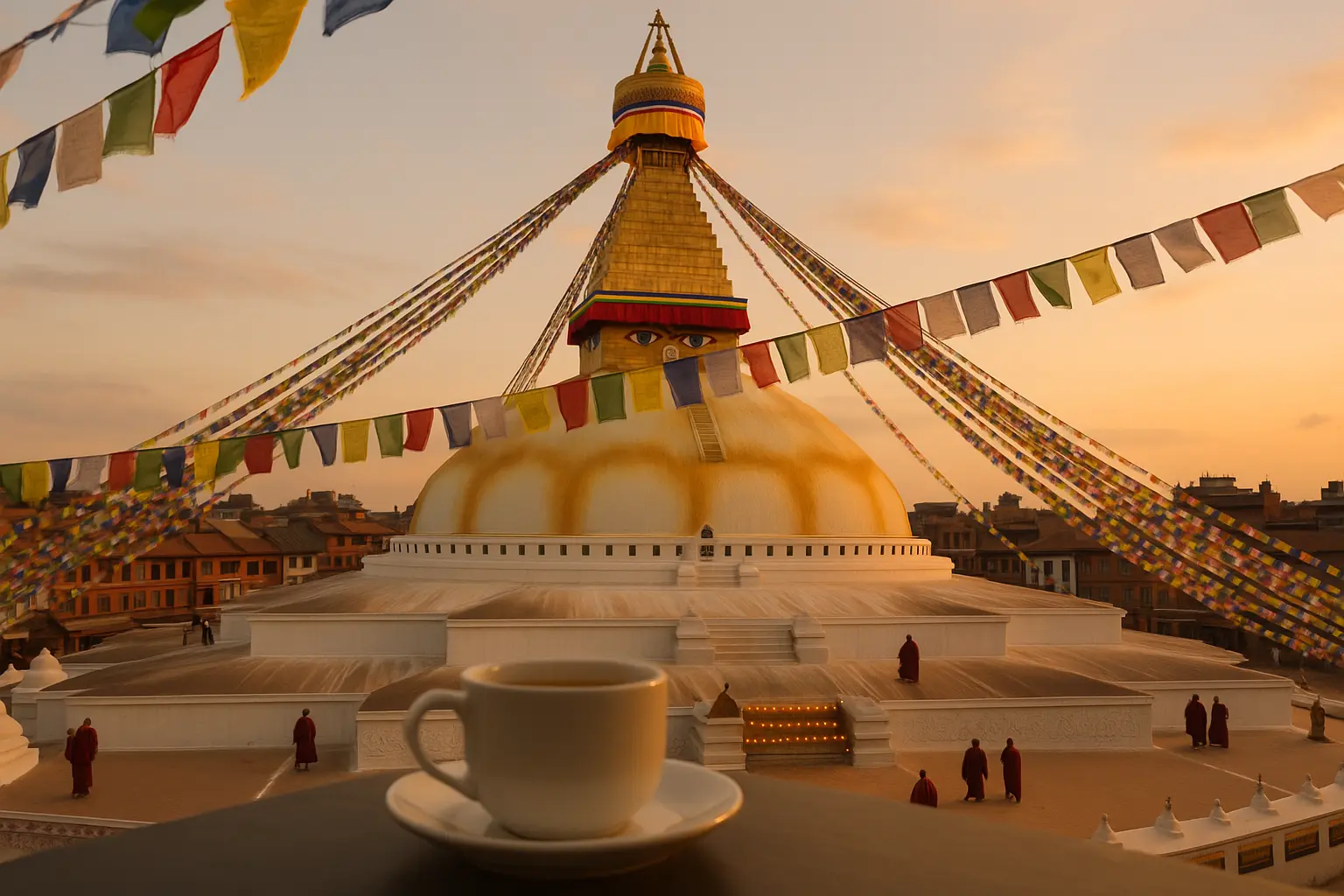
There’s a certain hush that falls over Boudha in the late afternoon. The stupa glows gold, the prayer flags cast soft shadows, and from rooftops like Garden Kitchen or Stupa View Cafe, you feel like you’re inside a living thangka painting.
You don’t need a professional camera. Just sit with a warm cup of tea, and wait for the light to touch the dome. That’s when the photo comes to you.
Tip: Best around 4:30–6 PM. Use a foreground element like your tea, a candle, or a silhouette for a frame that tells a story.
3. Morning Kora with the Devout
There’s something about Boudha in the morning that feels ancient. The air is cool. The chants echo softly. Monks, elders, and travelers like you and me walk the path in silence.
That’s when I like to walk with my camera low, almost forgotten in my hand. Because here, it’s not about snapping, it’s about sensing. The golden spire catching first light, the gentle hands spinning a prayer wheel, these are the photos that feel alive.
Tip: Go between 5:30–7:00 AM. Walk slowly, don’t rush. Let the frame come together as it happens.
4. Butter Lamps Behind the Stupa
You’ll find it if you linger. In the evenings, behind the stupa or near Tamang Gompa, someone always lights the lamps. Hundreds of small flames flickering in the breeze, prayers rising with the smoke.
I once spent an hour just watching one woman light them one by one. I didn’t even lift my camera until the last row. That’s when I realized the photo wasn’t about the fire; it was about her stillness.
Tip: Arrive just after sunset. Keep your settings low-light. No flash lets the lamps light your subject.
5. Prayer Flag Alleys That Catch the Sky
Tucked between courtyards and rooftops, there are little-known alleys where the flags stretch from home to home, dancing in the wind.
I discovered one after a local monk smiled and waved me down a quiet lane. The flags above me, the stupa peeking through, and children playing below it were the kind of beauty you don’t find unless you wander.
Tip: Try near Shechen Monastery or Ka-Nying alleyways. Aim your camera up, follow the lines of the flags, and capture the movement.
If You’re Serious About Catching the Moment…
Stay close. You can’t predict when the light, the chants, or the monks will align in just the right way. Boudha Mandala Hotel is just 10 seconds from the stupa.
Final Thought
You might leave Boudha with a hundred photos. But I hope you leave with something else too: a quieter way of seeing.
Not every shot will be perfect. Some will be blurry, some too dark. But if even one of them carries the stillness, the devotion, the sky full of flags, then you’ve done more than take a picture.
You’ve listened.
“The stupa doesn’t pose for your camera, it waits for your presence”.