
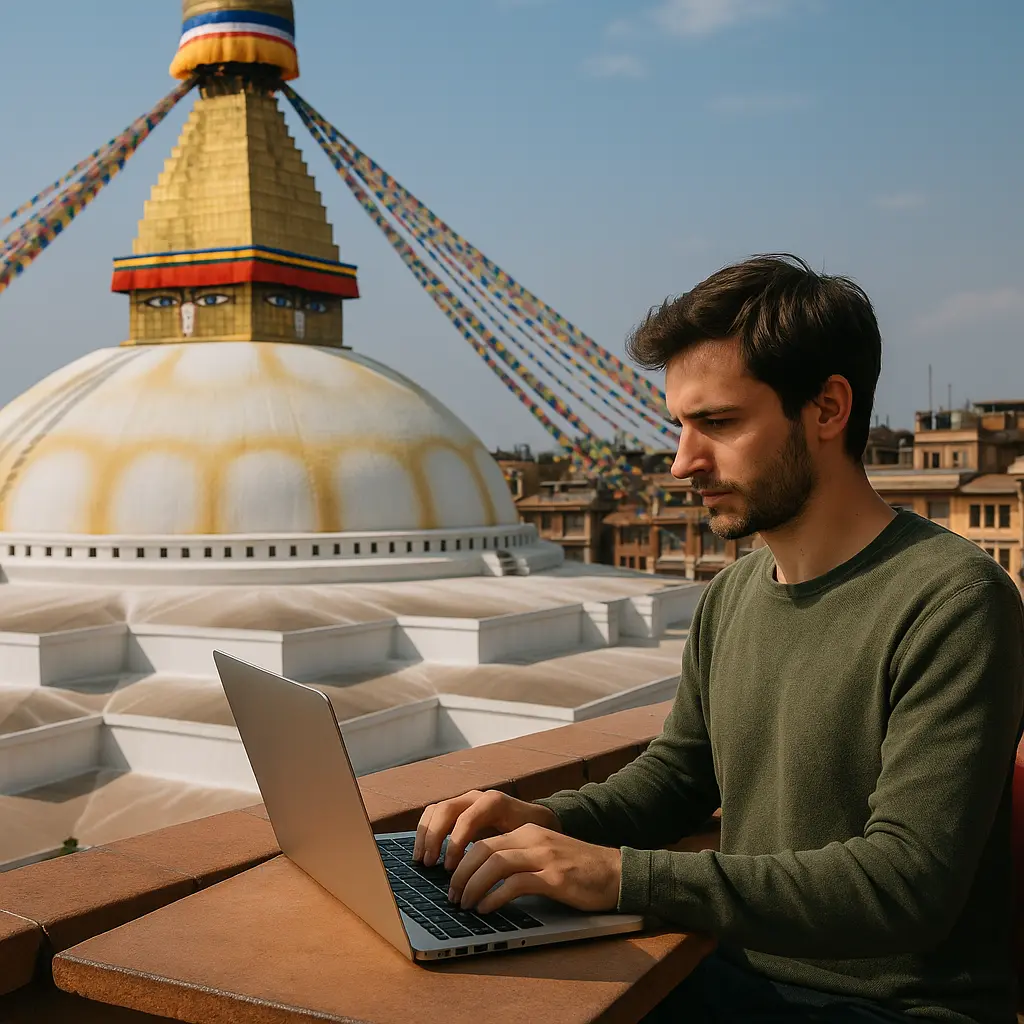
The first time I arrived in Boudha, I didn’t come looking for a remote work base. I came seeking stillness.
But like many digital nomads before me, I quickly realized something rare: Nepal, and especially Boudhanath, wasn’t just a place to visit. It was a place where you could build a rhythm. Where mornings began with the hum of mantras instead of notifications. Where your workspace was a rooftop with stupa views. And where slow, meaningful living wasn’t a trend, it was the air itself.
If you’ve felt the call to live more intentionally, while still keeping your remote job or creative work flowing, here’s what you need to know about staying in Nepal as a digital nomad.
Does Nepal offer a Digital Nomad Visa?
Not officially. There is no dedicated “digital nomad visa” in Nepal as of 2025. But that doesn’t mean you can’t stay, work remotely, or immerse yourself in daily life here.
Thousands of writers, designers, developers, spiritual seekers, and remote creatives live in Nepal legally, usually by using a tourist visa, extending it strategically, or affiliating with a local organization.
You just need to understand the options and more importantly, move through them mindfully.
The Tourist Visa: Your Gateway In
For most digital nomads, the tourist visa is the most flexible and accessible entry point.
You can get it on arrival at Tribhuvan International Airport in Kathmandu. Choose from 15, 30, or 90 days, and once you’re here, you can extend your stay up to 150 days per calendar year.
It’s not complicated. But it’s important to remember: this visa is meant for tourism. That means while working remotely for international clients is generally tolerated, you should avoid working for Nepali businesses unless you’re on a different visa type.
Still, if you’re freelancing, consulting, or running your business online, the tourist visa is the path most take. Just make sure your passport has six months of validity left, and carry some passport photos. The immigration office in Kalikasthan handles extensions smoothly, though expect a bit of paperwork and waiting.
What About Long-Term Stay?
If you’re thinking about staying beyond 150 days or returning year after year, you might explore other paths.
Some spiritual travelers affiliate with monasteries or NGOs and apply for non-tourist visas. Others set up consulting arrangements through business visas. These require more effort, local contacts, and paperwork, but they’re viable for those truly committed to making Nepal a long-term spiritual and creative home.
Still, for most nomads, especially those here for a few months of retreat, writing, building, or healing, the 150-day window offers enough time to settle into a beautiful rhythm without overcomplicating things.
Why Boudha is the Perfect Base for Remote Workers
The stupa doesn’t ask questions. It just holds space.
That’s what makes Boudhanath so magnetic to remote workers and mindful nomads. You’re just minutes from strong Wi-Fi cafés and coworking-friendly rooftops, but the atmosphere remains one of silence and reverence.
You’ll see it in small ways:
• Monks walking slowly in early light
• The soft tap of butter lamps being lit before dusk
• Local artists sketching the stupa from a shaded bench
• Freelancers writing books or building apps with incense rising beside their laptop
There’s no rush here. And for digital nomads, that’s a gift.
If you’re used to the hustle of Bali or Lisbon, Boudha feels like a quiet invitation: to work deeply and live fully present.
The Practical Side: Wi-Fi, Cafes, and Coworking
Don’t let the spiritual vibe fool you, Boudha is tech-ready in its own way.
Several rooftop cafés offer strong Wi-Fi and calm, quiet corners. Popular among remote workers are:
• Stupa View Café (great light, power outlets, herbal teas)
• Utpala Garden (vegetarian food, open courtyard, gentle energy)
• La Casita de Boudhanath (Spanish-Nepali fusion and peaceful vibe)
Most nomads simply rotate between these spots, working in the morning, walking kora at lunch, then settling into focus mode again after a pot of masala chai.
You’ll also find affordable SIM cards with 4G data (Ncell or Namaste), and if you stay long enough, it’s easy to get portable routers for backup.
Where to Stay: The Value of Proximity
Living close to the stupa changes everything. You’re not commuting to calm , you’re inside it.
At Boudha Mandala Hotel, you’re just ten seconds from the gate. That means:
• You can join the early morning kora before work
• Hear the evening chants from your room window
• Step into stillness whenever your mind needs a reset
The hotel offers long-stay rooms, strong Wi-Fi, a peaceful breakfast café, and a deeply respectful local team who understands the needs of spiritual travelers and remote workers.
If you’re planning to stay weeks or months, having a space that feels safe, sacred, and work-friendly makes all the difference.
Final Thoughts
Nepal may not yet have a flashy “digital nomad visa,” but it has something far more lasting: space to breathe.
Boudha doesn’t promise productivity hacks. It offers presence. And sometimes, that’s exactly what your work and your life need most.
So if you’re thinking of setting up your next creative season, sabbatical, or soul-led remote work chapter in Nepal, know this:
The visas are possible. The internet works. The community is here.
But more than anything? The stupa is waiting.
If you’re looking for a peaceful, long-stay-friendly hotel just steps from the stupa, Boudha Mandala offers stupa-view rooms, reliable Wi-Fi, and a warm, spiritually supportive welcome.