
White Gumba: A Peaceful Hilltop Escape for Mindful Travelers in Kathmandu


There’s a place above the Kathmandu Valley where silence feels sacred. Where prayer flags dance freely in the mountain air, and the city’s noise becomes a distant hum. Locals call it Seto Gumba, but travelers know it as White Gumba, the white monastery.

If you’ve walked the circle at Boudhanath, sat with the monkeys at Swayambhunath, and now yearn for a quieter space away from the crowds, White Gumba is your next step.

This is not a tourist attraction. It’s a spiritual pause.

What is White Gumba?

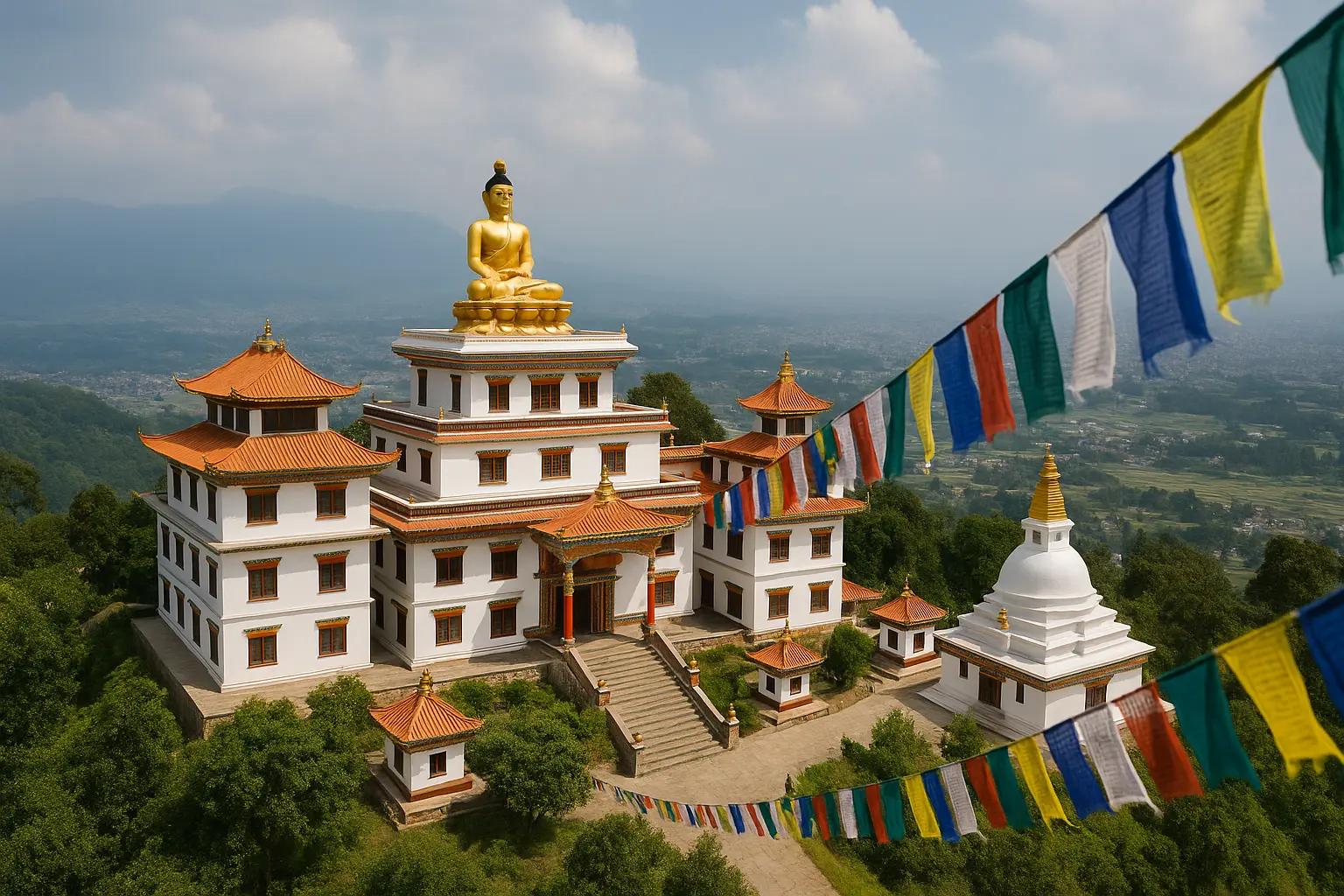
White Gumba, or Seto Gumba, is a Tibetan Buddhist monastery nestled on a peaceful ridge to the northwest of Kathmandu. The name comes from its stunning white walls, which glow in the sunlight and offer a striking contrast against the green hillside.

What sets it apart is not just its location, but its energy. It’s not just quiet, it’s reverent. You feel it the moment you arrive, as if even your thoughts begin to soften.

A Brief History of Seto Gumba

Seto Gumba is officially known as Druk Amitabha Mountain. It is part of the Drukpa lineage of Tibetan Buddhism, under the spiritual guidance of His Holiness the Gyalwang Drukpa.

The monastery was originally established in the early 2000s and has since grown into one of the most beautifully maintained monastic centers in Nepal. It’s not ancient in age, but its spirit is timeless.

The complex includes meditation halls, prayer rooms, gardens, and even eco-conscious living quarters for nuns and practitioners. While not as famous as Boudha or Swayambhu, it holds deep meaning for those who discover it.

Why Spiritual Travelers Are Drawn Here

White Gumba is not for the hurried tourist. It’s for the seeker.
Here’s why many travelers choose to visit:

• Peace and Space: Unlike the busier Buddhist sites, White Gumba feels open. You can walk, sit, breathe, and not feel watched.

• Scenic Overlook: From its height, you can see the entire Kathmandu Valley stretching beneath you. At sunset, the view turns golden.

• Presence of Monastic Life: You’ll often see nuns chanting, sweeping, or walking in silence. There are no staged rituals here, only real devotion.

• Art and Architecture: Murals, statues, and sacred motifs line the corridors. The colors are vivid, the symbolism rich.

It’s a place that meets you where you are, whether you need reflection, stillness, or simply a break from the noise of the world.

Getting There: How to Reach White Gumba

The monastery sits in the Nagarjun area, about 6–7 km northwest of Thamel or 4–5 km from Swayambhunath.

Here are your best options:

• By Taxi: Easiest and most direct. Ask for “Seto Gumba” or “White Monastery near Ramkot”. Cost is around NPR 800–1000 from Thamel.

• By Hike: If you’re up for a meditative walk, you can hike from Swayambhunath or Ichangu Narayan. It’s a gentle 1.5–2 hour trek through pine forests and village roads.

• By Public Transport: Take a microbus from Balaju to Ramkot, then walk 30–40 minutes uphill.

Tip: Bring water, a light jacket, and maybe some fruit for offering. There’s a small shop at the top, but it’s best to come prepared.

Best Times to Visit and Entry Info

Opening Days: White Gumba is usually open to the public on Saturdays and public holidays. Other days may be restricted or require permission.

Hours: 9 AM to 4 PM (best to go early for a quieter atmosphere and clearer views)

Entry Fee: There’s typically no fee, but donations are welcome. Dress modestly and speak softly.

Before visiting, it’s wise to confirm the open day with locals or your hotel staff. Schedules can change based on rituals or internal monastic events.

What You’ll Experience: Atmosphere, Views, and Rituals

The first thing you notice is the stillness.

Then come the views, which stretch as far as the eye can see, interrupted only by prayer flags or temple roofs. The buildings themselves are beautifully maintained, with crimson and gold trim, carved wooden eaves, and stone walkways that invite bare feet.

Inside the main gompa, you’ll see a towering statue of Amitabha Buddha, surrounded by butter lamps and murals of fierce and peaceful deities. Occasionally, you may hear the soft echo of a drum or bell from inside.

This is a place for:

• Silent meditation.
• Gentle walks around the stupa.
• Sitting in gardens beneath Bodhi trees.
• Watching the clouds shift above the city.

It’s less about sightseeing, more about soul seeing.

Combining a Visit with Boudha or Swayambhu

If you’re staying in Boudha, you can visit White Gumba as a half-day excursion. It pairs beautifully with a spiritual itinerary that includes:

• Boudhanath Stupa in the early morning.

• Lunch at a peaceful rooftop cafe.

• Taxi to Swayambhunath, then hike to White Gumba in the afternoon.


Many travelers prefer this over day trips that require long hours in traffic. It keeps you connected to the spiritual pulse of the valley without overwhelming your senses.

Meditation, Art, and Silence: The Gifts of the Gumba

Seto Gumba isn’t just a pretty place. It’s a space of real spiritual activity.

Many of the nuns here are engaged in long-term retreat or daily study. The murals reflect the teachings of Mahayana Buddhism. The entire architecture is a mandala, built to support inner stillness and clarity.

Some travelers come here and end up staying in nearby guesthouses, using the space for personal retreats. Others return week after week, using the climb as a form of walking meditation.

You don’t need to have a religious affiliation to benefit. Just come with respect and a willingness to slow down.

Final Thoughts

White Gumba is not the most famous monastery in Nepal. But for many who find it, it becomes the most remembered.

It’s the kind of place that stays with you. In a photo, in a memory, or maybe just in the way you exhale a little more gently after leaving.

If you’re looking for a quiet refuge above the city, a space to walk barefoot and feel sky above your head, White Gumba is waiting.
And if you’re staying nearby in Boudha, the journey is short. But the effect, you’ll find, is lasting.

If you’re staying in Boudha and seeking peaceful spiritual experiences nearby, White Gumba is a must-visit. And just 10 seconds from the stupa gate, Boudha Mandala Hotel offers stupa-view rooms and a quiet retreat for travelers like you.
The Secret Side Alleys of Boudha: Hidden Gems for Travelers

There’s a stillness in Boudha that draws you in. But it doesn’t end at the circle of the great stupa. If you follow the soft rustle of prayer flags, the scent of incense drifting from open windows, and the occasional sound of a conch shell calling monks to prayer, you’ll begin to see another Boudha. One that lives quietly, humbly, just beyond the main kora path.

This isn’t a place of signs and schedules. It’s a place of wandering. The alleys of Boudha don’t shout. They whisper. And if you listen closely, they’ll show you something unforgettable.

Why the Side Alleys Matter

While most visitors stay near the main stupa path, locals know where the soul of Boudha truly breathes. It’s in the narrow lanes behind monasteries. In the flicker of a butter lamp seen through a half-open door.

In the quiet rhythm of a nun sweeping her courtyard at dawn.
These side paths are not hidden to those who walk slowly. They reveal themselves with time, with trust, and with presence. This is where devotion lives — not performed, but practiced.

The Prayer-Flag Alley Behind Tamang Gompa

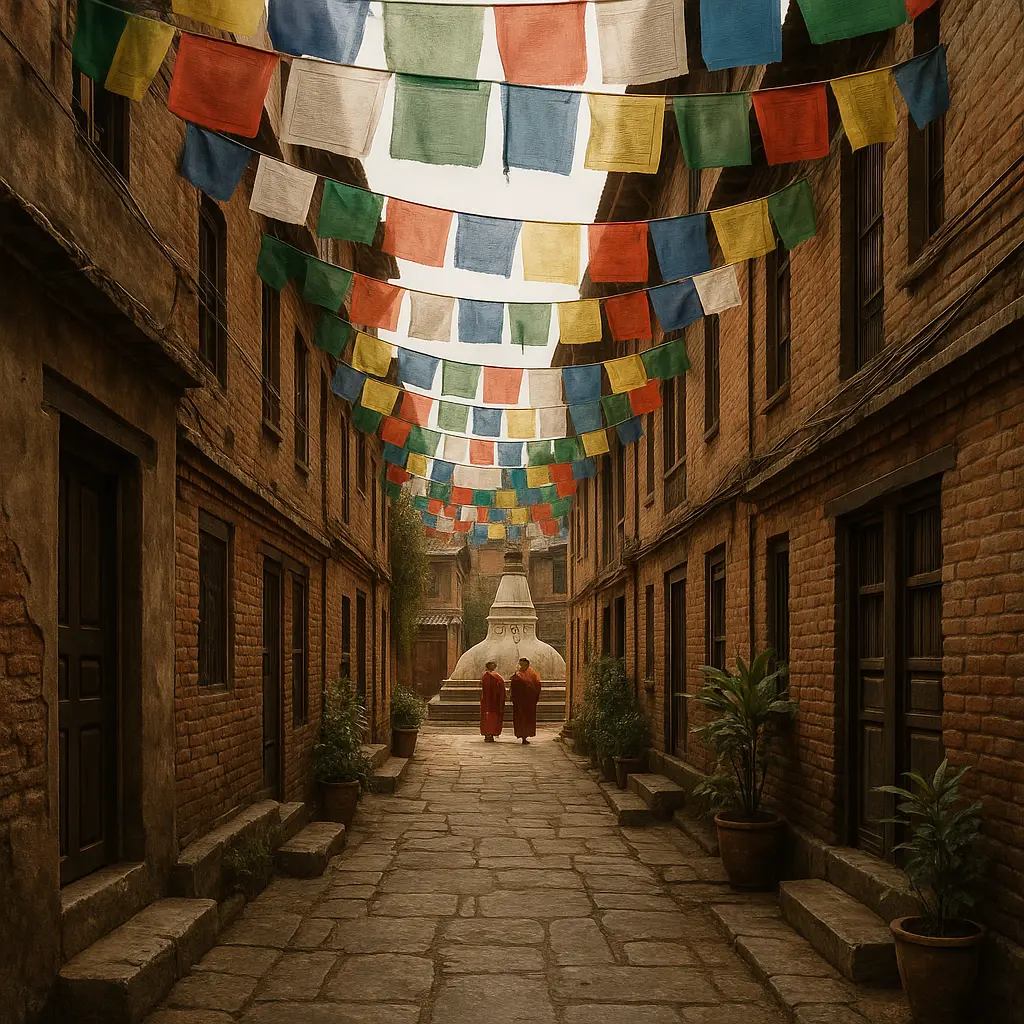
One morning, I followed a monk holding a small bundle of butter lamps into a quiet alley behind Tamang Gompa. What opened before me was a corridor of prayer flags, stretching overhead from rooftop to rooftop, casting colorful shadows on the brick path below.

At the end, I found a tiny courtyard with a stone stupa no taller than my waist. Two nuns were offering incense. One smiled. No words were needed. That moment stayed with me longer than any panoramic photo ever could.

The Left Turn at Lotus Bakery

Everyone knows Lotus Bakery. But few take the left turn just before its entrance.

If you do, you’ll find yourself walking toward a monastery courtyard where birds sing louder than any traffic horn, and the air smells like old wood and saffron robes. On my second visit, I sat there for nearly an hour, not planning to. I had brought a journal, but I didn’t write. I just sat, as bells rang from a nearby puja and a child offered a marigold to a statue.

Sometimes the quietest places say the most.

The Teahouse With No Name

One evening, after a soft rain had washed the dust from the bricks, I wandered into an alley in the northeast corner of the Boudha circle. I was cold, slightly lost, and looking for nothing in particular. That’s when I saw three monks sipping tea inside a small shop with no sign.
The smell of salty butter tea pulled me in. They welcomed me without words, only a nod. The tea was hot, the air was still, and for a moment I forgot I was a traveler. I was just there, present, sipping from a heavy glass mug, sharing space with devotion.

A Secret Rooftop With a Clear View

Not all rooftops in Boudha are listed on TripAdvisor.
One family-run lodge, tucked behind a gift shop near the west side of the stupa, opens its roof only if you ask kindly. I climbed three narrow flights of stairs and emerged onto a small terrace strung with fresh prayer flags. No music, no menu, no crowd.

Just a full, unbroken view of the stupa glowing in the setting sun. Below, the prayer wheels turned with the rhythm of old hands. Beside me, a cat curled up beside a butter lamp. I didn’t take many photos. I didn’t need to.

Wandering as a Spiritual Practice

Boudha is a mandala, not a museum. And just like a mandala, its gifts are found when you let go of structure.

The alleys here don’t follow a plan. Some turn sharply. Some end abruptly. Some open to light, others into shadow. But every corner invites you into deeper presence. To walk with no agenda. To observe without labeling. To feel instead of chase.

It’s a reminder that wandering isn’t the opposite of purpose. Sometimes, it is the purpose.

Why Staying Nearby Changes Everything

To truly uncover the hidden gems of Boudha, you need to stay close. When you stay at a place like Boudha Mandala Hotel, just 10 seconds from the stupa, the entire neighborhood becomes your backyard. You wake with the monastery bells. You wander out barefoot for morning kora. You meet shopkeepers who start to recognize you not as a guest, but as a neighbor.

It’s this sense of belonging that makes the alleys open up. The slower you go, the more they reveal.

Conclusion
Not every traveler will find these side alleys. Not because they’re hard to reach, but because they ask you to slow down, to notice, to be still enough to see.

So take the unknown turn. Linger a little longer by a closed temple gate. Smile at the stranger sweeping the doorway. And walk as if every step might lead to a hidden shrine.

Because in Boudha, it just might.
If you’re looking for a peaceful, soulful stay while exploring the secret side of Boudha, Boudha Mandala Hotel offers stupa-view rooms, long-stay options, and a calm, retreat-like atmosphere just steps from the circle.

Where to Eat in Boudha: Best Restaurants and Cafes Near the Stupa


There’s something sacred about eating in Boudha. Maybe it’s the scent of juniper in the air, the sound of soft mantras drifting from a nearby gompa, or the way time seems to slow down when you’re just a few steps from the great stupa.

Food here isn’t just about filling your belly. It’s about nourishment, presence, and quiet moments in between your journey.

Whether you’re looking for a rooftop cafe to watch the stupa glow at dusk or a hidden garden for morning chai, Boudha welcomes you with meals that feel soulful, not rushed.

What Makes Boudha’s Food Scene Special

Unlike other parts of Kathmandu that cater to fast-moving tourists, Boudha’s cafes and restaurants reflect the rhythm of spiritual life. Here, you’ll find monks sipping tea beside digital nomads with laptops, and long-stay pilgrims sharing vegetarian thalis after a morning of kora.

Many places prioritize clean, mindful eating. Vegetarian and vegan options are abundant. And because of the Tibetan influence, meals are often warm, simple, and made to be savored slowly.

Best Cafes in Boudha for Quiet Moments and Good Coffee

If you’re the kind of traveler who loves writing in a journal over a pot of tea or watching the sky change colors with your espresso, Boudha has the perfect cafe for you.

Boudha Cafe De Mandala: 10 Seconds from the Stupa

This is where guests of Boudha Mandala Hotel and mindful wanderers start their mornings.

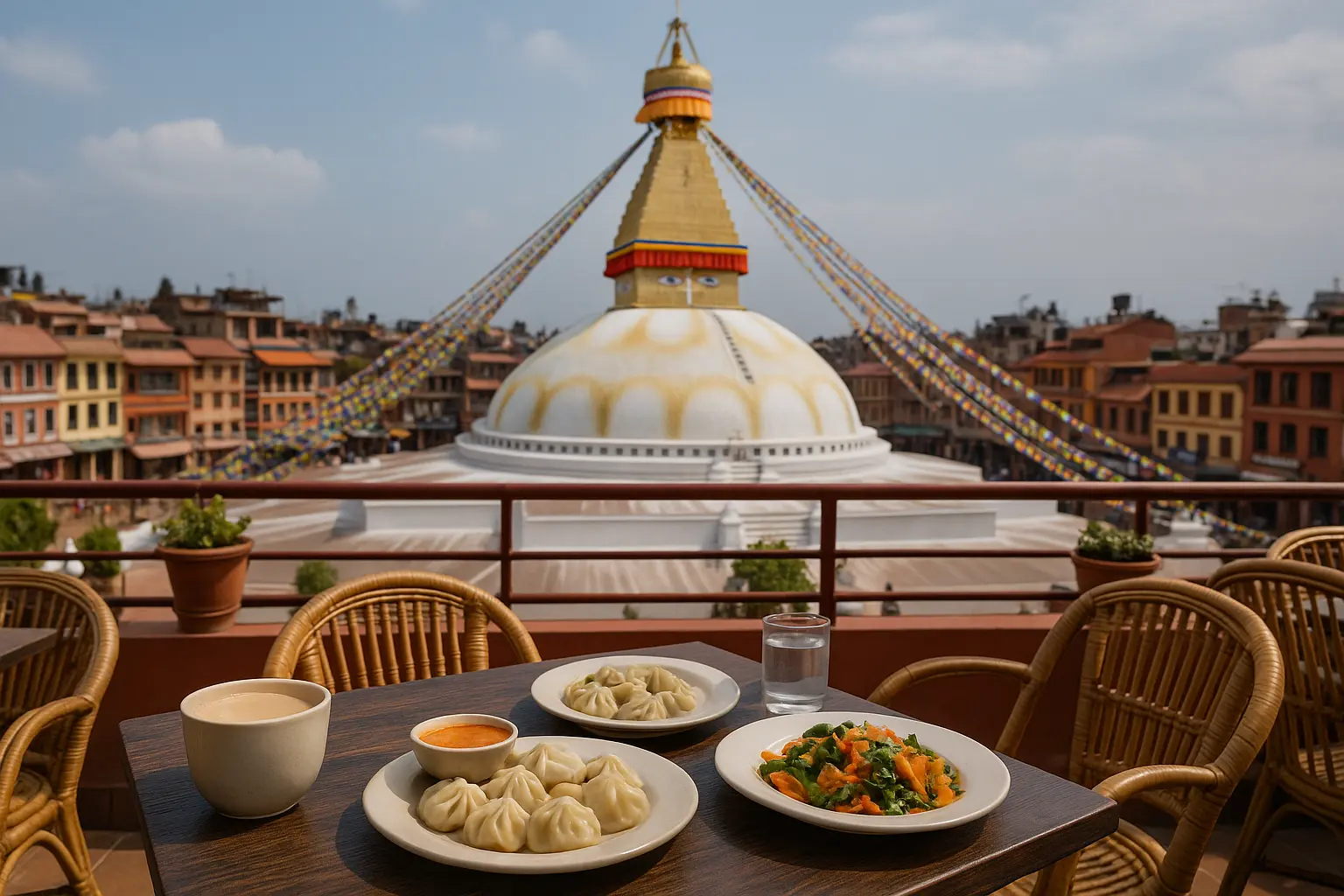
Boudha Cafe De Mandala sits quietly just off the stupa’s circle. With its rooftop view, peaceful indoor seating, and a menu that blends local and Western comfort food, it’s the kind of place where you linger without meaning to.

Expect:
• Organic breakfasts with eggs, porridge, or muesli.
• Organic teas and French press coffee.
• Light lunches with fresh greens, momos, and seasonal specials.

The vibe is retreat-like. Monks sometimes pass by below. Writers sip slowly. The staff greet you like an old friend.

Good to know
Free Wi-Fi, long-stay friendly, vegetarian options, and open early for pre-kora tea.

Garden Kitchen Cafe
Tucked near the stupa, this rooftop cafe offers a stunning view of the dome. It’s peaceful, great for digital nomads, and known for its warm banana bread and strong coffee.

Utpala Cafe
Located inside a nunnery compound, this all-vegetarian cafe is a hidden sanctuary. The food is light, affordable, and aligned with Buddhist values. Try the thukpa or the fresh salads.

Roadhouse Cafe Boudha
If you’re missing something a bit more Western, Roadhouse delivers. Their wood-fired pizzas and spacious terrace are perfect for late afternoon meals or group meetups.

Where to Eat for a More Traditional, Heartfelt Meal

After a long walk around the stupa or a morning of meditation, nothing hits like a hot plate of Tibetan food.

Double Dorje Restaurant

Simple seating, rich flavors. Their Tibetan thali includes tingmo bread, dhal, and curried vegetables. Don’t miss the butter tea and hand-folded momos.

Flavors Restaurant

A no-fuss favorite for locals and expats alike. Their rice and curry sets are satisfying, and the quiet atmosphere makes it ideal for slow, mindful eating.

Norling Restaurant
Known for its wholesome soups and stir-fried noodles. Their portions are generous, the prices fair, and the setting calm.

Hidden Gems for eating and reflecting

Sometimes, the best meals aren’t found on a map. They’re discovered while wandering a narrow alley or following the scent of freshly steamed dumplings.

Lhasa Momo
You’ll find it if you follow the locals. Soft, juicy momos with tangy achar in a tiny upstairs room. No frills, just good food and warm energy.

Ananda Treehouse Cafe
A bit off the main road, this garden cafe feels like a retreat within a retreat. Wooden seating, birdsong, and a menu of smoothies and herbal teas.

Stupa View Cafe
Yes, it’s popular. But for good reason. Order a masala tea at sunset and watch the sky blush over the stupa. Worth every rupee.

Eating Respectfully in a Sacred Space

Boudha is home to spiritual practitioners, monks, and retreat centers. Many of the restaurants and cafes are directly connected to these communities. As a visitor, a few quiet gestures of respect go a long way.

• Take off your shoes if eating at a monastery-run cafe
• Avoid loud conversations, especially near shrines or puja halls
• Dress modestly, covering shoulders and knees where possible
• Ask before photographing meals or spaces that feel sacred
• If a place is vegetarian only, honor that choice even if you’re not

Being mindful isn’t just about what’s on your plate, but how you move through the space where you eat.

Staying Nearby Makes Every Meal More Meaningful

One of the best ways to truly enjoy Boudha’s food culture is to stay close. When you’re just steps from the stupa, you don’t need to rush meals or plan your day around long commutes.

Boudha Mandala Hotel offers just that. With its stupa-view rooms and peaceful cafe, you can start your day with a quiet breakfast of oats, fruit, and chai, then return at dusk for lentil soup and herbal tea under prayer flags.

Many long-stay guests say they find their favorite cafes by simply walking, wandering, and letting the energy of the stupa guide them.

A Meal with Meaning
In Boudha, eating is an extension of your presence. Whether you’re sitting on a rooftop watching the sky turn gold or quietly sipping soup in a courtyard surrounded by prayer wheels, food becomes a form of connection.

You’ll remember the meals not just for the taste, but for the stillness you felt between bites.

If you’re looking for somewhere peaceful, nourishing, and deeply rooted in spirit, Boudha is waiting.

And if you want to stay where meals and moments come together effortlessly, Boudha Mandala Hotel is just ten seconds from the stupa gate, and a world away from the noise.