What is Service in a Hotel? A Spiritual Traveler’s Guide to Feeling Truly Welcomed

When you Google what is service in hotel, you’ll mostly find answers, things like room service, front desk assistance, or housekeeping. But for spiritual travelers, digital nomads, and mindful explorers, the meaning of service goes deeper. It’s not just about what a hotel provides. It’s about how you’re made to feel. Service, at its most meaningful, is about being seen, respected, and gently supported through your journey.

At Boudha Mandala Hotel, located just ten seconds from the sacred Boudhanath Stupa in Kathmandu, we believe hotel service is not transactional. It is devotional and quiet offering.

Key Takeaways

Hotel service is more than providing clean rooms or meals—it’s about how a guest feels. For spiritual travelers, digital nomads, and those on a deeper journey, service means being seen, respected, and gently cared for.

True hotel service includes small acts of kindness, cultural understanding, and a peaceful environment that supports reflection, healing, or work. Whether it’s reliable Wi-Fi for long-stay guests, silent support during meditation hours, or heartfelt guidance near sacred sites like Boudhanath Stupa, great service is always about meaningful human connection and emotional comfort.

Rethinking What Hotel Service Really Means

On the surface, hotel service often includes things like welcoming guests at check-in, ensuring clean rooms, offering meals, and helping with logistics like transportation or tour bookings. These are necessary parts of hospitality.

But for guests on a spiritual or longer journey, true service often reveals itself in more subtle forms: a warm smile when you arrive jet-lagged, someone remembering how you take your tea, silence honored after your morning meditation, or directions shared with patience and sincerity.

At a spiritual hotel like Boudha Mandala, service means more than fulfilling requests. It means holding space for your experience.

The Deeper Layers of Hospitality

If you’re wondering what is service in hotel from a more human, soulful perspective, it includes:

– Presence: A staff member notices when you’re cold and brings a shawl without being asked.

– Respect: Your rituals, dietary needs, and preferences are honored without explanation.

– Kindness: Small gestures, a prayer scarf offered before your stupa visit, a reminder about puja times, carry great meaning.

– Adaptability: Whether you’re staying for one night or on a three-month sabbatical, your pace is understood and supported.

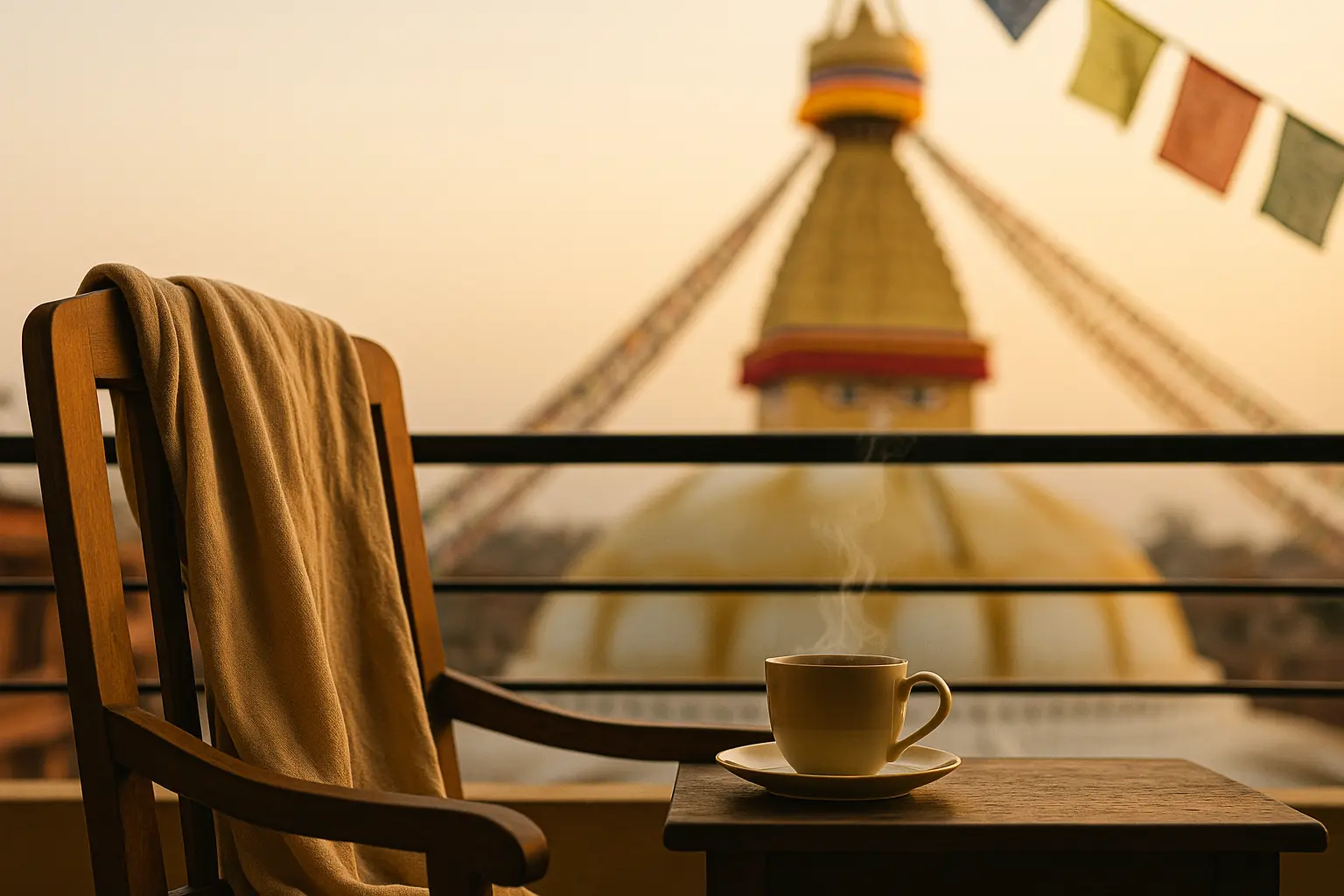
Imagine waking up at dawn to the sound of soft chants, stepping onto your balcony, and finding your tea already waiting. This is what deeply rooted hotel service feels like.

Service Near Sacred Sites Carries a Higher Responsibility

In a spiritual destination like Boudhanath, guests arrive not just for sightseeing but for inner reflection, healing, or pilgrimage. That changes everything about how service should be offered.

Hospitality here requires deep cultural and emotional understanding. A good hotel helps you find the monastery where the evening chanting calms your heart. It knows the difference between a visitor and a seeker.

At Boudha Mandala Hotel, our multilingual team grew up in the rhythms of this neighborhood. We understand when a guest skips breakfast to do their kora, or when they need directions to a less crowded monastery for quiet prayers.

What Service Means for Digital Nomads and Long-Stay Travelers

For remote workers, creatives, or those taking a spiritual sabbatical, service often means freedom without friction. Fast internet is essential, but so is having your laundry folded without disrupting your workspace. Cleanliness matters, but not at the cost of your rhythm.

That’s why we’ve designed long-stay apartments and rooms that feel like a peaceful base. Guests enjoy:

– Reliable Wi-Fi that supports video calls and creative flow.

– Kitchenettes to cook light, mindful meals.

– Flexible cleaning schedules that respect your hours.

– A retreat for focus and reflection.

This blend of independence and subtle support is where true long-stay service shines.

How to Know If a Hotel’s Service is Truly Aligned With You

If you’re still wondering what is service in hotel, try tuning into how a place makes you feel. The best service doesn’t need to advertise, it’s felt immediately. Ask yourself:

– Do I feel more grounded after check-in than I did before?

– Is the staff genuinely attentive, or simply polite?

– Are my quiet moments respected without explanation?

– Do I feel cared for even when I haven’t asked for anything?

These are often better indicators than any online review.

Service is Human Connection, Not Just a Checklist

Towels folded like swans or fast room delivery can be lovely. But the heart of hospitality lies in human connection. Service is the space held for your experience, the attention to detail that doesn’t intrude, and the invisible care that surrounds you.

At Boudha Mandala Hotel, we welcome you as you are. Whether you’ve come to work, to heal, or to simply rest by the stupa, our service meets you with warmth and calm.

If you’re looking for a peaceful hotel just steps from the Boudhnath stupa, Boudha Mandala offers stupa-view rooms, long-stay options, and a warm local welcome.
What Buddhist Meditation Techniques are Taught at Boudha Retreats?


If you’ve ever searched for a meditation retreat in Kathmandu, you’ve likely felt that pull, the need to step away from noise and move toward something quieter and more grounded.

That’s why so many end up in Boudha.

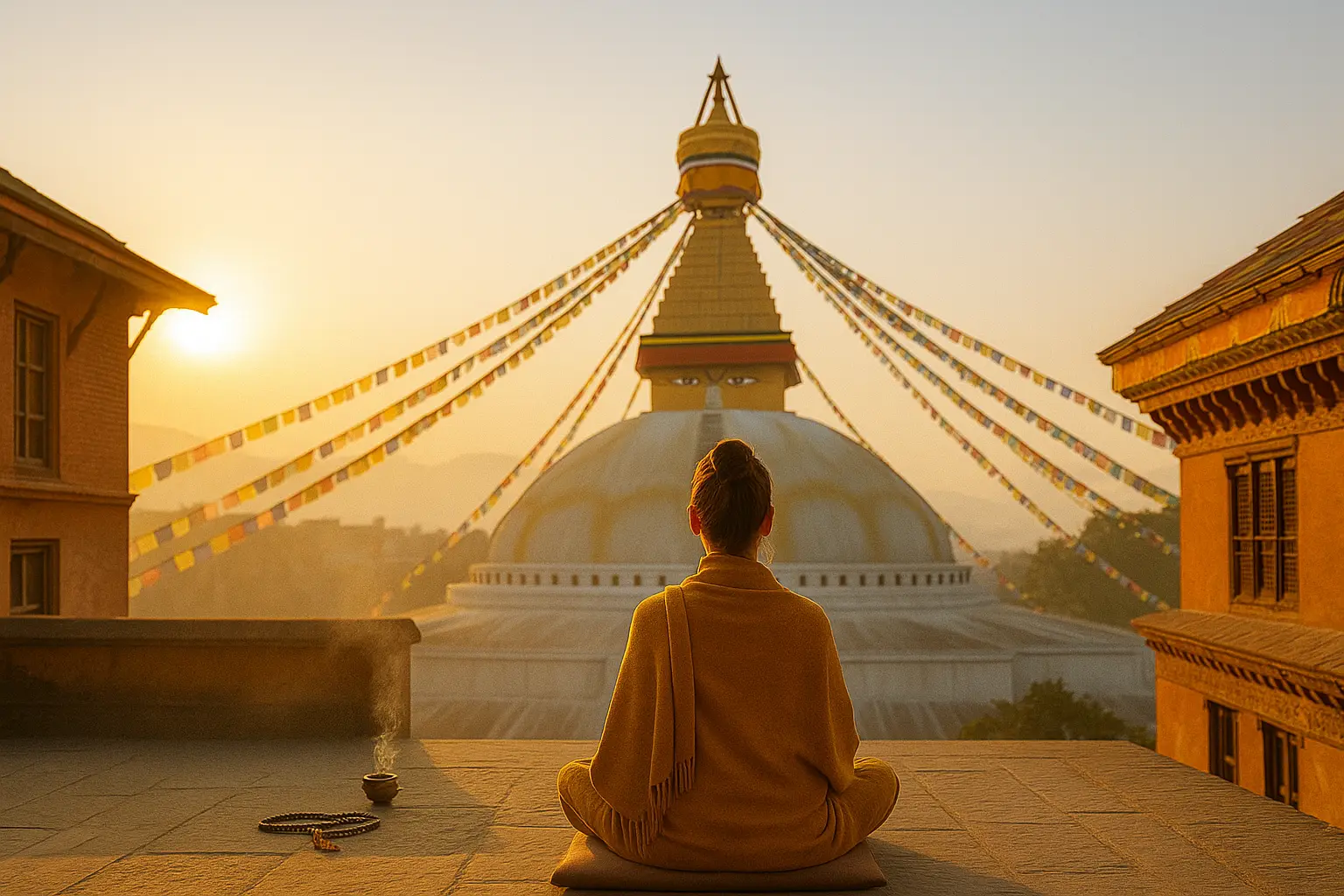
Boudha feels like a different rhythm. Mornings begin with the low hum of chants and the soft turning of prayer wheels. So, what do you actually learn on a meditation retreat in Boudha?

Let’s take a closer look at the Buddhist meditation techniques from foundational breath practices to compassion-based methods rooted in Tibetan Buddhism.

Key Takeaways

The most common Buddhist meditation techniques techniques taught at Boudha retreats include:

– Shamatha (Calm-Abiding Meditation): A foundational breath-based practice to develop focus and mental stillness.

– Vipassana (Insight Meditation): Teaches you to observe sensations, thoughts, and impermanence with clarity and presence.

– Tonglen & Loving-Kindness (Metta): Compassion-based techniques that help open the heart and reduce self-centered thinking.

– Walking Meditation Around the Stupa: A unique local ritual of mindful walking and mantra recitation around Boudhanath Stupa.

– Mantra & Chanting Meditation: Sound-based practices using Tibetan mantras to calm the mind and connect with intention.

Why Boudhanath Feels Different

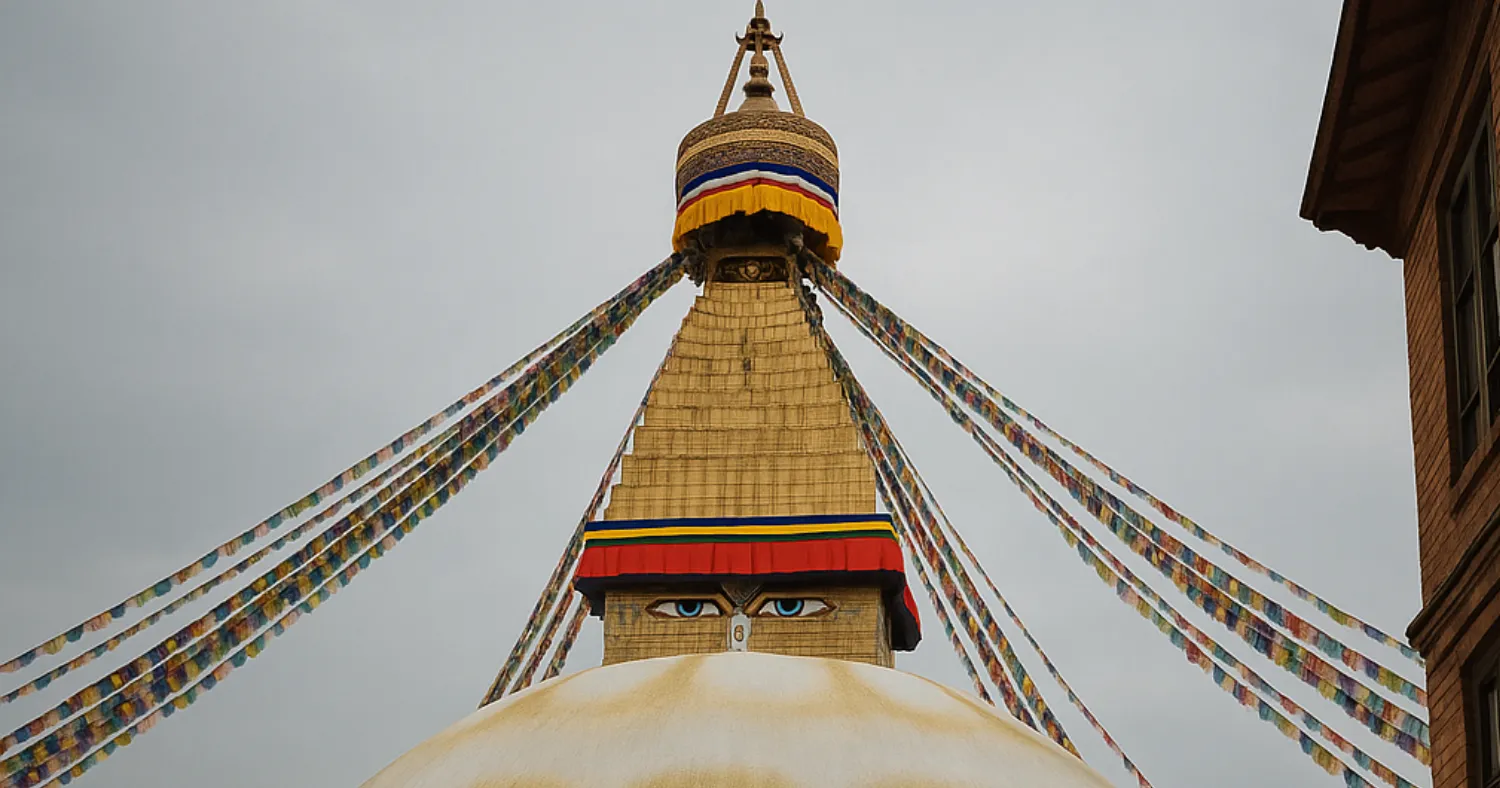
The stupa here has stood for centuries. It’s one of the most important sites in Tibetan Buddhism not just in Nepal, but in the world.
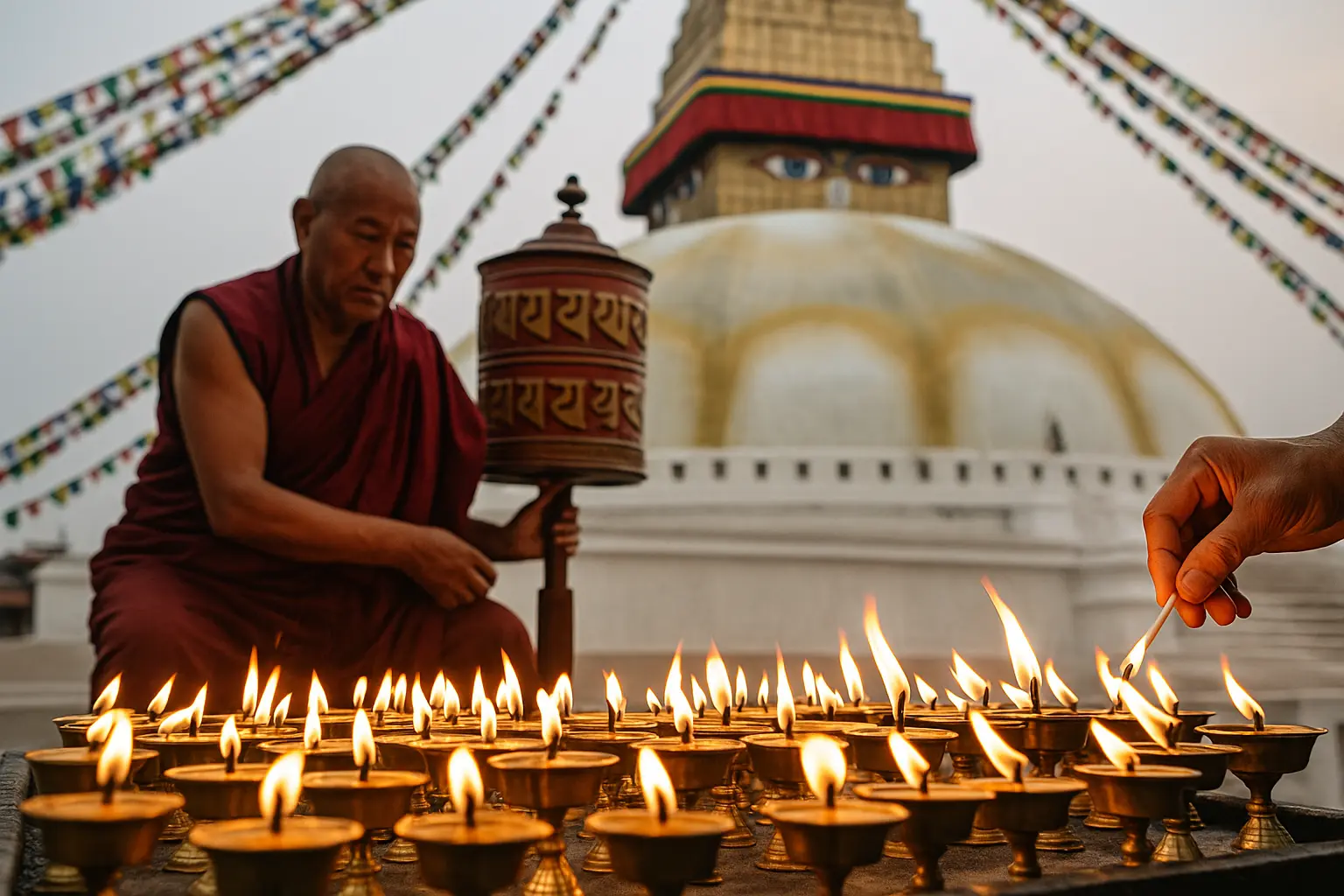
Around it, over fifty monasteries form a living circle of practice. You’ll hear chants, see butter lamps flickering at dusk, and feel something hard to describe.
Unlike Thamel or other tourist-heavy areas, Boudha moves slowly. It gives you permission to do the same.

Buddhist Meditation Techniques Taught in Boudha Retreats

Most retreats in this area are grounded in Buddhist tradition, especially Tibetan lineages. Whether you’re joining a group or practicing on your own, these are the buddhist mediation techniques you’re likely to learn.

Shamatha (Calm-Abiding Meditation)

This is the foundation. You focus on the breath, or sometimes a visual object. When your mind wanders which it will, you gently return.

That’s it. No pressure.

Shamatha trains attention and steadies the nervous system. You begin to notice space between thoughts. Many meditation retreats in Kathmandu use this as a base for deeper practices.

Vipassana (Insight Meditation)

Vipassana helps you see clearly. It’s not dramatic. You sit, observe sensations, and notice how everything changes, breath, sound, mood, thought.

This technique can be taught in both silent retreats and more interactive sessions. In Boudha, you’ll often find a Tibetan approach that includes guided reflection and time for questions.

It’s not about analyzing your life. It’s about learning to be with it, as it is.

Tonglen and Loving-Kindness (Metta)

These practices shift the focus from clarity to compassion.

In Tonglen, you breathe in discomfort or pain your own, or the world’s and breathe out relief, warmth, kindness.

Metta practice involves sending goodwill to others. You might begin with someone you love, then extend it to someone neutral, and eventually, even someone difficult.

Both techniques are common in retreats around Boudha, especially those led by Tibetan teachers. They balance awareness with heart.

Walking Meditation Around the Stupa

This isn’t always listed in retreat brochures, but it’s one of the most powerful practices here.

Each morning and evening, people walk slowly around Boudhanath Stupa. Some spin prayer wheels. Some count mala beads. Others just walk quietly, steady and present.

It’s informal but deeply meditative. You’re welcome to join anytime. No one will stare. No one will stop you.
You just walk.

Mantra and Sound Practices

Chanting is part of daily life in Boudha. Retreats often begin or end sessions with mantras, Om Mani Padme Hum is the most common.

You don’t need to sing well or believe in anything specific. You just let the rhythm carry your focus.

Some retreats include explanations. Others let the practice speak for itself. Both work.

Who Teaches These Practices?

Teachers in Boudha come from different traditions. Some are Tibetan lamas who’ve trained since childhood.

Others are Nepali monks, Western practitioners, or nuns fluent in English.

Most retreats are beginner-friendly. No robes, no dogma. Just real people sharing what they’ve learned, often with great care and humility.

You’ll find both structured retreats and informal drop-in sessions. The common thread is kindness and clarity.

What a Retreat Day Feels Like

Here’s a simple flow many Boudha retreats follow:

– Early morning meditation

– Silent breakfast

– Teaching or group practice

– Breaks for journaling or rest

– Afternoon session (chanting, compassion practice, walking meditation)

– Light dinner and evening reflection

Some retreats are silent. Others allow for questions and conversation. Most are gentle, respectful, and allow space for your own rhythm.

Where to Stay If You’re Practicing Near Boudha

Not everyone comes for a formal retreat. Some arrive needing quiet, and create their own rhythm.

Boudha Mandala Hotel is the one of the best hotels in Boudha that feels like a retreat.

It’s about 10 seconds from the stupa gates, but far enough from the crowds to stay peaceful. Here’s what it offers:

– Stupa-view rooms with small balconies

– Long-stay apartments with kitchens

– An organic café for quiet breakfasts

– Staff who understand retreat culture and respect your space

If you’re attending a meditation retreat in Kathmandu, or looking to do your own in a gentle way, this is a solid base.

What You’ll Actually Learn

The techniques matter. The teachers matter. But what you’ll really learn in Boudha is how to slow down.

How to listen. How to sit with yourself without fixing anything. How to walk a little more lightly in the world.

If that’s what you’re looking for, you don’t need to have it all figured out. Just come. Stay a few days. Let the place do its work.

Sometimes, the simplest practice is the most honest one.

5 Sacred Monasteries and Temples to Visit Near Boudhanath Stupa


Key Takeaways:

Near Boudhanath Stupa in Kathmandu, several revered monasteries and temples welcome visitors seeking deeper spiritual connection. From the massive Shechen Monastery to the peaceful Guru Lhakhang, these sacred sites offer glimpses into Tibetan Buddhist practice, art, and daily devotion. Whether you’re on pilgrimage or simply curious, each location offers a space for reflection, prayer, or simply sitting with presence, all within walking distance of the great stupa.

There’s something magnetic about Boudhanath. The way people walk clockwise in the early light, prayer wheels turning in rhythm with their breath. But beyond the main stupa, hidden in alleys or down quiet side roads, a whole world of spiritual depth awaits.
If you pause for a moment, step outside the circle, and follow the soft hum of chants or the faint aroma of incense, you’ll find living monasteries, gompas, and temples that have been part of this sacred neighborhood for generations.

These aren’t just sites to visit. They’re sanctuaries to enter with your whole heart.

Shechen Monastery (Shechen Tennyi Dargyeling)

Just a short walk northeast of the stupa lies Shechen Monastery, one of the six great Nyingma monasteries established outside Tibet. Founded by the great Dilgo Khyentse Rinpoche, Shechen is known for its beautiful architecture, extensive mural paintings, and peaceful inner courtyard.

This monastery doesn’t just preserve tradition, it lives it. Monks engage in daily study and ritual, and many teachings are open to the public, especially during special events or retreats. The atmosphere here feels timeless, respectful, spacious, and quietly welcoming.

Walk inside and you’ll hear the low murmur of chanting, the flutter of prayer flags above the garden, and maybe, if you’re lucky, a soft puja bell echoing through the halls.

Ka-Nying Shedrub Ling Monastery

To the west of the stupa lies Ka-Nying Shedrub Ling, a monastery steeped in both scholarship and deep spiritual practice. It was founded by Tulku Urgyen Rinpoche and is currently led by his son, Chökyi Nyima Rinpoche, a beloved teacher in both Tibetan and Western communities.

The monastery combines shedra (monastic college) and drubdra (meditation center), creating a balanced path for monks and lay practitioners alike. There’s a warm garden café nearby, and visitors often pause to reflect or attend one of the Sunday public teachings.

It’s a space of learning, but also of listening. You don’t need to understand Tibetan to feel the clarity in the air.

Thrangu Tashi Yangtse Monastery

A little further from the central stupa, near the banks of the Bagmati River, sits Thrangu Monastery, founded by Khenchen Thrangu Rinpoche. This Kagyu lineage monastery has a strong focus on education, hosting a full monk training program and a monastic school.

Visitors are welcome during daylight hours, especially on lunar calendar puja days. The setting is serene, a mix of rustling leaves and slow, purposeful footsteps.
If you’re seeking a quiet moment of reflection, the temple courtyard offers a view of open sky, golden prayer wheels, and the soft footfalls of maroon-robed monks returning from morning chants.

Guru Lhakhang

It’s easy to miss. But if you look closely while walking the outer kora around Boudhanath, you’ll find a narrow entrance tucked between two shops. Step inside and the sounds of the street dissolve.

Guru Lhakhang is a small temple dedicated to Guru Rinpoche (Padmasambhava), and it holds one of the oldest and most revered statues in the area. Butter lamps flicker at all hours. The scent of juniper and incense lingers.

Locals stop by quietly, leaving offerings or simply bowing for a moment. There are no signs or tours here. It’s just devotion, alive in its purest form.

Palyul Namdroling Monastery

This Nyingma lineage monastery sits slightly off the main road, but it welcomes visitors warmly. Namdroling offers regular tsok offerings, public events during Losar and other major festivals, and a peaceful prayer hall painted in vivid color.

There’s a sense of openness here, of practice being lived, not performed. If you sit quietly long enough, the chants might carry you into their rhythm.

It’s places like this where the line between observer and participant begins to blur.

How to Visit Respectfully

As you step into these sacred spaces, keep a few things in heart:

• Always remove your shoes before entering temple halls
• Walk clockwise around stupas or prayer wheels
• Speak softly, especially inside gompas
• Avoid pointing feet toward altars or statues
• Don’t photograph during pujas unless clearly permitted
When in doubt, pause. Watch how others move. The most respectful way is often the most still.

Why Staying Nearby Deepens the Experience

Staying near Boudhanath allows you to witness the daily rhythm of Tibetan life:

  • Monks sweeping courtyards at dawn
  • Nuns chanting prayers behind low wooden doors
  • Pilgrims lighting butter lamps in early light

It’s more than a visit. It’s an invitation to live alongside devotion, even for a few days.

If you’re seeking a peaceful, spiritual base, Boudha Mandala Hotel offers stupa-view rooms, long-stay options, and a deeply quiet atmosphere just ten seconds from the circle.

Conclusion
Each monastery or temple around Boudhanath is a presence, alive with prayer, shaped by generations, quietly luminous.
You don’t need a guidebook to feel their power. You just need to walk slowly, stay open, and listen.
Somewhere between the incense, the turning wheels, and the soft chants behind walls, you’ll begin to sense it: this is not just a neighborhood, it’s a mandala in motion.

The Meaning of Prayer Flags, Butter Lamps, and Tibetan Rituals


Key Takeaways

Tibetan prayer flags and butter lamps aren’t just decorations; they’re sacred symbols of compassion, clarity, and connection. Prayer flags carry mantras on the wind, blessing all beings they touch, while butter lamps represent the light of wisdom, dispelling inner darkness. Together with rituals like kora and prostrations, these practices create a living expression of Tibetan Buddhism, especially in sacred places like Boudhanath. To witness or participate with respect is to step into a centuries-old circle of prayer, breath, and presence.

Introduction

It was just after sunrise in Boudha. The first butter lamps were flickering to life, glowing amber against the white of the stupa. Wind tugged gently at rows of prayer flags above, carrying blessings across the rooftops. A nun passed quietly, her hands on a worn mala, her gaze steady.
This wasn’t a show. It was devotion. Alive, quiet, and deeply human.

Many visitors to Boudhanath are drawn in by the beauty, the colors, and the rituals. But behind every fluttering flag and glowing lamp is a prayer, a teaching, a tradition lived for generations. This is a guide for those who want to see deeper, to feel what these sacred symbols truly mean.

What Are Tibetan Prayer Flags?

Prayer flags, or Lungta (རླུང་རྟ་), are more than decoration. They are wind-borne prayers, rooted in Tibetan Buddhism and even older Bon traditions.

There are five colors, each representing an element:
• Blue, Sky/space
• White, Air/wind
• Red, Fire
• Green, Water
• Yellow, Earth

Each flag is printed with mantras, usually Om Mani Padme Hum, and sacred symbols like the Wind Horse, which carries prayers to the heavens. As the wind passes through the cloth, the prayers are believed to bless all beings.

Prayer flags are not meant to be permanent. They fade, tear, and return to the earth, a reminder of impermanence. New flags are often hung on full moon days or during festivals like Losar (Tibetan New Year).

Why Are Prayer Flags Hung at Boudha and Other Stupas?

Boudhanath, one of the most important Tibetan Buddhist stupas in the world, is crowned with thousands of prayer flags. They stretch in geometric webs from the stupa’s peak to its base, dancing constantly in the breeze.

Hanging flags here is both an offering and a declaration. You’re adding your intentions to a collective prayer. The wind becomes your messenger.

Pilgrims often hang their own strings of flags before a long journey, after a family blessing, or in memory of a loved one. It’s not just what they mean, it’s what they carry.

The Deeper Meaning of Butter Lamps

To offer a butter lamp in Tibetan Buddhism is to offer light, both literal and symbolic.

The butter lamp (marme) represents the light of wisdom, cutting through the darkness of ignorance. In Himalayan monasteries, these lamps are offered daily during morning and evening pujas.

They’re traditionally made with yak butter, but now many use ghee or oil. You can see rows of lamps flickering around the base of Boudha Stupa, especially during dusk.

When you light a lamp with quiet intention, it becomes a prayer, for clarity, for healing, for someone who has passed.

According to Tibetan belief, offering lamps accumulates merit, especially when done with mindfulness. In some traditions, people offer 108 lamps at once, one for each delusion or obstacle in the mind.

Rituals You’ll See in Boudha (and What They Mean)

The stupa isn’t just surrounded by people, it’s circled by devotion. Each act you see has meaning:

Kora: Walking clockwise around the stupa, spinning prayer wheels, reciting mantras. It’s a moving meditation.

Prostration: A full-body bow done repeatedly, often for hundreds of cycles. It’s a physical expression of humility and purification.

Chanting: The most common mantra is Om Mani Padme Hum, associated with Avalokiteshvara, the bodhisattva of compassion.

Mala Beads: 108-bead strands used to count recitations of mantras. Each cycle is a journey inward.

All of these practices invite a slowing down, a shift from thinking to being.

How to Participate (or Observe) Respectfully

Whether you’re a pilgrim or a curious traveler, the key is presence and humility.

  • Walk clockwise around stupas. Never against the flow.
  • Speak quietly. Treat the space like a living temple.
  • Dress modestly. Shoulders and knees covered is appreciated.
  • Avoid selfies during rituals. It disrupts both the moment and the meaning.
  • Buy prayer flags and lamps from monasteries or pilgrims. It keeps the intention clean, and supports the local spiritual economy.

Remember: you’re entering a sacred rhythm. Step lightly.

Staying Close to the Ritual

Living near Boudha, even for a few days, gives you something deeper than a visit. You begin to feel the timing of the rituals, the rhythm of the kora, the quiet before the morning pujas.

From the rooftop of Boudha Mandala Hotel, just 10 seconds from the stupa, you can see the flags unfurl, the lamps begin to glow, and the circle form again.

Whether you’re on a pilgrimage, writing a book, or simply needing stillness, this proximity brings you into the mandala of daily devotion.

Personal Reflection: One Morning Under the Flags

I once lit a butter lamp for someone I had lost. I didn’t know the prayers. I didn’t know the rituals. But I stood beside an old nun who nodded at me, as if saying, “You’re doing it right”.

She lit her lamp with trembling hands, and I followed. There was no language between us. But there was a connection.
That’s the thing about Tibetan rituals. You don’t always need to understand them to feel their truth.

Conclusion
Whether it’s a flag flapping in the wind or a flame dancing in stillness, these symbols stay with you. Tibetan rituals aren’t just things you see; they’re invitations to return to presence, to compassion, to light.

When you leave Boudha, you might not carry a prayer wheel or a mala. But the prayer stays, in how you walk, how you see, how you listen.