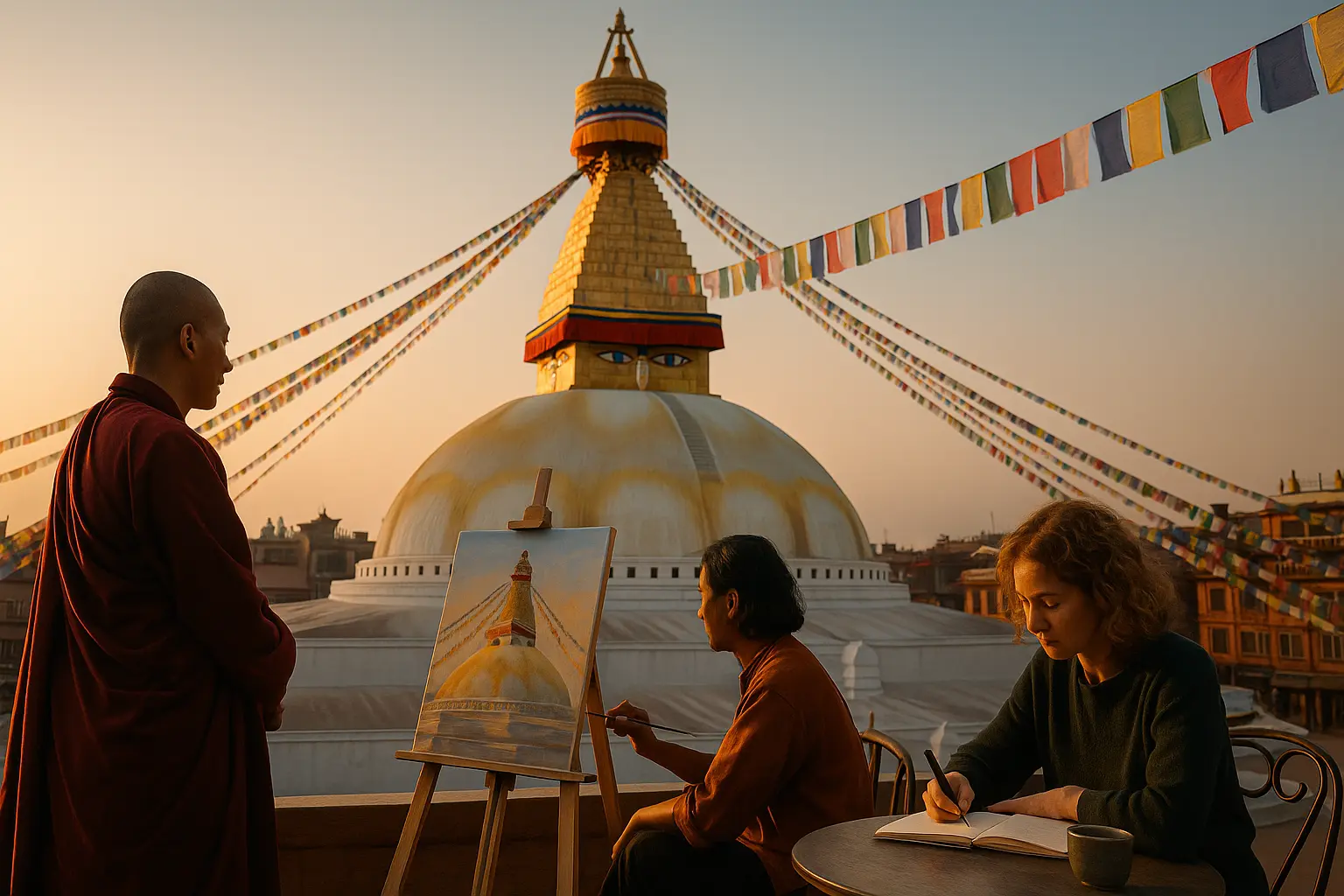
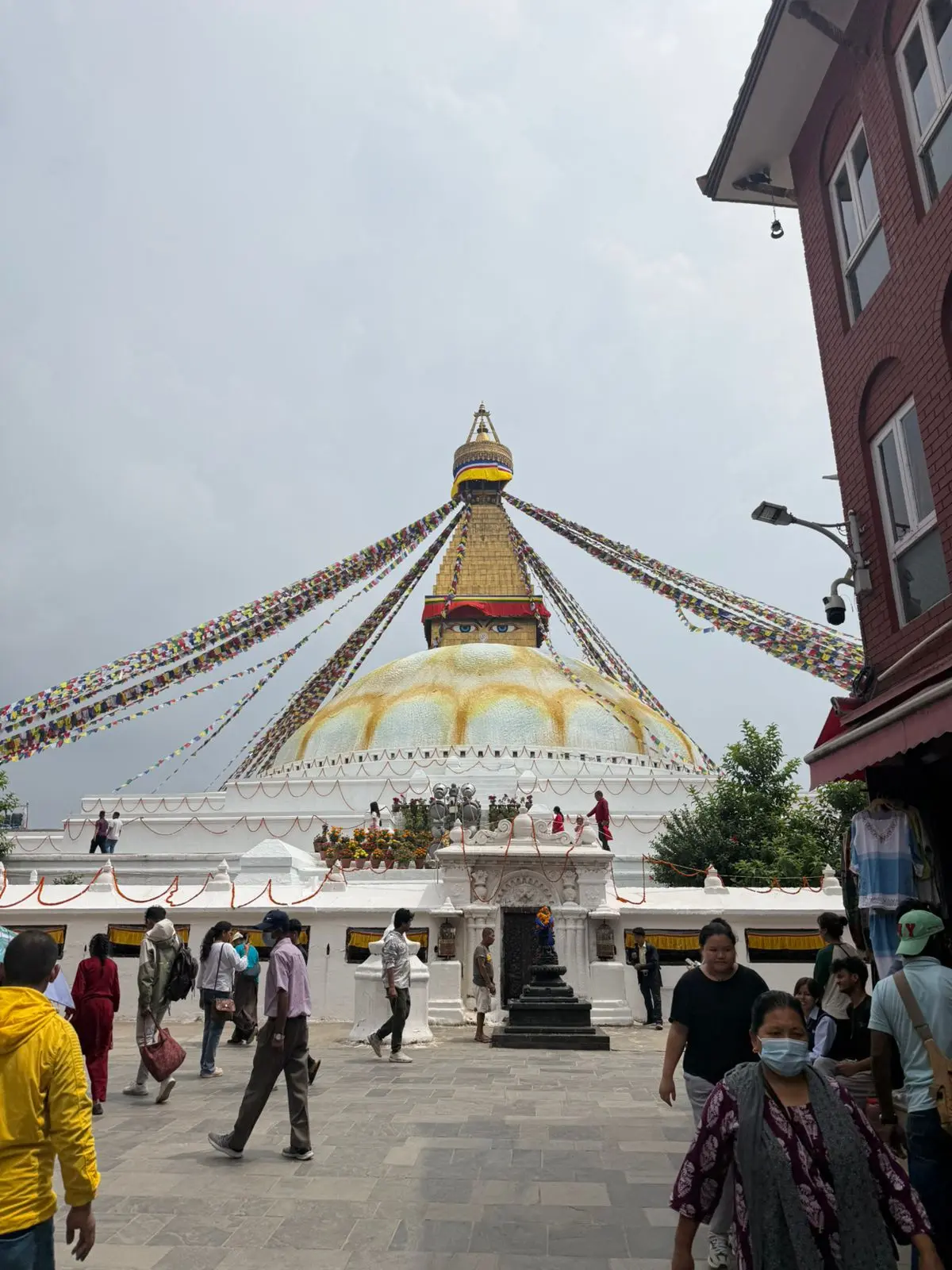
10 Interesting Facts About Buddhism That Most People Don’t Know

Key Takeaways

• Buddhism is over 2,500 years old and originated in Nepal, not India.

• It is a nontheistic spiritual tradition, meaning it does not worship a creator god.

• The Buddha was a real historical figure, not a mythical being.

• Core teachings like the Four Noble Truths and Ethe Eightfold Path are practical life philosophies, not dogma.

• Buddhism spread peacefully across Asia via pilgrimage routes and cultural exchange, not conquest.

• There are multiple schools of Buddhism, including Theravāda, Mahāyāna, and Vajrayāna.

• Meditation in Buddhism is not for relaxation, it’s a tool for awakening and insight.

• The idea of reincarnation in Buddhism is more nuanced than often understood.

• Buddhist art and architecture, like stupas and mandalas, are rich with symbolic meaning.

• Today, over 500 million people practice Buddhism globally, blending tradition with modern life.


Buddhism is one of the most widely practiced spiritual paths in the world,but it’s also one of the most misunderstood. You may associate it with monks in saffron robes, chanting mantras, or quiet meditation halls filled with incense. But beyond those images lies a vast, rich, and deeply human philosophy that has shaped cultures, ethics, and ways of being for more than two millennia.

Here are ten lesser-known but fascinating facts about Buddhism that reveal its depth, diversity, and enduring relevance.

1. The Buddha Was Born in Nepal, Not India

Many people assume that Buddhism began in India. While it’s true that the Buddha attained enlightenment in Bodh Gaya (present-day India), Siddhartha Gautama,the historical Buddha,was born in Lumbini, in what is now southern Nepal, around 563 BCE.

Today, Lumbini is a UNESCO World Heritage Site and an important pilgrimage destination, attracting visitors from all over the world.

2. Buddhism Has No Central God

Unlike many major religions, Buddhism is non-theistic. It doesn’t worship a supreme creator. Instead, it teaches that all beings have the potential for enlightenment (bodhi) within themselves.

This philosophical framework places responsibility for liberation squarely on one’s own actions, which is why karma, mindfulness, and ethical living are so central in Buddhist thought.

3. The Teachings Are Designed to Be Tested, Not Believed Blindly

The Buddha often said, “Don’t believe anything just because I said it. Test it for yourself.” This approach to wisdom is rare among ancient teachings.

In fact, many Buddhist traditions encourage practitioners to question, investigate, and directly experience truth through meditation, study, and ethical living. This aligns with modern values of critical thinking and inner inquiry.

4. There Are Many Forms of Buddhism,And They’re All Valid

Buddhism isn’t a monolith. Over centuries, it evolved into several distinct lineages, each emphasizing different aspects of the Dharma (Buddha’s teachings):

• Theravāda Buddhism: Common in Sri Lanka and Southeast Asia; focuses on early scriptures and monastic practice.

• Mahāyāna Buddhism: Found in China, Korea, Japan; introduces Bodhisattvas and expansive teachings.

• Vajrayāna Buddhism: Practiced in Tibet, Bhutan, and Mongolia; uses mantras, visualizations, and tantric rituals.

Despite differences, all schools maintain the foundational principles of the Four Noble Truths and Eightfold Path.

5. Meditation Is Just One Part of the Path

While often associated with meditation, Buddhism sees it as one aspect of a larger path. In the Eightfold Path, meditation (samādhi) is only one of eight limbs.

Ethical conduct (sīla) and wisdom (paññā) are just as vital. This holistic path encourages the cultivation of right speech, right livelihood, and right understanding,not just inner calm.

6. Nirvana Is Not a Place,It’s a State of Liberation

Popular culture sometimes portrays nirvana as a Buddhist “heaven.” In truth, nirvana (nibbāna) means “to extinguish” the fires of craving, hatred, and delusion.

It’s a state of complete freedom, where one no longer clings to ego, desire, or identity. Attaining it is considered the ultimate goal of Buddhist practice, but the path toward it is what gives daily life meaning.

7. Buddhism Spread Through Peace, Not Force

Unlike many religions that expanded through conquest, Buddhism spread across Asia through cultural exchange, trade routes, and missionary monks.

King Ashoka of India (3rd century BCE) played a crucial role by supporting Buddhist missions to Sri Lanka, Nepal, and beyond. Later, the Silk Road helped carry Buddhist texts, art, and monastic traditions into Central and East Asia.

8. Rebirth in Buddhism Is Not About the Soul

One of the most misunderstood ideas in Buddhist philosophy is rebirth. Unlike the Hindu concept of an eternal soul (ātman), Buddhism teaches anattā,the doctrine of “no-self.”

This means that what continues after death is a stream of consciousness conditioned by karma, not a fixed soul. It’s a subtle but profound view, emphasizing cause and effect rather than eternal identity.

9. Buddhist Art Is Rich with Symbolism

Buddhist visual culture,especially thangka paintings, mandalas, stupas, and mudras,is not merely decorative. These forms are symbolic maps of the mind and reminders of key teachings.

• A stupa represents the enlightened mind

• A mandala maps the universe of awakening

• Mudras (hand gestures) express specific energies like compassion or fearlessness

For spiritual travelers, these symbols offer visual doorways into Buddhist wisdom.

10. Buddhism Is Still Evolving and Thriving

Buddhism is not a museum relic. It’s a living tradition practiced by over 500 million people globally, from Himalayan monks to urban meditation teachers in New York or Tokyo.

In the modern age, Buddhism has found fresh expression through:
Secular mindfulness movements

• Socially engaged Buddhism

• Digital sanghas and online retreats

• Cross-cultural dialogue between East and West

Despite its ancient roots, the Dharma continues to adapt, offering refuge and clarity in a complex world.

Final Reflection

Buddhism is often seen as serene and quiet,but beneath its calm surface lies a fierce compassion, a precise psychological map, and a deeply human invitation: to know yourself, free yourself, and live with wisdom.

If you’re visiting sacred sites like Boudhanath or Lumbini, or simply sitting quietly with your own thoughts, remember, the Buddha didn’t want followers. He wanted people to awaken.
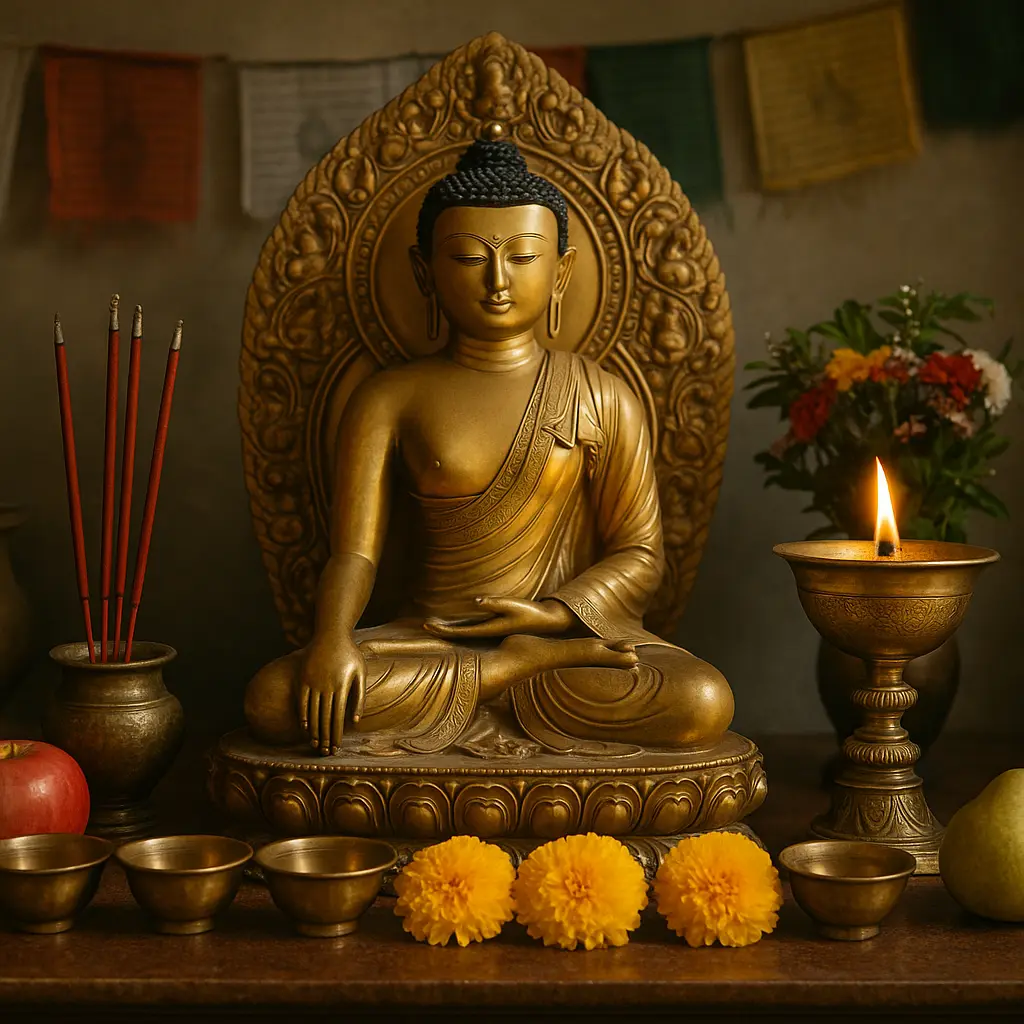
What Is a Buddha Shrine? Meaning, Ritual, and Sacred Spaces


A Buddha shrine, sometimes called a Buddhist altar or veneration space, is a sacred place where the presence of the Buddha is honored. Whether found inside temples, monasteries, homes, or tucked into corners of bustling city streets, these shrines serve as spiritual focal points, places for meditation, offerings, and remembrance of the awakened mind.

At its heart, a Buddha shrine is not about religion in the conventional sense. It’s about cultivating presence, gratitude, and mindfulness. Whether you’re a devout practitioner or simply a spiritually curious traveler, standing before a Buddha shrine often evokes a quiet sense of reverence ,like stepping into a moment outside of time.

Elements of a Buddha Shrine: What You’ll See and Why It Matters

No matter where you travel,whether it’s a remote monastery in Nepal or a quiet corner in someone’s home,the essential elements of a Buddha shrine remain surprisingly universal. These include:

• A statue or image of the Buddha, usually seated in meditation or teaching posture

• Offerings such as flowers, incense, butter lamps, fruit, or clean water

• Sacred texts or prayer flags

• A clean, respectful environment, often elevated above daily living spaces

Each element holds meaning. The offerings aren’t to please a god, but to cultivate qualities like generosity, devotion, and awareness. Lighting a butter lamp symbolizes removing ignorance and bringing light to the mind. Even the way the Buddha is seated,legs crossed, eyes lowered,serves as a silent teaching in stillness and equanimity.

Types of Buddha Shrines You’ll Find in Nepal

Temple Shrines

Step into any Buddhist temple in Nepal,whether it’s Boudhanath, Swayambhunath, or a local village monastery,and you’ll encounter grand, elaborately decorated Buddha shrines. These spaces are rich with:

• Thangka paintings of deities and mandalas

• Rows of butter lamps flickering in silence

• Chanting monks or lay practitioners doing circumambulations


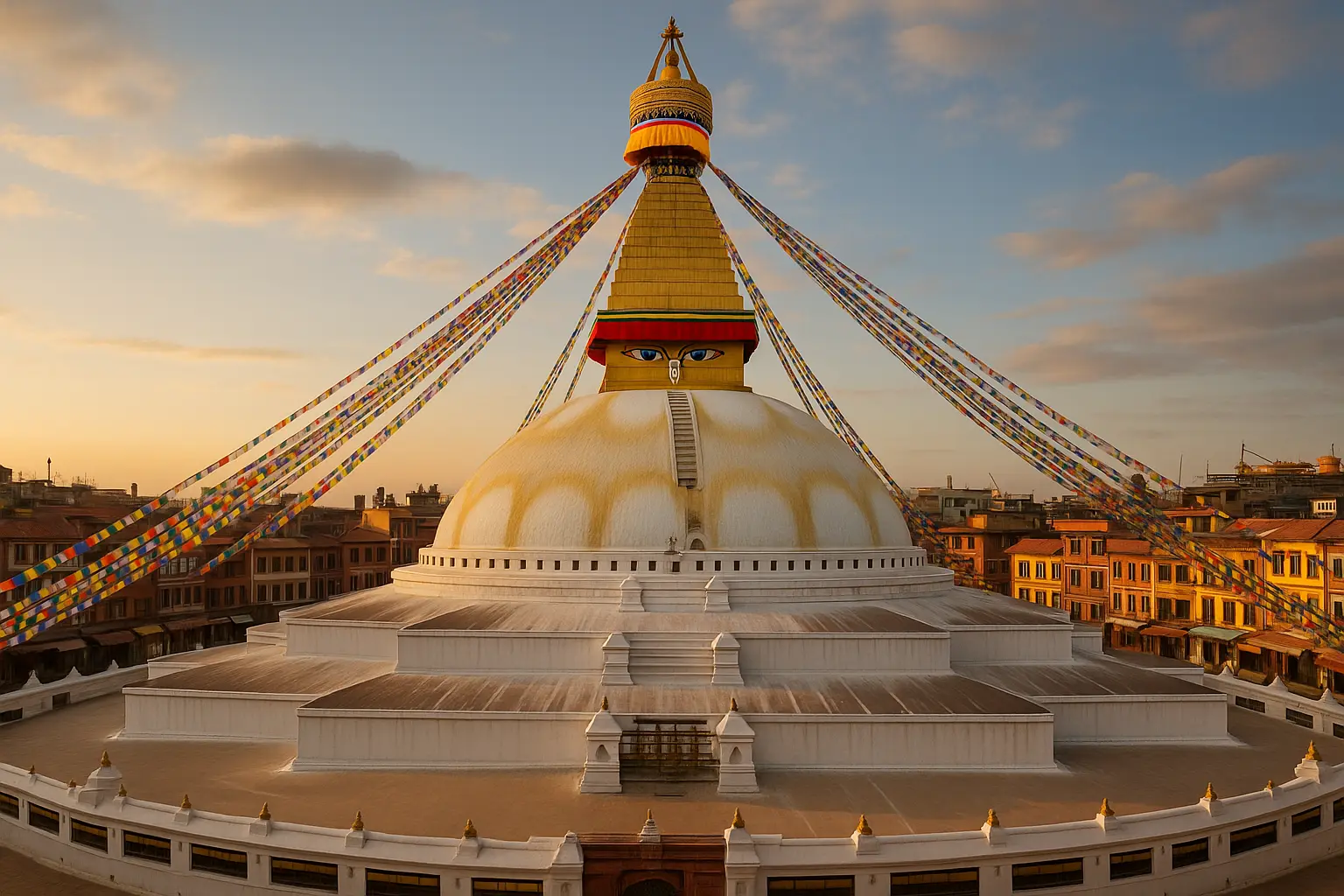
At Boudhanath Stupa, for example, the main shrine faces inward from each cardinal direction, radiating blessings like a mandala turned inside out. These aren’t just aesthetic. Each detail is an embodiment of sacred geometry, history, and devotion.

2. Monastic Shrines

Inside Tibetan Buddhist monasteries, shrines often include not just a central Buddha image, but also statues of lineage masters, protector deities, and elaborate offerings arranged with ceremonial precision. These spaces are primarily used for daily pujas (prayer ceremonies) and deeper meditative practices.

If you’re staying near Boudhanath, you can often quietly join morning or evening rituals at monasteries like Shechen, Ka-Nying, or Nagi Gompa (further north in Shivapuri).

3. Home Shrines

Many Nepali and Tibetan families maintain simple home altars, typically located on a high shelf in the main living area. These might include:

• A photo or statue of the Buddha

• A row of small offering bowls filled with water

• Fresh flowers or incense

Even if you’re a traveler or digital nomad living in an apartment, creating a small personal shrine can transform your space into something sacred. A single candle and a peaceful image may be enough.

Why People Visit Buddha Shrines

People come to Buddha shrines not just to pray,but to remember who they are when the noise quiets down. Whether local pilgrims doing prostrations around Boudhanath or solo travelers lighting incense in silence, the reasons include:

• Seeking inner peace or answers

• Expressing gratitude or grief

• Marking the start or end of a journey

• Honoring someone who has passed

• Connecting to a lineage or teaching

Imagine waking up early in Boudha, stepping barefoot onto a balcony, and watching the morning light touch the stupa’s golden pinnacle. Below, an elderly nun offers marigolds to a shrine with a gaze so calm, it stills your thoughts. This is not sightseeing. This is soul-seeing.

How to Behave at a Buddha Shrine: Mindful Etiquette

When visiting a Buddha shrine,especially in Nepal,respect is key. Here are a few gentle reminders:

• Remove your shoes before entering temple areas

• Don’t point your feet toward the shrine or sacred objects

• Walk clockwise around stupas or shrines

• Refrain from loud conversation or selfies

• Don’t touch statues or offerings, unless invited

It’s also common to make a small offering,such as lighting a butter lamp or offering a few rupees for maintenance. But more than anything, your sincerity is the real offering.

Notable Buddha Shrines Around Boudhanath Stupa

If you’re staying at Boudha Mandala Hotel, you’re just seconds away from some of the most spiritually alive Buddha shrines in the world. Here are a few nearby highlights:

• Boudhanath Stupa: The heart of Tibetan Buddhism in Nepal, surrounded by dozens of small shrine rooms and temples

• Guru Lhakhang Monastery: A beautiful courtyard shrine tucked inside a monastery just off the stupa circle

• Samtenling Gompa: A peaceful monastery with a hidden inner shrine visited mostly by locals

• Shechen Monastery: Just a short walk away, with one of the most elaborate shrine halls in Kathmandu

Each of these places invites quiet, patient observation. Don’t rush. Let yourself be affected.

How to Create Your Own Buddha Shrine While Traveling

Even if you’re moving between places, it’s possible to carry a sense of shrine with you. Here’s how:

• Bring a small Buddha statue or image

• Use a scarf or cloth as a sacred base

• Include one or two personal tokens (like a stone from a sacred place or a mala bead)

• Light a candle or incense stick at sunrise or sunset

The goal is not to build something perfect, but something meaningful. Even five minutes in front of your travel altar can anchor you in presence, gratitude, and calm.

Final Thoughts

In an age of speed, distraction, and disconnection, Buddha shrines offer something rare stillness that asks nothing of you. Whether you bow, light a lamp, or simply pause and breathe, these spaces help you return to what matters: the clarity of mind, the depth of heart, and the awareness that peace is possible.

If you’re looking for a peaceful hotel just steps from the stupa, Boudha Mandala offers stupa-view rooms, long-stay options, and a warm local welcome. With calm interiors, nourishing food, and easy access to sacred shrines, it’s the perfect base for travelers seeking meaning, not just movement.

Buddhist Food Restrictions: Mindful Eating and Spiritual Discipline

Food in Buddhism goes beyond mere nourishment. It’s an essential part of spiritual practice, mindfulness, and ethical living. Buddhist dietary practices are influenced by teachings around compassion, non-attachment, and respect for life.

This guide explores Buddhist food restrictions, why they exist, and how mindful eating is a core part of spiritual growth for Buddhists and mindful travelers alike.

Core Principles Behind Buddhist Food Restrictions

Buddhist food guidelines aren’t just rules; they reflect deeper spiritual values:

• Ahimsa (Non-Harming): Avoiding harm to living beings, leading many Buddhists to adopt vegetarianism or veganism.

• Mindfulness and Moderation: Eating to nourish the body rather than indulging desire.

• Non-Attachment: Food is viewed as sustenance, not pleasure or indulgence.

These principles guide dietary choices and everyday eating habits.

Vegetarianism and Veganism in Buddhism

While not all Buddhists are vegetarians, many choose vegetarian or vegan diets as an expression of compassion and non-harming. Mahayana Buddhists are more likely to follow strict vegetarianism, believing that abstaining from meat reduces suffering in the world.

Monks and nuns in many Buddhist traditions also follow vegetarian or vegan diets as part of their monastic discipline.

Foods Typically Avoided in Buddhism

Certain foods are traditionally avoided by many practicing Buddhists, especially monastics:

• Meat and Fish: Especially avoided during important religious observances or by stricter practitioners.

• Alcohol and Intoxicants: Alcohol and mind-altering substances are usually prohibited as they impair mindfulness.

• Garlic, Onion, and Strongly Flavored Foods: These are often avoided, particularly in Mahayana monasteries, due to their perceived impact on spiritual balance and meditation.

Mindful Eating: How Buddhists Approach Meals

Eating mindfully is central in Buddhism. It involves:

• Eating slowly and consciously, fully appreciating each bite.
• Being aware of where the food comes from and expressing gratitude.
• Consuming just enough to nourish the body without excess or waste.

This mindfulness transforms a simple act into a spiritual practice.

Buddhist Food Practices Around Boudhanath

If you’re exploring spiritual life around Boudhanath, you’ll find many restaurants and cafes offering meals aligned with Buddhist food guidelines:

1. Boudha Cafe De Mandala

Located within the Boudha Mandala Hotel, it offers vegetarian and vegan options, mindful dishes prepared with local ingredients, ideal for travelers who appreciate food as spiritual nourishment.

2. Ananda Treehouse

Known for its organic vegan and vegetarian options, this rooftop café provides mindful, flavorful meals suited to spiritual and health-conscious travelers.

3. Zen Bistro

Offers a variety of vegetarian dishes without onion or garlic, catering specifically to Buddhist dietary principles.

Incorporating Buddhist Food Practices at Home

Whether you’re traveling or staying in Boudha long-term, you can incorporate Buddhist principles into your meals:

• Choose vegetarian or vegan meals several times a week.
• Practice mindful eating by eating slowly, without distraction.
• Reflect on the source of your food, fostering gratitude and awareness.

You can find local ingredients at Boudha’s fresh market, enhancing your mindfulness practice through cooking and meal preparation.

Why Buddhist Dietary Restrictions Matter

Understanding Buddhist food restrictions isn’t just about rules; it’s about adopting a mindful approach to life. Eating becomes a practice of compassion, ethical living, and spiritual discipline.
For travelers staying near Boudhanath, embracing these practices enriches the travel experience, aligning daily meals with spiritual intentions and cultural respect.

Final Reflection: Food as a Path to Awakening

Food in Buddhism is more than sustenance. It’s a pathway to awakening. By observing food restrictions and mindful eating practices, you nourish not only your body but your spirit.

Next time you sit down to eat near Boudha, pause. Feel grateful for the food before you. Remember, every meal is an opportunity for mindfulness and spiritual growth.

Swayambhunath Temple: A Spiritual and Architectural Marvel Above Kathmandu

The Living Legend Behind Swayambhu

Before there was a city, before the valley held even a whisper of Kathmandu, there was a sacred light shining from a lotus on a lake.

That light, say the ancient texts, is the origin of Swayambhunath.
“Swayambhu” means “self-arisen.” It’s believed that the hill and the stupa emerged from the lotus itself, not built by human hands but by divine forces. That story still pulses through the air here, especially in the early morning mist, when the stupa glows softly as if remembering its own myth.

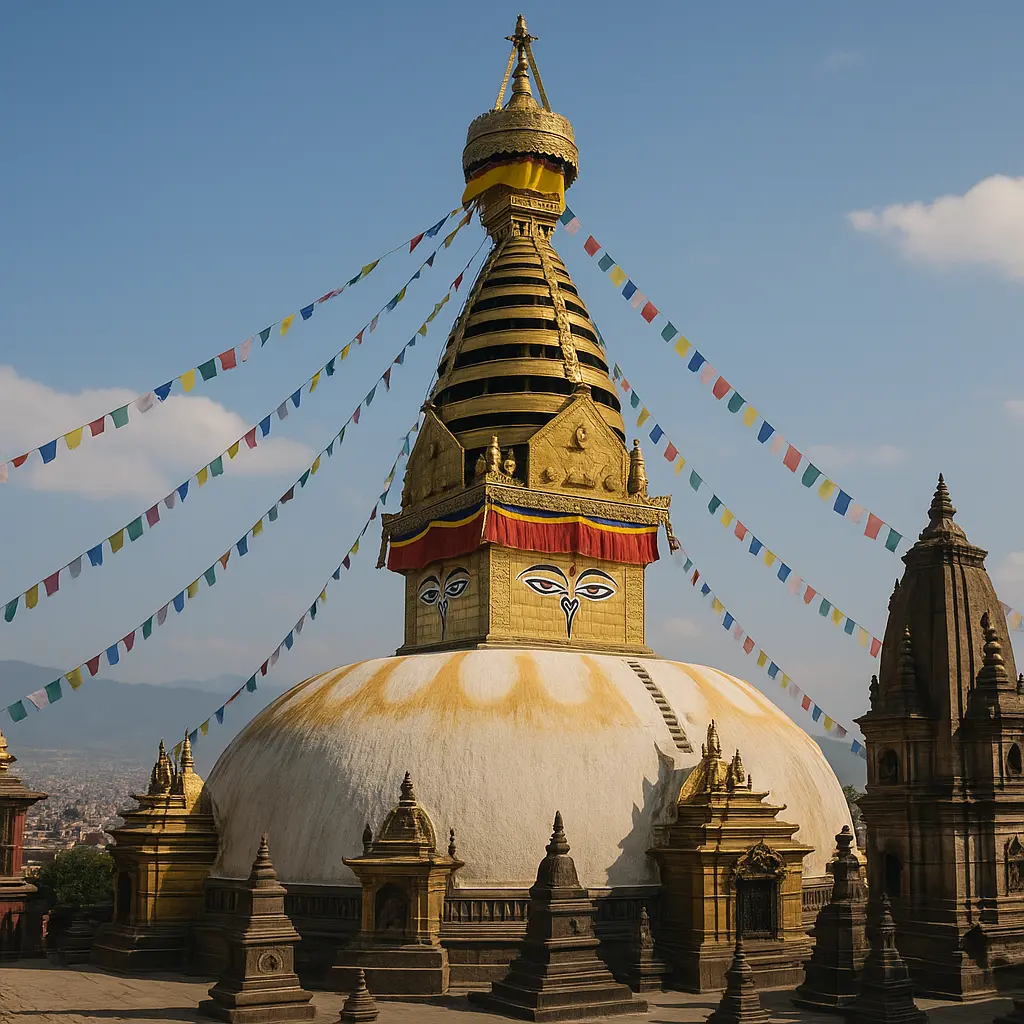
At the heart of the stupa, the Eyes of the Buddha look out not with judgment, but with timeless calm. Between the eyes sits the Nepali number one, a symbol of unity. Above them, the thirteen golden steps of the spire represent the stages on the path to enlightenment.

This isn’t just a monument. It’s a living mandala, vibrating with the prayers of pilgrims who’ve walked these steps for generations.

Sacred Symbols in Stone and Wind

When you walk around the main dome, prayer wheels spin under your fingers and small chaityas line the paths like silent sentinels. The golden vajra at the stupa’s front rests on a base with four lions, symbolizing strength and protection.

What makes Swayambhunath so unique is its spiritual harmony. Though it’s one of the most important Buddhist sites in Nepal, Hindu shrines stand beside Buddhist temples with no contradiction. You’ll see a statue of Harati, a Hindu goddess turned Buddhist protector, lovingly tended with marigold offerings.

Everything here is intentional. The white dome represents the world. The square base with painted eyes is wisdom. The thirteen golden tiers of the spire mark spiritual realization. And the fluttering prayer flags carry the hopes and mantras of everyone who’s come seeking peace.

Climbing the Steps to Stillness

There are 365 steps to the top. One for every day of the year. Some say it’s a test of devotion, others call it a spiritual exercise. Whatever your reason, the climb is worth every breath.

You’ll pass wild monkeys playing near carved stone lions, old women in saris spinning wheels, young monks carrying water in metal buckets. The scent of juniper smoke blends with the faint ringing of bells.

At the top, all of Kathmandu stretches before you. But the real view is inward.

Come at sunrise when the sky is still a soft blue. Or come at dusk when golden light bathes the spire and pigeons circle like slow-moving prayers. There’s no wrong time. Only your own rhythm.

Visiting with Heart and Respect

To enter this sacred space, it helps to slow down. Move clockwise around the stupa. Step gently. Speak softly. Watch how others walk, pause, and bow.

Here are a few simple guidelines to honor the space:
• Take off your shoes before entering the shrine halls.
• Don’t point your feet at statues or altars.
• Avoid loud conversation or phone use.
• Ask before taking close-up photos, especially of people or pujas.
• Don’t feed the monkeys, no matter how curious they seem.

Respect isn’t a rule here, it’s a rhythm.

Around Swayambhu: Tea, Monasteries, and Hidden Corners

The temple grounds are just the beginning. Tucked into the hillside are several monasteries with resident monks, often open for quiet visitors. You’ll find murals, bells, and hidden courtyards with views few tourists discover.

Stop at a small teashop overlooking the valley. The masala tea tastes sweeter when sipped slowly, as prayer flags flutter in the wind.

You can also visit the nearby Natural History Museum or explore small ritual item shops selling butter lamps, incense, and carved singing bowls.

Every corner around Swayambhunath tells a story. You just have to listen.

Why Swayambhunath Still Matters

Some places fade with time. This one deepens. Swayambhunath is still an active pilgrimage site, alive with monks in red robes and elders counting beads under ancient trees.

But it’s more than ritual. It’s a rare symbol of religious harmony. A place where Hindu and Buddhist energies coexist without division. A place where travelers, artists, seekers, and locals come not just to take pictures, but to feel something ancient, something still.

It’s also a living teacher. Its architecture holds wisdom. It’s silence, a kind of teaching. It’s rituals, a reminder that the sacred isn’t always loud.

Where to Stay for a Deeper Connection

If Swayambhunath stirs something in you, consider staying nearby in a place where that sense of quiet can continue.

Just a short drive away in Boudha, you’ll find Boudha Mandala Hotel, a peaceful, spiritually aligned retreat just ten seconds from the great stupa. With long-stay apartments, stupa-view balconies, and an in-house café serving organic meals, it’s designed for pilgrims, creatives, and digital nomads alike.

When you stay nearby, you don’t just visit sacred sites, you live alongside them. You hear the morning chants. You sip your tea under prayer flags. You become part of the rhythm.

Final Reflection

As you descend the steps from Swayambhunath, don’t be surprised if you feel lighter, quieter, somehow more spacious.

Because this temple isn’t just watching over the city. It’s inviting you to remember the stillness within yourself.
And perhaps, that’s the real pilgrimage.

Poets Who Found Inspiration in Boudha

Introduction

There are places in the world where words come softly, like prayer. Boudhanath is one of them. Poets often describe it not as a location, but as a mood. A rhythm. A stillness that seeps into the soul and flows out as verse.

Walk a slow kora in the early morning, and you’ll feel it too. The air holds incense and possibility. The chants echo like ancient syllables still searching for paper. For many poets, foreign and Nepali alike, Boudha has been more than a setting. It has been a teacher.

This is a look at some of the voices who sat by its walls, listened, and wrote.

Allen Ginsberg (USA)

Ginsberg, one of the great American Beat poets, passed through Nepal in the 1960s during his spiritual explorations. His poetry from this period reflects his fascination with Buddhist practice and the sacred geography of Kathmandu.

Though he’s more often associated with Bodh Gaya or India, those who’ve traced his letters and journals know he visited Boudhanath too. The spinning wheels, butter lamps, and chants left a mark.
“Holy Boudhanath, great eye of Kathmandu…”

, A line scribbled in one of his travel journals

Yuyutsu Sharma (Nepal)

Born in Nepal and known internationally, Yuyutsu RD Sharma has written widely about Himalayan life, spirituality, and Kathmandu’s changing landscape. In his poems, Boudha appears not just as a holy site but as a breathing character, full of longing and wisdom.

From his collection “Annapurna Poems” to his meditations on Himalayan culture, Sharma weaves Boudhanath’s presence into metaphors of wind, silence, and light.

Jane Hirshfield (USA)

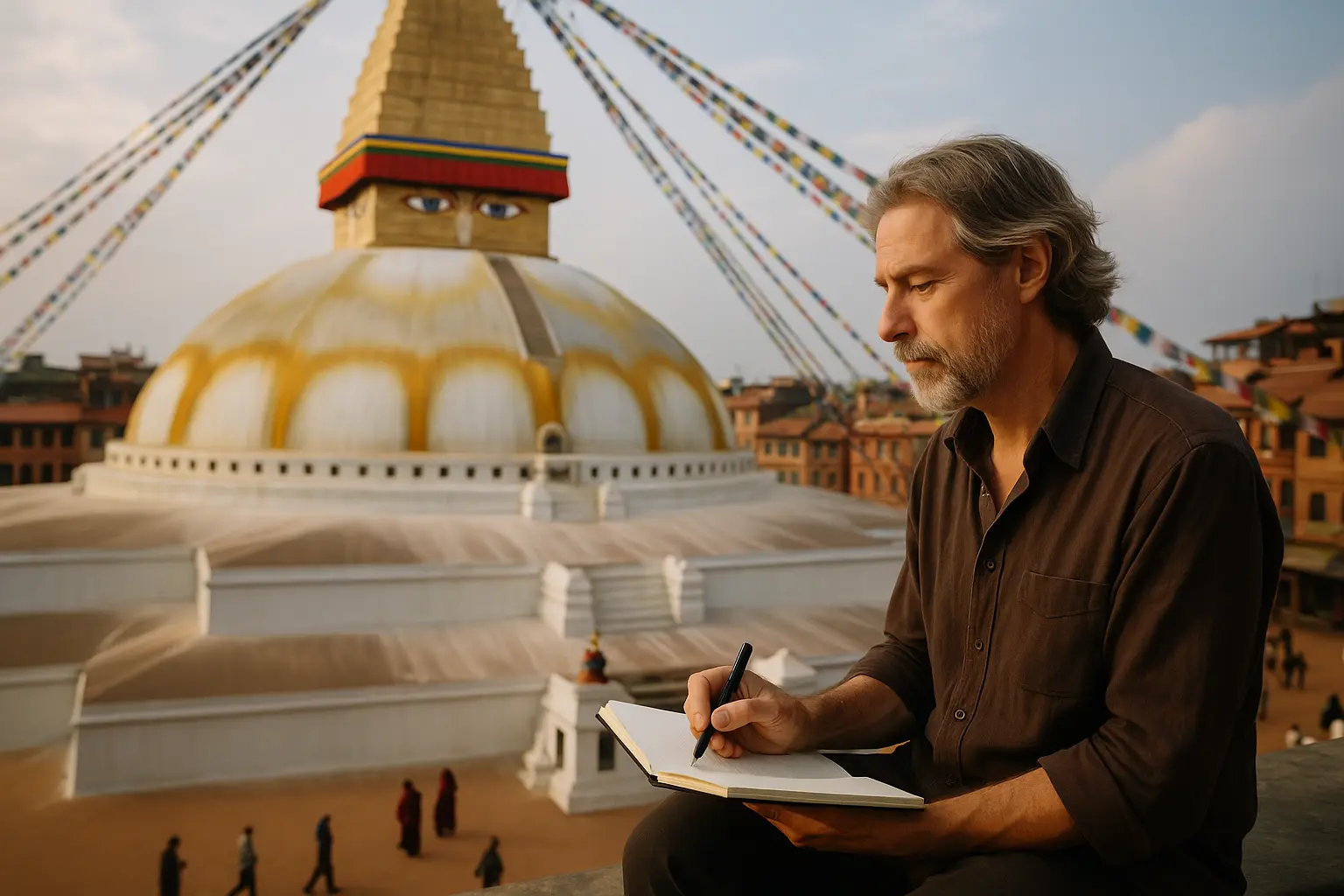
While not always directly associated with Boudha, Hirshfield’s retreat to Kathmandu in the early 2000s, documented through interviews and travel notes, sparked a wave of inward-facing poems. Visitors remember her sketching verses near stupa cafés, writing in silence as pigeons circled the dome.

Her Buddhist background and meditative style make it easy to imagine Boudhanath’s mandala-like presence shaping her metaphors.

Tsering Wangmo Dhompa (Tibet/Nepal)

Tsering, the first Tibetan female poet to be published in English, spent time in Boudha reconnecting with family, culture, and language. Her poetry often explores themes of displacement, identity, and longing.

In works like “My Rice Tastes Like the Lake”, the spiritual spaces of Boudha appear gently, almost like dream fragments, a butter lamp’s flicker, the sound of bells, the motion of devotion.

Her reflections on Tibetan diaspora are deeply resonant with the Boudha landscape, where many exiled Tibetans have built new sacred homes.

Manjushree Thapa (Nepal)

Though primarily a novelist and essayist, Thapa’s lyrical prose and occasional poetry often touch on the sacred geography of Kathmandu. She has written beautifully about ritual, place, and the quiet dignity of Buddhist tradition.

Boudhanath, as a recurring location in her essays, serves as a contemplative space, especially in moments where she describes the intersection of personal and cultural memory.

Michael Hettich (USA)

An American poet who spent a brief sabbatical time in Nepal, Hettich wrote about the “suspended quiet” of Boudhanath in several of his travel pieces and unpublished poems. One of his lines captures it simply:

“The stupa watched without blinking, as we whispered the rest of our lives.”

Though less known in literary circles connected to Nepal, his poems shared in writer retreats in the Valley held Boudha in soft reverence.

Boudha as Living Verse

Boudha does not perform for tourists. It breathes for those who sit and listen. For poets, that’s all it takes. In the slow movement of monks, the spiral walk around the dome, the thrum of chants that dissolve thought, language awakens.

Even anonymous poets, nuns with notebooks, and travelers scribbling lines into weather-worn journals find voice here. The outer kora becomes a page, each step a word.

Why Boudha Inspires Poets

It’s not just the architecture or the rituals, but the atmosphere. The sense that something ancient continues to unfold, without rush. For a poet, that’s nourishment.

Poets find in Boudha:
• Stillness that sharpens language.
• A rhythm that mirrors poetic breath.
• Symbols, like prayer flags or lamps, that become metaphors.
• A community where silence is shared, not feared.
• Moments that unfold, rather than demand to be captured.

Where to Stay for Poetic Retreats

If you’re a writer or poet planning a long stay in Boudha, being close to the stupa is a gift. Boudha Mandala Hotel, just 10 seconds from the main gate, offers quiet rooms with stupa views, perfect for journaling or reflection.

The on-site café serves local teas, and it’s not uncommon to see monks reading, writers scribbling, or someone quietly working on a poem about the morning light.

Final Reflection
You may come to Boudha with a pen, but you’ll leave with a pause. Something inside will have slowed, grown spacious. Perhaps that’s why so many poets return, or never quite leave, at least in verse.

Because Boudhanath doesn’t just inspire poetry.
It teaches you how to listen.

Where to Find Handcrafted Art and Souvenirs in Boudha (That Aren’t Tourist Traps)

Boudha Beyond the Souvenir Stalls

Most travelers arrive at Boudhanath Stupa expecting beauty. And they find it. But nestled between the prayer wheels and maroon robes is something quieter,a sense that what you take home should mean more than a souvenir.

Plastic trinkets and “Made in China” magnets line the outer circle, but if you pause, step into a side alley, or duck into a quiet monastery shop, you’ll find something else: soul. The kind of art born from devotion, not just design.

This guide is for the traveler who wants to carry something real.

Why Authentic Matters: Souvenirs with Soul

In Boudha, souvenirs are more than objects. They are carriers of lineage, memory, and presence.

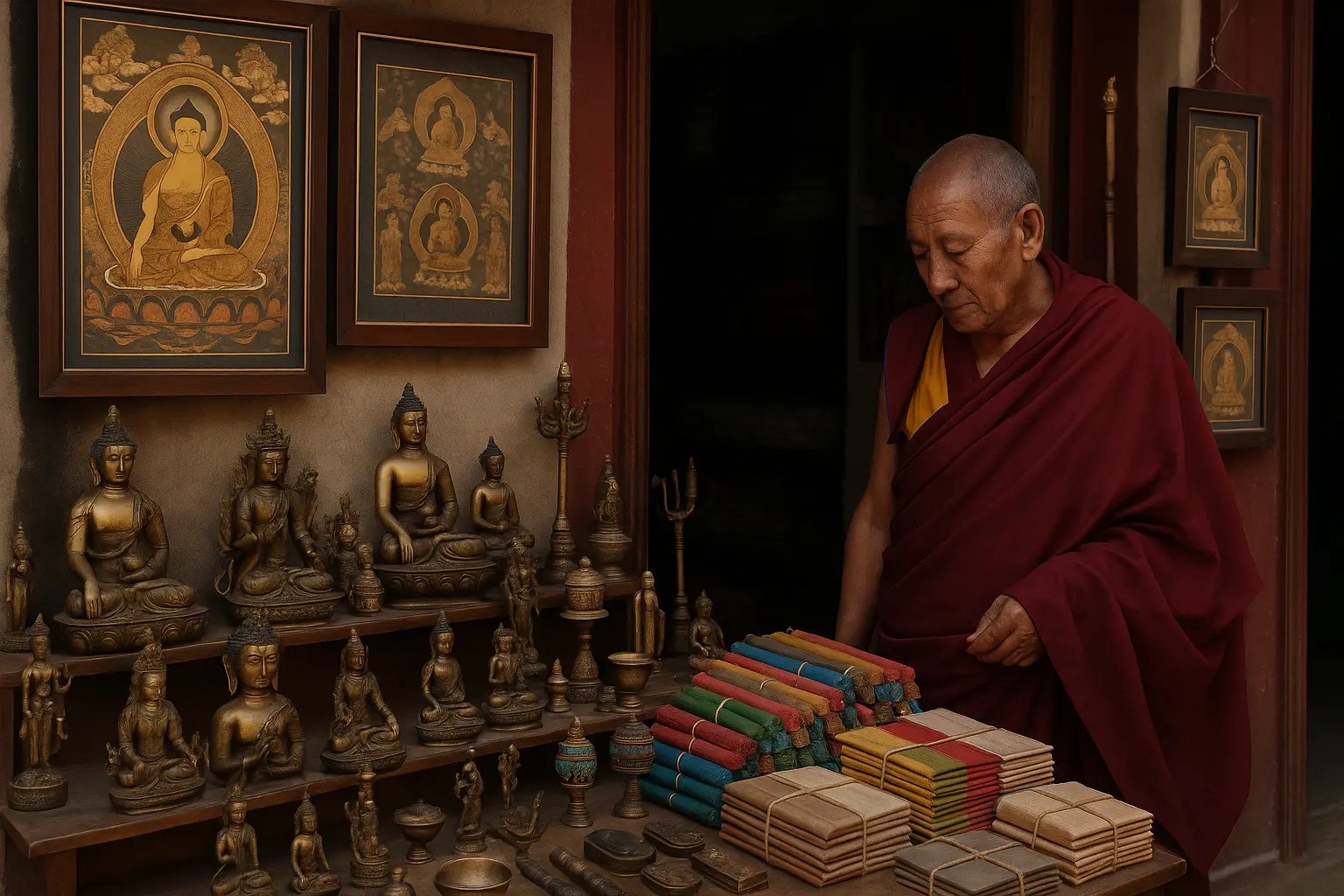
When you choose a thangka painted by a local artist or incense wrapped by monastery hands, you’re not just shopping, you’re supporting the living traditions of the Himalayas. You’re helping a young monk attend school, preserving a family art form, or sustaining a lineage of teachers through your offering.

Ethical shopping in Boudha is a quiet practice of reverence.

Boudha Café De Mandala Gift Corner (if applicable)

If you’re staying at Boudha Mandala Hotel, don’t miss the small gift nook in our in-house café. We often carry curated local items,monk-made incense, prayer flags blessed in pujas, and handmade journals from Nepali women’s cooperatives.

Perfect for mindful gifting, or simply something to remember the stillness of your stay.

The Himalayan Art Council: Sacred Art with Integrity

For truly exceptional Himalayan art, the Himalayan Art Council stands as a cultural landmark. Located near the Boudha circle, this nonprofit institution preserves and promotes Himalayan art as a living tradition.

Here you’ll find:
• Museum-quality thangkas and paubha paintings.
• Sculptures and sacred items created by master artists.
• Digital certification and provenance, protecting both artist and buyer.
• Rotating exhibitions, lectures, and artist residencies

The Council is committed to honoring spiritual integrity. When you purchase here, you’re not just supporting artists,you’re participating in a movement to safeguard Nepal’s cultural soul.

Explore certified Himalayan art with integrity at the Himalayan Art Council.

Monastery Shops: Offerings from the Devoted

Some of the most heartfelt items can be found in monastery shops:

• Ka-Nying Shedrub Ling Monastery Gift Shop
Handmade incense, practice books, blessed prayer flags, and puja items. All proceeds support the monastery’s education and retreat programs.


• Shechen Monastery Store
Books on Tibetan Buddhism, CDs of chants by Dilgo Khyentse Rinpoche’s lineage, simple thangkas, and ritual tools used in teachings and ceremonies.


Buying from these shops is a direct way to support the daily life of monks and nuns.

Local Artisan Studios in Hidden Alleys

Wander a few steps away from the stupa and you’ll discover family-run studios, some no bigger than a single room, where thangka painters, paubha artists, and woodcarvers work quietly.

Ask if the artist is present. Many are happy to talk about their craft. You may even catch a painter mid-stroke or a silversmith setting a turquoise stone.

Look especially near:
• Alleyways leading toward Shechen Monastery.
• The northeast path beyond the stupa toward Pashmina Galli.
• Small shops with hand-painted signage (a good sign it’s not mass-produced).

Tibetan Handicraft Boutiques That Care

Not all stores are traps. A few boutiques on the outer circle and Mandala Street work with fair-trade cooperatives and Tibetan refugee artisans.

Look for:
• Yak wool shawls handwoven in Mustang.
• Copper and silver jewelry made by local Tibetan smiths.
• Meditation tools like singing bowls that are actually hand-hammered


Always ask: Who made this? Where does the money go? Ethical stores will answer proudly.

What Not to Buy (and Why)

Even in a sacred space like Boudha, not every stall respects the tradition. Be mindful of:

• Cheap thangkas printed or made by factory artists with no lineage

• “Antique” items with no clear provenance

• Religious icons (like tsa-tsas or Buddha heads) being sold casually on the street

These items, especially if they’re sacred or old, may be inappropriate to purchase or display without knowing their origin. When in doubt, choose something handmade and local.

Final Reflection
The best souvenirs don’t come from a checklist. They come from a feeling.

Maybe it’s the scent of juniper incense rising from your altar at home. A thangka that reminds you of stillness. A piece of jewelry that carries the weight of mountains.

In Boudha, the sacred is everywhere, but only if you walk slowly enough to notice.

And if you’re staying at Boudha Mandala Hotel, just ask our team. We’ll point you toward artists we know, monks we trust, and shops that respect the spirit of this sacred circle.

Because in the end, what you carry home should carry the peace you felt here.

List of Artists Who Found Inspiration in Boudha (From Abroad and Nepal)


Introduction

Some places speak louder than words. They speak in colors, shadows, rituals, and rhythms. Boudhanath Stupa in Kathmandu is such a place, quiet yet compelling, vibrant yet meditative. Every dawn, artists quietly unfold sketchbooks, photographers focus lenses, and poets sharpen pencils, drawn here by something intangible yet powerful.

Boudha’s gentle morning chants, vibrant prayer flags, and ever-turning prayer wheels have inspired countless creative souls. Below, you’ll meet a diverse collection of Nepali and international artists whose work has been profoundly touched by Boudha’s sacred presence.

International Artists Inspired by Boudha

Richard Gere: Actor and Photographer

Best known for Hollywood films, Richard Gere’s deeper life is entwined with Tibetan Buddhism. A frequent visitor to Kathmandu, Gere’s photography often quietly explores daily life and spiritual devotion around Boudha. For him, the stupa represents spiritual clarity, a space to rediscover stillness.

Matthieu Ricard: Photographer and Buddhist Monk

French-born Matthieu Ricard, known globally as “the happiest man alive,” finds endless inspiration around Boudha. His photos, intimate portrayals of monastic life, pilgrims at prayer, and everyday acts of devotion, are stunning windows into the quiet beauty that thrives here.

Keanu Reeves: Capturing the Spirit in Film

During the filming of “Little Buddha,” Reeves visited Boudha multiple times, quietly absorbing the atmosphere. Though not primarily an artist, his respectful engagement with the local community brought global attention to the stupa’s tranquil presence.

Prominent Nepali Artists Drawn to Boudha

Lok Chitrakar: Master of Paubha Painting

Lok Chitrakar, an esteemed Nepali paubha painter, has long been inspired by the stupa’s spiritual symbolism. His artworks embody traditional Newari spiritual painting, blending precision with spiritual devotion. Chitrakar believes Boudha has a special energy that feeds his creativity and spirituality alike.

Uday Charan Shrestha: Capturing Inner Stillness

Shrestha, one of Nepal’s most respected contemporary painters, regularly visits Boudha to paint and reflect. His canvas often captures scenes of devotion, monks walking the kora, the play of light and shadow on prayer wheels, bringing Boudha’s spiritual aura to life through vibrant colors and textures.

Ragini Upadhyay Grela: Spiritual Symbolism

Known for her symbolic, thought-provoking work, Ragini Upadhyay Grela draws profound inspiration from the quiet yet powerful presence around Boudha. Her paintings often weave spiritual symbolism with modern interpretations, reflecting Boudha’s blend of ancient tradition and contemporary life.

Photographers Who Captured Boudha’s Essence

Kevin Bubriski: Witness of Devotion

Internationally renowned photographer Kevin Bubriski documented Nepal’s spiritual life for decades. His black-and-white photography of Boudhanath captures subtle details, a child lighting a butter lamp, elderly hands spinning a prayer wheel, offering viewers a reflective glimpse into daily rituals around the stupa.

Mani Lama: A Local Eye on Spiritual Life

Nepali photographer Mani Lama beautifully portrays everyday devotion around Boudha. His photographs offer an insider’s intimate perspective, showing moments of tenderness and authenticity that only someone deeply connected to the place could capture.

Writers and Poets Who Found Their Voice in Boudha

Manjushree Thapa: Narratives Rooted in Spirituality

Nepali author Manjushree Thapa has often described Kathmandu, particularly Boudha, as an endless source of inspiration. In her works, the stupa’s rituals and quiet spaces often appear as metaphors for deeper explorations of identity, spirituality, and belonging.

Pico Iyer: Finding Quiet in Chaos

World-famous travel writer Pico Iyer, known for exploring places of spiritual refuge, has frequently cited Boudha as a place of unique tranquility amidst Kathmandu’s bustling chaos. His writings vividly portray the stupa as a serene oasis, perfect for reflection and rejuvenation.

Why Boudha Continues to Inspire

What draws these diverse creators to Boudha is more than aesthetics; it’s an atmosphere of gentle spiritual resonance, a quiet power that nurtures creativity. Here, daily rituals blend seamlessly with creative rhythms. Art and spirituality merge naturally, without effort or pretension.

When you come to Boudha, you step into this gentle, inspiring field. Perhaps it’s the continuous motion of prayer wheels, the way light dances on colorful flags, or the deep silence that inspires such creativity. Whatever it is, artists from around the globe continue to find something profoundly meaningful here.

Staying Inspired Near Boudha Stupa

To truly tap into this creative energy, nothing beats staying near Boudhanath itself. Boudha Mandala Hotel, just seconds from the stupa, offers stupa-view rooms, a peaceful rooftop café, and quiet spaces perfect for reflection and creativity.

Whether you’re an artist, writer, photographer, or simply a traveler seeking a mindful retreat, staying here lets you experience the same daily rhythms that inspired so many before you. When you rise with the sun, walk the morning kora, and quietly watch life unfold around the stupa, you’ll understand exactly why artists keep coming back.

Final Thought: Your Own Creative Journey Begins Here

Boudha invites everyone, artist or not, to pause, breathe, and feel deeply. It’s a place where inspiration isn’t something you chase; it’s something you discover quietly within yourself.

Maybe your own journey will begin with a simple stroll, a sketchbook in hand, or a blank page waiting to be filled. Maybe you’ll find your own quiet voice in the whispering flags or spinning wheels.

After all, Boudha doesn’t just inspire art, it inspires life.

Planning your creative journey to Boudha?

Stay steps away from inspiration at Boudha Mandala Hotel, where comfort, calm, and creativity align.

Famous People Who Visited Boudha: The Sacred Draw of Kathmandu’s Spiritual Heart

Key Takeaways:

Boudhanath Stupa isn’t just sacred ground for locals; its peaceful energy and spiritual magnetism have drawn famous visitors, from globally revered spiritual leaders to Hollywood actors and renowned writers. Their journeys reflect the universal appeal of Boudha’s quiet stillness and spiritual depth.

Introduction

If you’ve ever walked the quiet morning kora around Boudhanath Stupa, you understand why people travel from around the world to experience its sacred peace. But you might not realize just how many well-known spiritual leaders, Hollywood stars, and renowned thinkers have quietly walked this same path.

Boudha doesn’t shout about its famous visitors. Instead, it quietly draws them in. Here, celebrity status fades away; the stupa sees all equally, through the compassionate eyes of the Buddha painted on its golden spire.

Let’s explore the stories behind some of the most famous people who have quietly found their way here.

His Holiness the 14th Dalai Lama: Spiritual Influence in Boudha

While the Dalai Lama himself rarely visits Nepal due to political sensitivities, his spiritual influence deeply permeates Boudhanath.

Many monasteries surrounding the stupa follow his teachings closely, and several prominent disciples have taught here regularly. The essence of compassion he embodies resonates throughout Boudhanath.

In a sense, even without frequent physical visits, the Dalai Lama’s spirit is ever-present in Boudha, making the stupa feel like an extension of his compassionate heart.

Richard Gere: Actor Turned Devotee

Hollywood star Richard Gere is known not just for his acting but for his profound dedication to Tibetan Buddhism. Gere has visited Nepal multiple times, quietly spending time around Boudhanath’s circle, engaging in meditation, and learning from prominent Tibetan teachers in the area.

He once mentioned in an interview that places like Boudha provide the grounding necessary for true spiritual reflection. For Gere, the stupa isn’t a tourist attraction; it’s a refuge of presence.

Keanu Reeves and “Little Buddha”: The Hollywood Connection

Many visitors to Kathmandu know about the film Little Buddha, directed by Bernardo Bertolucci, starring Keanu Reeves as Siddhartha. While filming in Nepal, Reeves reportedly spent quiet moments near Boudhanath, drawn by its peaceful aura.

Though Reeves hasn’t spoken extensively about his personal spiritual beliefs, locals remember his visit fondly. His respectful demeanor and genuine interest in Nepal’s spiritual heritage left a positive impression around Boudha.

Renowned Tibetan Buddhist Masters: Chökyi Nyima and Tsoknyi Rinpoche

While perhaps not household names everywhere, teachers like Chökyi Nyima Rinpoche and Tsoknyi Rinpoche are revered globally among spiritual seekers. Their frequent teachings and meditation retreats at monasteries surrounding Boudha attract international artists, writers, and practitioners who seek depth, wisdom, and creative inspiration.

When you walk around Boudha, you might be sitting next to students who have traveled thousands of miles simply to learn from these masters. The quiet presence of these spiritual leaders makes Boudha a true global spiritual destination.

Spiritual Writers and Thinkers: Matthieu Ricard, Robert Thurman, Lama Surya Das

World-renowned Buddhist writer Matthieu Ricard has often spoken of Boudha as a place of profound inner silence, conducive to meditation and compassion. Similarly, Tibetan scholar Robert Thurman and popular author Lama Surya Das have visited and referenced the stupa’s sacred environment in their teachings and writings.

These thinkers have helped popularize Buddhism’s deep stillness and its capacity for spiritual renewal, making it a key pilgrimage point for intellectual and spiritual exploration.

What Brings Them to Boudha?

You might wonder: Why do these accomplished, globally recognized individuals choose Boudhanath? The answer is simple yet profound; it offers something rare in today’s noisy world: true silence, meaningful connection, and spiritual clarity.

Artists come for creative renewal. Actors for authenticity beyond the spotlight. Writers for uninterrupted thought. And monks for genuine spiritual practice.

Here, everyone, famous or not, arrives seeking something deeper.

Staying Near the Stupa: How You Can Walk in Their Footsteps

If you’re drawn to Boudha’s spiritual and creative energy, staying close makes all the difference. Boudha Mandala Hotel is not only steps away from the stupa, it’s perfectly aligned with Boudha’s atmosphere of quiet introspection.

From its rooftop, you can watch the same sunrise that inspired artists and spiritual leaders before you. In its peaceful rooms, you find rest that deepens your practice. And as you walk the early morning kora, you’ll join footsteps left by seekers, saints, and even stars.

Conclusion

Fame might bring people here, but it doesn’t matter much once they arrive. Boudha sees all visitors the same,as pilgrims, seekers, or travelers finding their own quiet path. Whether it’s the Dalai Lama’s teachings resonating in monasteries, Gere’s quiet reverence, or writers’ poetic reflections, the truth is clear:

Boudha isn’t famous because of who visits. It’s beloved because of what it inspires.

Come see for yourself why people from all walks of life, known or unknown, journey here. Perhaps you’ll discover your own quiet inspiration waiting silently beneath prayer flags, among spinning wheels, or in the eyes of strangers circling slowly around the stupa.

Planning your visit to Boudha?

Stay just steps from the sacred stupa at Boudha Mandala Hotel. With peaceful rooms, stupa views, and warm local hospitality, you can experience the same tranquility that’s drawn artists, monks, and famous travelers from across the world.

Why Artists, Poets, and Monks Come to Boudha for Inspiration

Where Silence Sparks Creation

There are places that sing to the soul, and then there are places that hum. Boudhanath is the latter.

If you’ve ever stood quietly before the stupa as the sun rises, you’ve felt it, that gentle vibration that settles the mind and stirs something deeper. The scent of juniper, the soft murmur of chants, the slow turning of prayer wheels, it’s not noise, it’s rhythm. And in that rhythm, many have found their voice.

Over the years, Boudha has become more than a pilgrimage site. It’s a quiet refuge for creators, a sanctuary where inspiration arrives not through intensity, but through presence.

The Spiritual Atmosphere of Boudhanath

Boudhanath Stupa isn’t just a monument. It’s a living, breathing mandala. Every day from before sunrise, monks, nuns, elders, and pilgrims begin their kora, walking clockwise around the stupa with prayer beads in hand.

There is a field of stillness here that seems to expand the moment you arrive. You slow down, not because you’re told to, but because the energy invites you to.

The chants from nearby monasteries create a low, continuous current in the air. Prayer flags snap gently in the wind. Pigeons take flight and land without panic. Even the light here feels like it filters down through layers of prayer.

It’s no wonder artists find themselves reaching for their sketchbooks, poets for their notebooks, and monks for their bells.

Why Artists Come to Boudha

Walk around the stupa mid-morning and you’ll see it: someone sitting cross-legged near Tamang Gompa sketching the dome, a painter under a rooftop umbrella blending oils into a golden sky, a photographer waiting quietly for the perfect light on a butter lamp altar.

It’s not just the visual beauty. It’s the way Boudha makes space for contemplation. The textures of carved wood, the movement of robes, the interplay of shadow and incense, these things speak in a language artists understand.

One of the best places to explore this artistic spirit is the Himalayan Art Council. Here, traditional thangka painting, paubha scrolls, and contemporary Himalayan art come together. It’s a platform that honors artist creativity as a living tradition, not a relic of the past.

Explore the Himalayan Art Council

Whether you’re an artist looking to study form or a traveler simply seeking soulful visual beauty, this platform opens a rare doorway into both ancient craftsmanship and modern expression.

A Home for Poets and Writers

The rhythm of Boudha is perfect for writing. The turning of wheels, the chanting, the soft footsteps, it all becomes a kind of metronome for thought.

Many writers come here to finish manuscripts, begin memoirs, or simply keep a quiet journal of their inner journey. There’s no pressure to produce, just a subtle invitation to pay attention. That’s where poetry begins.

Rooftop cafés like Garden Kitchen or Boudha Café de Mandala (the in-house café at Boudha Mandala Hotel) are favorite spots for early-morning writing. With a pot of Tibetan tea and the stupa glowing in front of you, words tend to arrive without being forced.

Some say Boudha gives language back its silence. The kind of silence where meaning grows.

Monks and the Art of Mindful Living

Creativity doesn’t always take the form of a brush or pen. In Boudha, some of the most profound artists are the monks.

Watch a monk arrange butter lamps, each flame lit with care. Or a nun sweeping the courtyard, her movement steady and unrushed. Or the precise symmetry of a thangka painter dipping a brush into pigment ground from stone.

In these acts, there is rhythm. There is precision. There is presence. And that is the essence of art.

The architecture itself is a canvas: vivid murals, carved dragons above doorways, multicolored banners dancing in the wind. Everywhere you look, you see the imprint of spiritual creativity.

Staying in Boudha as a Creative

To truly enter the flow of this place, you need to stay nearby. When you can walk out of your room and be at the stupa in ten seconds, you stop chasing moments,you live inside them.

Boudha Mandala Hotel offers just that. Stupa-view balconies, a calm rooftop for morning writing, and a peaceful café below where monks and travelers alike gather. For long-stay artists or digital nomads working on slow creative projects, the hotel feels like a retreat center without the formality.

The staff understands pilgrimage. They understand silence. And they’ll help you find incense, art supplies, or even the nearest monastery workshop, without hesitation.

Final Reflection

You won’t find fast Wi-Fi on every rooftop here, and that’s the point. Boudha doesn’t invite distraction. It invites you to notice.
The way a monk walks. The flutter of a robe. The color of dusk. The echo of a bell long after it’s been rung.

This is where creation begins, not from pressure, but from quiet.
So if you’re a poet in search of stillness, a painter waiting for color to return, or simply someone who’s forgotten how to listen to silence, come to Boudha.

Walk slowly. Look closely. The inspiration is already here.

If you’re seeking a peaceful stay just steps from the stupa, Boudha Mandala Hotel offers long-stay options, a rooftop café, and a warm welcome rooted in the spirit of presence.

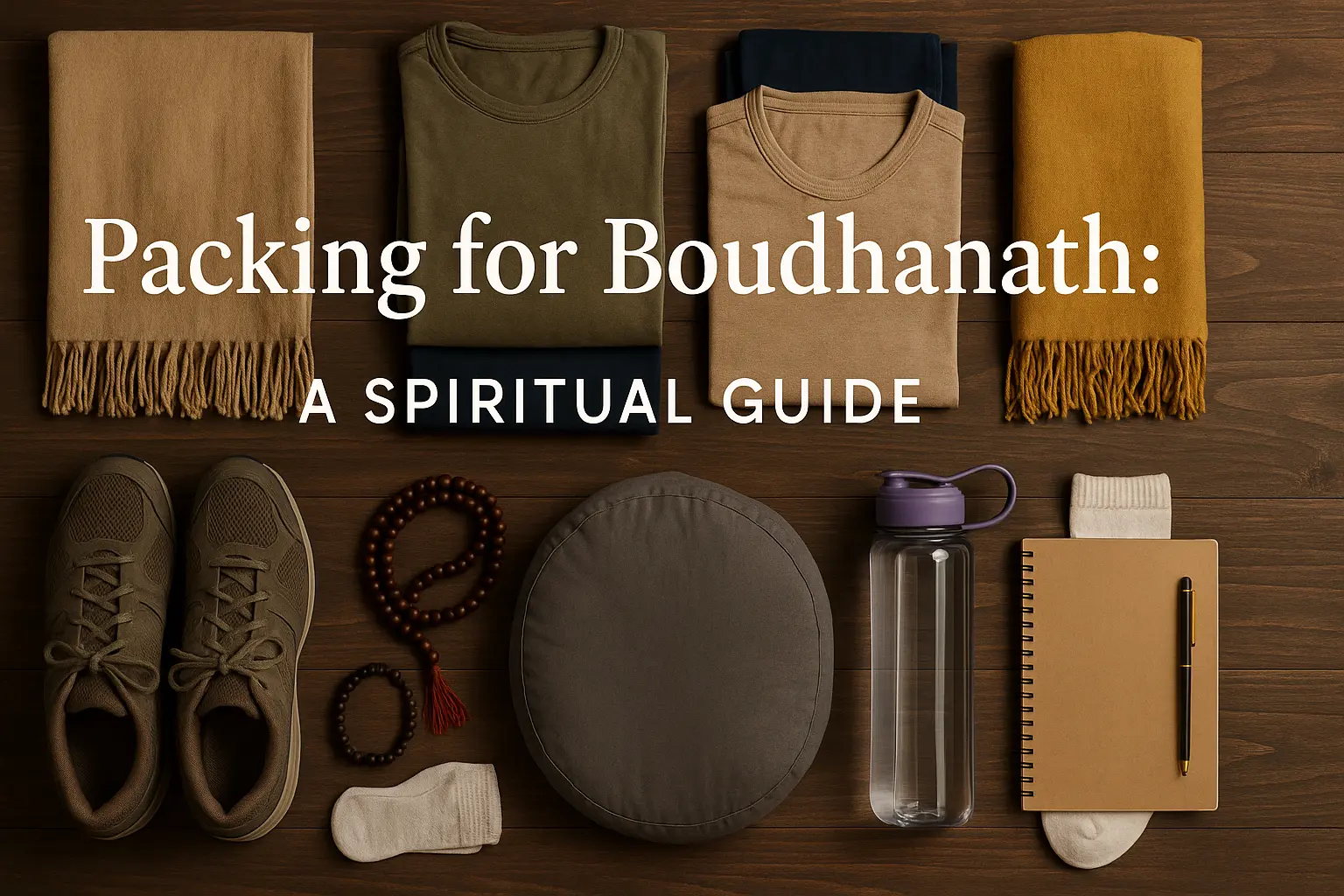
Packing Guide for Your Spiritual Trip to Boudhanath


Key Takeaways

Packing for a spiritual trip to Boudhanath requires thoughtfulness and simplicity. Bring modest clothing that covers shoulders and knees, comfortable walking shoes for circumambulating the stupa, a scarf or shawl for temples, a journal, a meditation cushion (if needed), and weather-appropriate layers. Avoid flashy items, revealing clothes, or disruptive electronics. This guide helps you pack with intention and respect, so your journey begins in alignment with the spirit of Boudha.

Introduction

Packing for Boudhanath isn’t just about fitting things into a suitcase, it’s about preparing your mind and heart. Whether you’re coming for a retreat, a silent meditation, or simply to walk the sacred kora path around the stupa, how you pack will shape the tone of your experience.

Boudha is not just a destination, it’s a spiritual presence. Every scarf, every step, every offering reflects a deeper intention. So let’s begin where every pilgrimage begins, with awareness.

Clothing Essentials
In Boudhanath, the atmosphere is gentle, sacred, and quiet. Your clothing should reflect that.

• Light, breathable long pants or long skirts
• Shirts with sleeves (avoid sleeveless tops)
• Scarf or shawl for temple visits or cool mornings
• Layers for chilly mornings and warm days
• Avoid shorts, tight clothes, and bold graphics

Simple, clean clothing shows respect for the space, and invites calm into your own body.

Footwear for Sacred Ground

You’ll be walking a lot in Boudha, especially along the smooth stone paths of the kora.

• Comfortable walking shoes or sandals
• Easy-to-remove footwear (you’ll be taking them off often)
• Lightweight socks if entering temples barefoot

Heavy boots aren’t needed unless you plan to trek beyond the valley. Simplicity is key.

Meditation and Retreat Items

Many people come to Boudha for inner stillness. If that’s your path, pack with your practice in mind.

• Travel meditation cushion or seat pad
• Shawl or blanket for early morning sessions
• Mala beads (if you use them)
• Journal and pen for reflections
• Eye mask or earplugs if staying near the stupa (early mornings can be lively)

You don’t need much, just the tools that support your stillness.

Health, Safety and Self-Care

Boudha is generally very safe, but having a few basics can make your stay smoother.

• Refillable water bottle
• Natural sunscreen and lip balm
• Basic first aid (plasters, antiseptic, rehydration salts)
• Insect repellent (especially in warmer months)
• Any prescription medications

You’ll find pharmacies and clinics nearby, but it’s wise to bring essentials.

Digital and Practical Gear (Minimal and Mindful)

Your tech should support your peace, not distract from it.

• Unlocked smartphone with Nepali SIM (optional but helpful)
• Portable charger or power bank
• Flashlight or small headlamp (power outages still happen)
• Universal adapter for charging devices

Leave heavy gadgets behind. If possible, even try a digital detox for a day or two.

Items to Avoid

Boudhanath is a sacred space, and many temples are active places of practice.

• Loud tech or Bluetooth speakers
• Flashy jewelry or luxury accessories
• Revealing or tight clothing
• Drones or professional photography gear (unless approved)

When in doubt, ask yourself, “Does this support my spiritual intention?”

Seasonal Considerations

Kathmandu’s weather varies; here’s how to adapt:

Winter (Dec–Feb):
• Thermal base layers
• Wool socks and warm shawl
• Down jacket or puffer

Monsoon (Jun–Aug):
• Rain jacket or poncho
• Waterproof sandals or slip-on shoes
• Travel umbrella

Spring and Fall (Mar–May, Sept–Nov):
• Light sweaters
• Layerable tops
• Cotton pants and scarf

Packing with Purpose: A Spiritual Mindset

Imagine walking the kora at dawn, your backpack light, your steps steady. You’ve brought only what you need, and nothing more. In that quiet simplicity, something shifts.

Packing this way isn’t just practical, it’s spiritual. You make space, inside and out.

Quote:
“Take only what you need. Leave space for the sacred.”

Final Tips

Staying close to the stupa can simplify everything. Boudha Mandala Hotel offers:

• Safe space to store bags or excess luggage
• Peaceful rooms just 10 seconds from the kora path
• Helpful local staff who understand your spiritual needs

Forgot something? You’ll find local shops selling shawls, malas, incense, and travel essentials all around the circle.

When you pack lightly and mindfully, your whole journey feels more sacred.