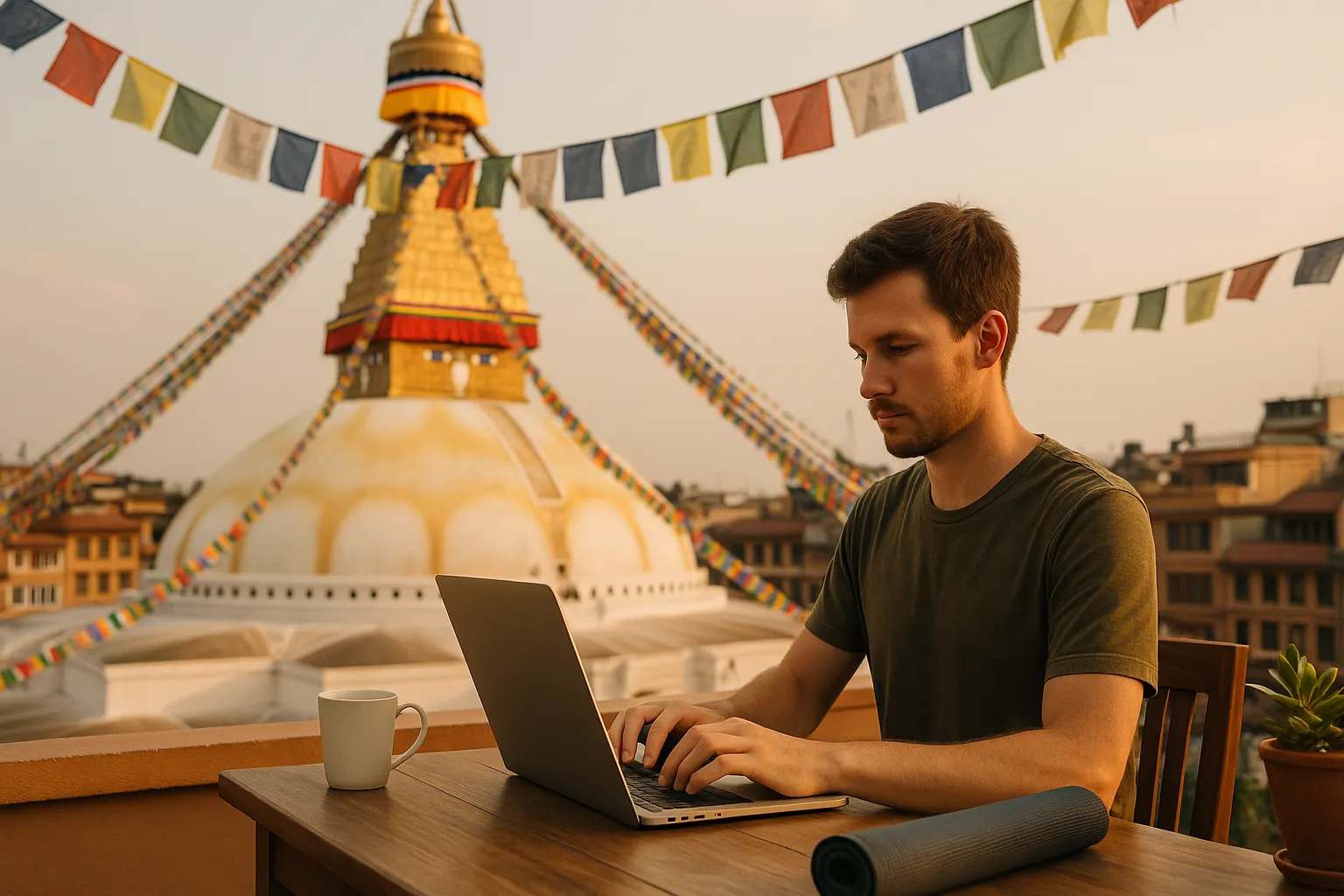
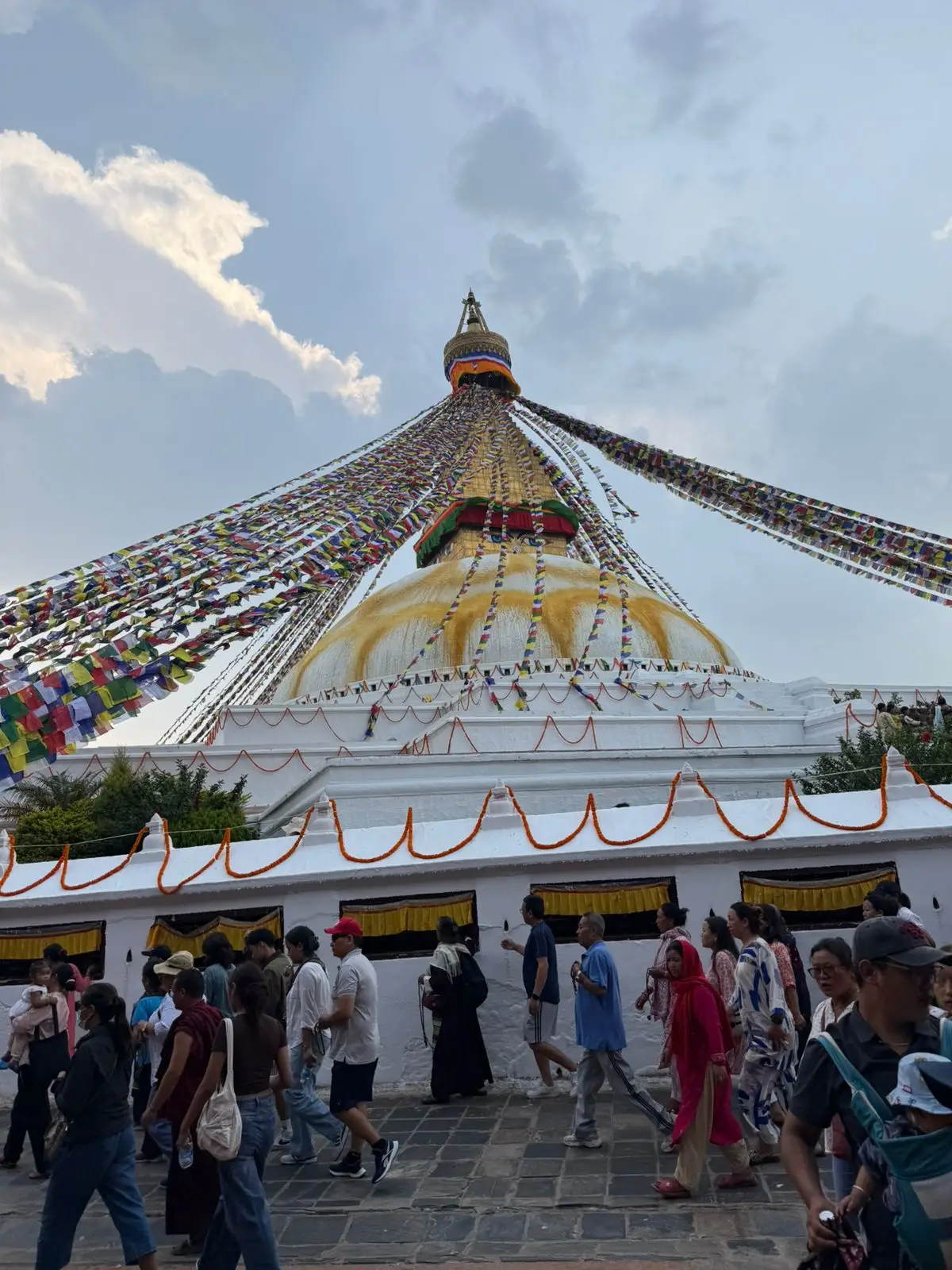
Every morning and evening, the path around Boudhanath Stupa in Kathmandu comes alive with the gentle shuffle of footsteps, the soft hum of mantras, and the rhythmic spin of prayer wheels.
Locals, monks, pilgrims, and spiritual travelers walk clockwise around the stupa in a centuries-old ritual known as Kora. But why do people circle the Boudhanath Stupa, and what does it mean and what is it’s significance?
Kora is a meditation, devotion, purification, and connection. Here’s why this practice holds a deep significance in the heart of Tibetan Buddhism and the lives of those who come here.
What Is Kora? Understanding the Ritual of Circumambulation
Kora (also spelled “korra”) is the act of walking clockwise around a Buddhist sacred site. In Tibetan Buddhism, it’s a powerful form of moving meditation that channels focus, reverence, and spiritual merit. At Boudhanath, kora happens daily around one of the most sacred stupas outside of Tibet.
Pilgrims often recite the mantra “Om Mani Padme Hum” as they walk, some spinning prayer wheels embedded into the stupa’s base. Each step is a prayer, each lap a small act of transformation.
Accumulating Merit & Purifying Karma
One of the main reasons people circle the Boudhanath Stupa is to accumulate merit and purify past karma. In Buddhism, merit is the positive spiritual energy generated through good deeds, and kora is seen as one of the most effective ways to cultivate it.
Boudhanath is lined with 147 prayer wheels. Each wheel contains scrolls inscribed with mantras, spinning one is believed to have the same effect as reciting the mantra aloud thousands of times. One full lap around the stupa is said to generate the equivalent of over 1.6 million prayers, amplifying one’s karmic benefit.
In a world full of distractions, this simple act becomes a path to inner clarity.
Meditation in Motion
Kora also serves as a deeply grounding meditation practice. Instead of sitting still, practitioners move mindfully around the stupa, synchronizing breath, chant and movement.
This ritual quiets mental chatter and cultivates present-moment awareness. You might hear murmured chants of “Om Mani Padme Hum,” feel the cool brass of the wheels, or watch monks robed in maroon robes walk slowly, step by sacred step.
Even for non -buddhists, the experience offers a rare stillness. Many travelers describe a sense of deep calm, like being inside a living prayer.
Respect and Devotion to the Buddha
Circling the stupa is devotional. In Buddhist tradition, walking clockwise around a sacred object is called pradakshina, a practice that symbolizes honoring the enlightened mind of the Buddha.
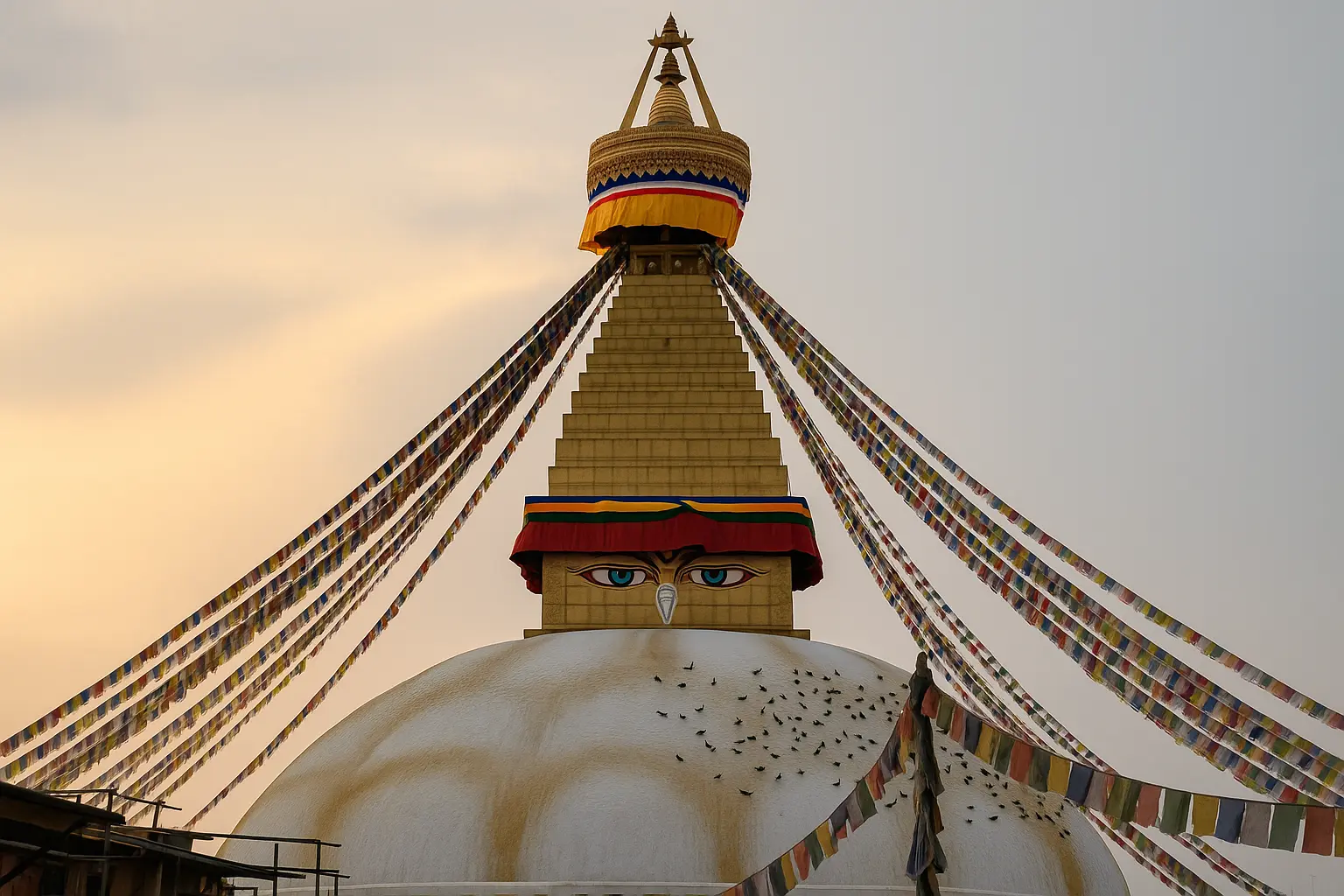
Boudhanath itself represents different aspects of Buddhist cosmology: the dome symbolizes the Buddha’s enlightened consciousness, the all-seeing eyes signify omnipresent compassion, and the spire connects heaven and earth.
By walking around it, pilgrims offer their respect, devotion, and aspirations for awakening.
Feeling the Energy of a Sacred Space
Boudhanath is a living and breathing sacred space. Designated a UNESCO World Heritage Site in 1979, the stupa is surrounded by more than 50 Tibetan monasteries.
Many describe feeling an unexplainable energy in the courtyard: a magnetic pull toward stillness, reflection, or even tears. It’s believed that this spot lies on a powerful energy line, making it especially potent for spiritual practice.
Community, Resilience & Cultural Continuity
Kora also connects people to each other and to their heritage. Locals gather here daily: elders with malas, young monks in training, Tibetans in traditional dress, and curious visitors.
After the 2015 earthquake, when the stupa was partially damaged, the community came together to restore it. And with that, the daily practice of kora continued uninterrupted, an act of resilience and unity in motion.
Joining the Kora: What to Know as a Visitor
You’re welcome to join.
Just walk slowly, clockwise, and respectfully. Refrain from loud conversations, dress modestly, and try spinning the prayer wheels with intention.
Best times to go?
Early morning (around 6–7 am) or at dusk, when butter lamps flicker and the stupa glows gold. Whether you walk one lap or many, the experience can be deeply grounding.
Final Thought
So why do people circle the Boudhanath Stupa?
Because it brings them closer to peace, to presence, to the Buddha, and to a spiritual community that transcends borders.
If you’re looking for a peaceful hotel just steps from the stupa, Boudha Mandala Hotel offers stupa-view rooms and long-stay options. You’ll be close enough to hear the morning chants and join the kora yourself.