List of Artists Who Found Inspiration in Boudha (From Abroad and Nepal)


Introduction

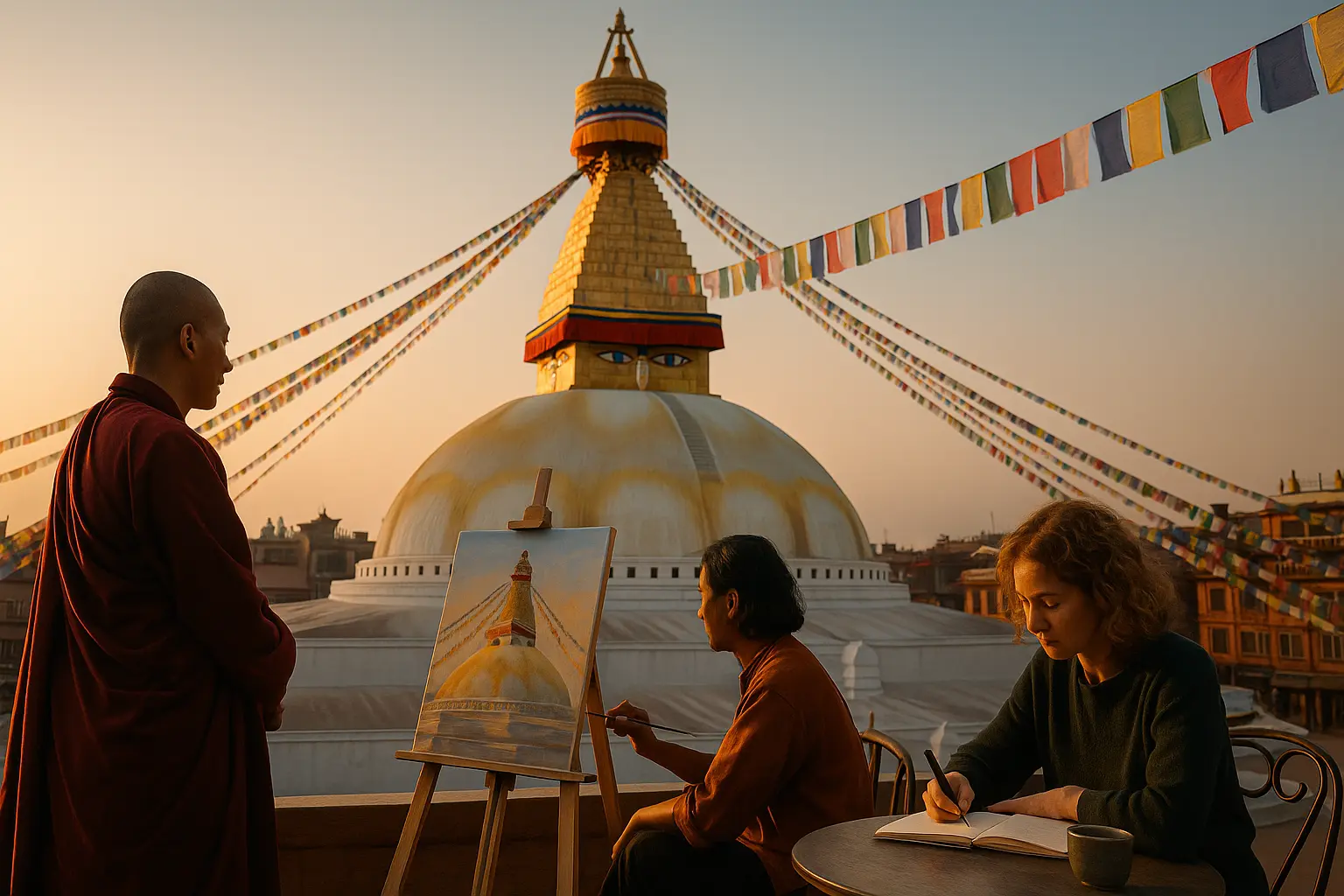
Some places speak louder than words. They speak in colors, shadows, rituals, and rhythms. Boudhanath Stupa in Kathmandu is such a place, quiet yet compelling, vibrant yet meditative. Every dawn, artists quietly unfold sketchbooks, photographers focus lenses, and poets sharpen pencils, drawn here by something intangible yet powerful.

Boudha’s gentle morning chants, vibrant prayer flags, and ever-turning prayer wheels have inspired countless creative souls. Below, you’ll meet a diverse collection of Nepali and international artists whose work has been profoundly touched by Boudha’s sacred presence.

International Artists Inspired by Boudha

Richard Gere: Actor and Photographer

Best known for Hollywood films, Richard Gere’s deeper life is entwined with Tibetan Buddhism. A frequent visitor to Kathmandu, Gere’s photography often quietly explores daily life and spiritual devotion around Boudha. For him, the stupa represents spiritual clarity, a space to rediscover stillness.

Matthieu Ricard: Photographer and Buddhist Monk

French-born Matthieu Ricard, known globally as “the happiest man alive,” finds endless inspiration around Boudha. His photos, intimate portrayals of monastic life, pilgrims at prayer, and everyday acts of devotion, are stunning windows into the quiet beauty that thrives here.

Keanu Reeves: Capturing the Spirit in Film

During the filming of “Little Buddha,” Reeves visited Boudha multiple times, quietly absorbing the atmosphere. Though not primarily an artist, his respectful engagement with the local community brought global attention to the stupa’s tranquil presence.

Prominent Nepali Artists Drawn to Boudha

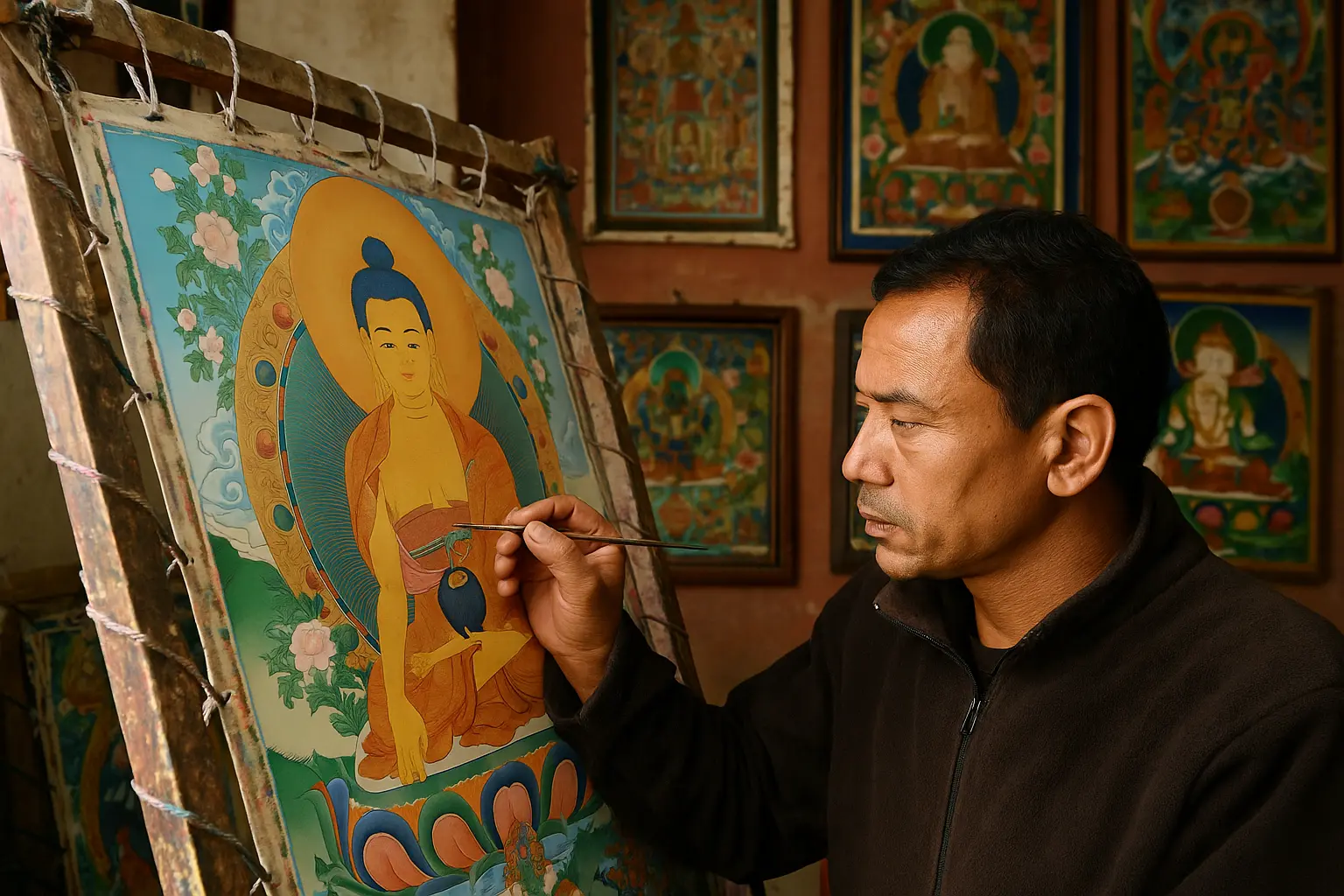
Lok Chitrakar: Master of Paubha Painting

Lok Chitrakar, an esteemed Nepali paubha painter, has long been inspired by the stupa’s spiritual symbolism. His artworks embody traditional Newari spiritual painting, blending precision with spiritual devotion. Chitrakar believes Boudha has a special energy that feeds his creativity and spirituality alike.

Uday Charan Shrestha: Capturing Inner Stillness

Shrestha, one of Nepal’s most respected contemporary painters, regularly visits Boudha to paint and reflect. His canvas often captures scenes of devotion, monks walking the kora, the play of light and shadow on prayer wheels, bringing Boudha’s spiritual aura to life through vibrant colors and textures.

Ragini Upadhyay Grela: Spiritual Symbolism

Known for her symbolic, thought-provoking work, Ragini Upadhyay Grela draws profound inspiration from the quiet yet powerful presence around Boudha. Her paintings often weave spiritual symbolism with modern interpretations, reflecting Boudha’s blend of ancient tradition and contemporary life.

Photographers Who Captured Boudha’s Essence

Kevin Bubriski: Witness of Devotion

Internationally renowned photographer Kevin Bubriski documented Nepal’s spiritual life for decades. His black-and-white photography of Boudhanath captures subtle details, a child lighting a butter lamp, elderly hands spinning a prayer wheel, offering viewers a reflective glimpse into daily rituals around the stupa.

Mani Lama: A Local Eye on Spiritual Life

Nepali photographer Mani Lama beautifully portrays everyday devotion around Boudha. His photographs offer an insider’s intimate perspective, showing moments of tenderness and authenticity that only someone deeply connected to the place could capture.

Writers and Poets Who Found Their Voice in Boudha

Manjushree Thapa: Narratives Rooted in Spirituality

Nepali author Manjushree Thapa has often described Kathmandu, particularly Boudha, as an endless source of inspiration. In her works, the stupa’s rituals and quiet spaces often appear as metaphors for deeper explorations of identity, spirituality, and belonging.

Pico Iyer: Finding Quiet in Chaos

World-famous travel writer Pico Iyer, known for exploring places of spiritual refuge, has frequently cited Boudha as a place of unique tranquility amidst Kathmandu’s bustling chaos. His writings vividly portray the stupa as a serene oasis, perfect for reflection and rejuvenation.

Why Boudha Continues to Inspire

What draws these diverse creators to Boudha is more than aesthetics; it’s an atmosphere of gentle spiritual resonance, a quiet power that nurtures creativity. Here, daily rituals blend seamlessly with creative rhythms. Art and spirituality merge naturally, without effort or pretension.

When you come to Boudha, you step into this gentle, inspiring field. Perhaps it’s the continuous motion of prayer wheels, the way light dances on colorful flags, or the deep silence that inspires such creativity. Whatever it is, artists from around the globe continue to find something profoundly meaningful here.

Staying Inspired Near Boudha Stupa

To truly tap into this creative energy, nothing beats staying near Boudhanath itself. Boudha Mandala Hotel, just seconds from the stupa, offers stupa-view rooms, a peaceful rooftop café, and quiet spaces perfect for reflection and creativity.

Whether you’re an artist, writer, photographer, or simply a traveler seeking a mindful retreat, staying here lets you experience the same daily rhythms that inspired so many before you. When you rise with the sun, walk the morning kora, and quietly watch life unfold around the stupa, you’ll understand exactly why artists keep coming back.

Final Thought: Your Own Creative Journey Begins Here

Boudha invites everyone, artist or not, to pause, breathe, and feel deeply. It’s a place where inspiration isn’t something you chase; it’s something you discover quietly within yourself.

Maybe your own journey will begin with a simple stroll, a sketchbook in hand, or a blank page waiting to be filled. Maybe you’ll find your own quiet voice in the whispering flags or spinning wheels.

After all, Boudha doesn’t just inspire art, it inspires life.

Planning your creative journey to Boudha?

Stay steps away from inspiration at Boudha Mandala Hotel, where comfort, calm, and creativity align.
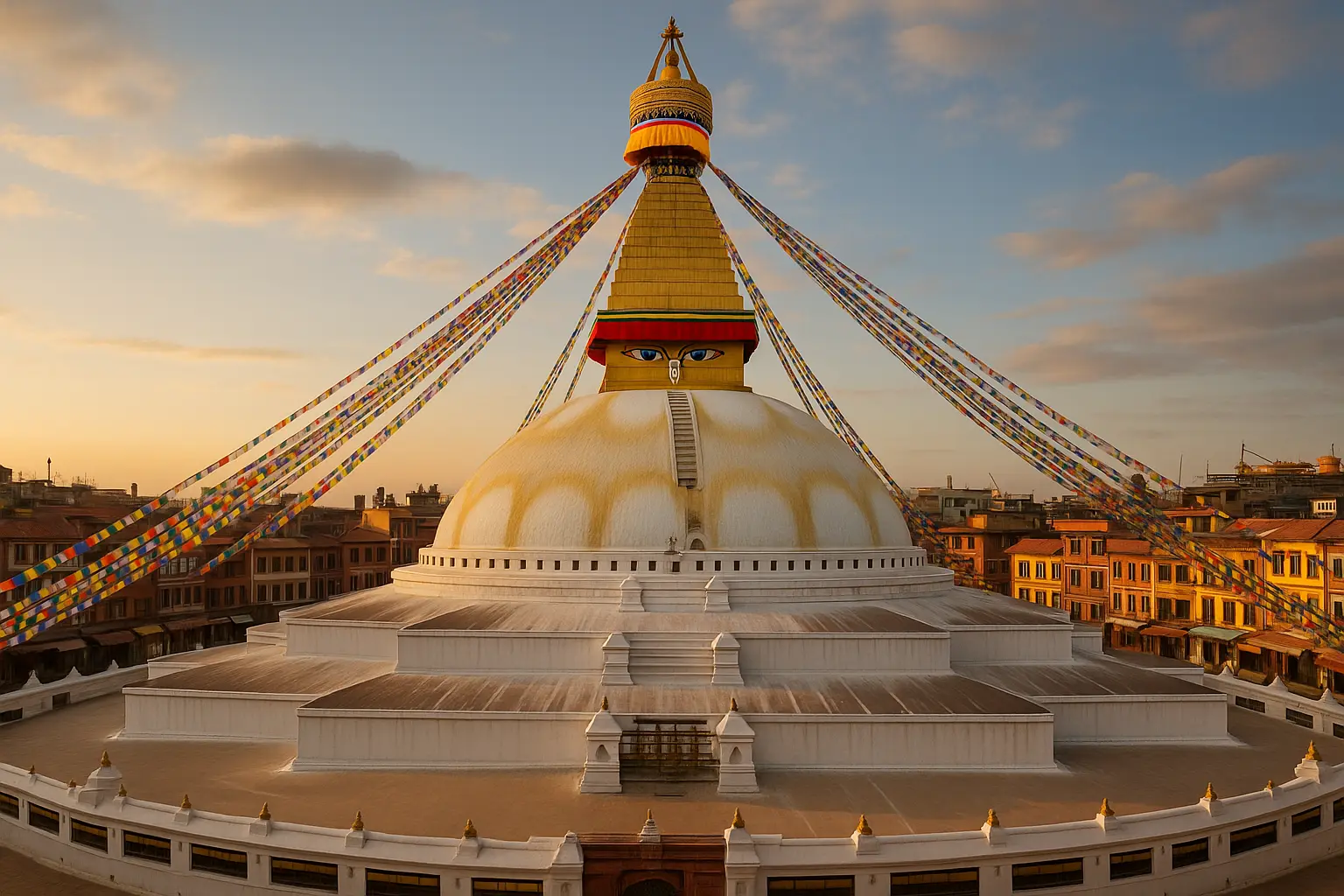
Famous People Who Visited Boudha: The Sacred Draw of Kathmandu’s Spiritual Heart

Key Takeaways:

Boudhanath Stupa isn’t just sacred ground for locals; its peaceful energy and spiritual magnetism have drawn famous visitors, from globally revered spiritual leaders to Hollywood actors and renowned writers. Their journeys reflect the universal appeal of Boudha’s quiet stillness and spiritual depth.

Introduction

If you’ve ever walked the quiet morning kora around Boudhanath Stupa, you understand why people travel from around the world to experience its sacred peace. But you might not realize just how many well-known spiritual leaders, Hollywood stars, and renowned thinkers have quietly walked this same path.

Boudha doesn’t shout about its famous visitors. Instead, it quietly draws them in. Here, celebrity status fades away; the stupa sees all equally, through the compassionate eyes of the Buddha painted on its golden spire.

Let’s explore the stories behind some of the most famous people who have quietly found their way here.

His Holiness the 14th Dalai Lama: Spiritual Influence in Boudha

While the Dalai Lama himself rarely visits Nepal due to political sensitivities, his spiritual influence deeply permeates Boudhanath.

Many monasteries surrounding the stupa follow his teachings closely, and several prominent disciples have taught here regularly. The essence of compassion he embodies resonates throughout Boudhanath.

In a sense, even without frequent physical visits, the Dalai Lama’s spirit is ever-present in Boudha, making the stupa feel like an extension of his compassionate heart.

Richard Gere: Actor Turned Devotee

Hollywood star Richard Gere is known not just for his acting but for his profound dedication to Tibetan Buddhism. Gere has visited Nepal multiple times, quietly spending time around Boudhanath’s circle, engaging in meditation, and learning from prominent Tibetan teachers in the area.

He once mentioned in an interview that places like Boudha provide the grounding necessary for true spiritual reflection. For Gere, the stupa isn’t a tourist attraction; it’s a refuge of presence.

Keanu Reeves and “Little Buddha”: The Hollywood Connection

Many visitors to Kathmandu know about the film Little Buddha, directed by Bernardo Bertolucci, starring Keanu Reeves as Siddhartha. While filming in Nepal, Reeves reportedly spent quiet moments near Boudhanath, drawn by its peaceful aura.

Though Reeves hasn’t spoken extensively about his personal spiritual beliefs, locals remember his visit fondly. His respectful demeanor and genuine interest in Nepal’s spiritual heritage left a positive impression around Boudha.

Renowned Tibetan Buddhist Masters: Chökyi Nyima and Tsoknyi Rinpoche

While perhaps not household names everywhere, teachers like Chökyi Nyima Rinpoche and Tsoknyi Rinpoche are revered globally among spiritual seekers. Their frequent teachings and meditation retreats at monasteries surrounding Boudha attract international artists, writers, and practitioners who seek depth, wisdom, and creative inspiration.

When you walk around Boudha, you might be sitting next to students who have traveled thousands of miles simply to learn from these masters. The quiet presence of these spiritual leaders makes Boudha a true global spiritual destination.

Spiritual Writers and Thinkers: Matthieu Ricard, Robert Thurman, Lama Surya Das

World-renowned Buddhist writer Matthieu Ricard has often spoken of Boudha as a place of profound inner silence, conducive to meditation and compassion. Similarly, Tibetan scholar Robert Thurman and popular author Lama Surya Das have visited and referenced the stupa’s sacred environment in their teachings and writings.

These thinkers have helped popularize Buddhism’s deep stillness and its capacity for spiritual renewal, making it a key pilgrimage point for intellectual and spiritual exploration.

What Brings Them to Boudha?

You might wonder: Why do these accomplished, globally recognized individuals choose Boudhanath? The answer is simple yet profound; it offers something rare in today’s noisy world: true silence, meaningful connection, and spiritual clarity.

Artists come for creative renewal. Actors for authenticity beyond the spotlight. Writers for uninterrupted thought. And monks for genuine spiritual practice.

Here, everyone, famous or not, arrives seeking something deeper.

Staying Near the Stupa: How You Can Walk in Their Footsteps

If you’re drawn to Boudha’s spiritual and creative energy, staying close makes all the difference. Boudha Mandala Hotel is not only steps away from the stupa, it’s perfectly aligned with Boudha’s atmosphere of quiet introspection.

From its rooftop, you can watch the same sunrise that inspired artists and spiritual leaders before you. In its peaceful rooms, you find rest that deepens your practice. And as you walk the early morning kora, you’ll join footsteps left by seekers, saints, and even stars.

Conclusion

Fame might bring people here, but it doesn’t matter much once they arrive. Boudha sees all visitors the same,as pilgrims, seekers, or travelers finding their own quiet path. Whether it’s the Dalai Lama’s teachings resonating in monasteries, Gere’s quiet reverence, or writers’ poetic reflections, the truth is clear:

Boudha isn’t famous because of who visits. It’s beloved because of what it inspires.

Come see for yourself why people from all walks of life, known or unknown, journey here. Perhaps you’ll discover your own quiet inspiration waiting silently beneath prayer flags, among spinning wheels, or in the eyes of strangers circling slowly around the stupa.

Planning your visit to Boudha?

Stay just steps from the sacred stupa at Boudha Mandala Hotel. With peaceful rooms, stupa views, and warm local hospitality, you can experience the same tranquility that’s drawn artists, monks, and famous travelers from across the world.

Why Artists, Poets, and Monks Come to Boudha for Inspiration

Where Silence Sparks Creation

There are places that sing to the soul, and then there are places that hum. Boudhanath is the latter.

If you’ve ever stood quietly before the stupa as the sun rises, you’ve felt it, that gentle vibration that settles the mind and stirs something deeper. The scent of juniper, the soft murmur of chants, the slow turning of prayer wheels, it’s not noise, it’s rhythm. And in that rhythm, many have found their voice.

Over the years, Boudha has become more than a pilgrimage site. It’s a quiet refuge for creators, a sanctuary where inspiration arrives not through intensity, but through presence.

The Spiritual Atmosphere of Boudhanath

Boudhanath Stupa isn’t just a monument. It’s a living, breathing mandala. Every day from before sunrise, monks, nuns, elders, and pilgrims begin their kora, walking clockwise around the stupa with prayer beads in hand.

There is a field of stillness here that seems to expand the moment you arrive. You slow down, not because you’re told to, but because the energy invites you to.

The chants from nearby monasteries create a low, continuous current in the air. Prayer flags snap gently in the wind. Pigeons take flight and land without panic. Even the light here feels like it filters down through layers of prayer.

It’s no wonder artists find themselves reaching for their sketchbooks, poets for their notebooks, and monks for their bells.

Why Artists Come to Boudha

Walk around the stupa mid-morning and you’ll see it: someone sitting cross-legged near Tamang Gompa sketching the dome, a painter under a rooftop umbrella blending oils into a golden sky, a photographer waiting quietly for the perfect light on a butter lamp altar.

It’s not just the visual beauty. It’s the way Boudha makes space for contemplation. The textures of carved wood, the movement of robes, the interplay of shadow and incense, these things speak in a language artists understand.

One of the best places to explore this artistic spirit is the Himalayan Art Council. Here, traditional thangka painting, paubha scrolls, and contemporary Himalayan art come together. It’s a platform that honors artist creativity as a living tradition, not a relic of the past.

Explore the Himalayan Art Council

Whether you’re an artist looking to study form or a traveler simply seeking soulful visual beauty, this platform opens a rare doorway into both ancient craftsmanship and modern expression.

A Home for Poets and Writers

The rhythm of Boudha is perfect for writing. The turning of wheels, the chanting, the soft footsteps, it all becomes a kind of metronome for thought.

Many writers come here to finish manuscripts, begin memoirs, or simply keep a quiet journal of their inner journey. There’s no pressure to produce, just a subtle invitation to pay attention. That’s where poetry begins.

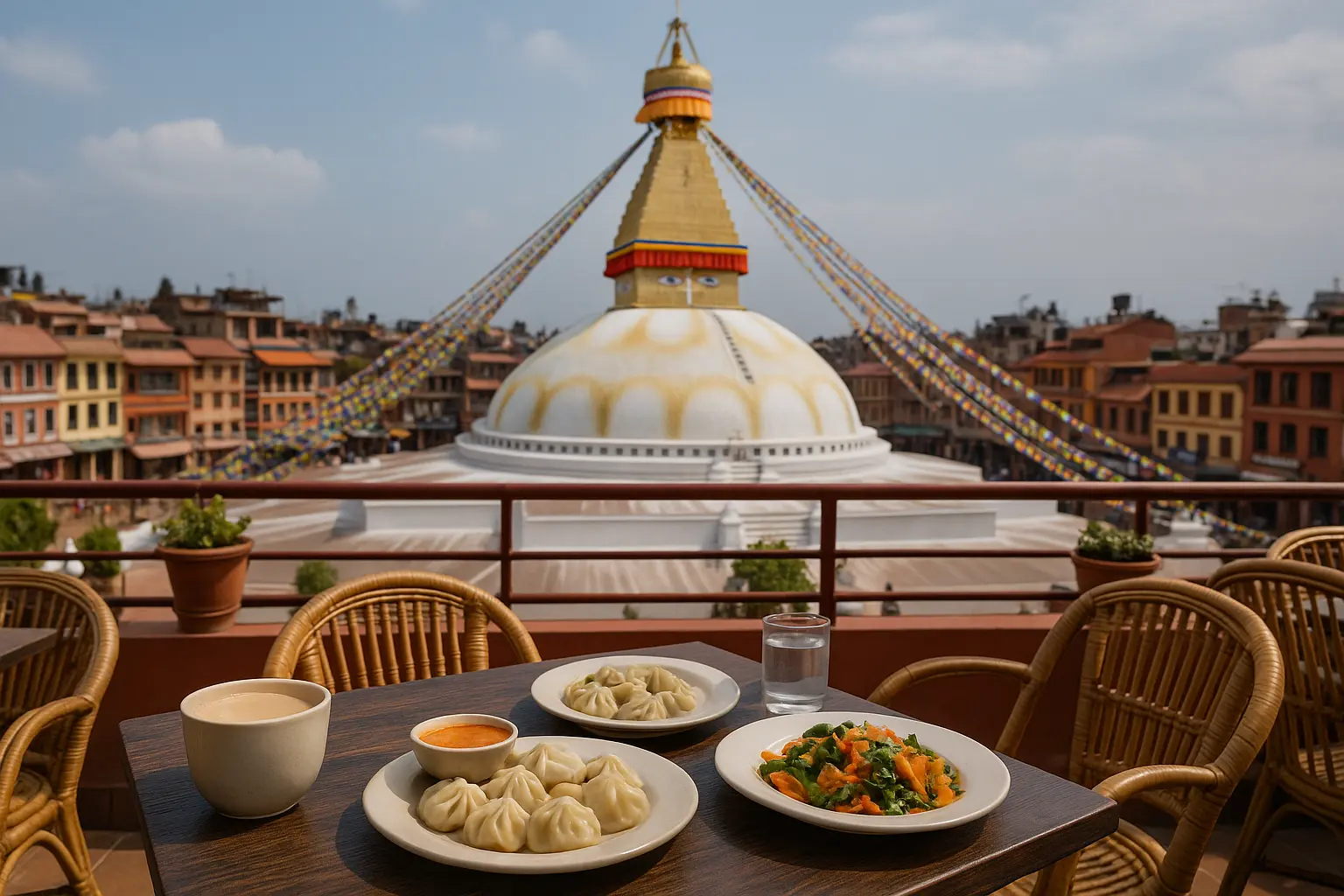
Rooftop cafés like Garden Kitchen or Boudha Café de Mandala (the in-house café at Boudha Mandala Hotel) are favorite spots for early-morning writing. With a pot of Tibetan tea and the stupa glowing in front of you, words tend to arrive without being forced.

Some say Boudha gives language back its silence. The kind of silence where meaning grows.

Monks and the Art of Mindful Living

Creativity doesn’t always take the form of a brush or pen. In Boudha, some of the most profound artists are the monks.

Watch a monk arrange butter lamps, each flame lit with care. Or a nun sweeping the courtyard, her movement steady and unrushed. Or the precise symmetry of a thangka painter dipping a brush into pigment ground from stone.

In these acts, there is rhythm. There is precision. There is presence. And that is the essence of art.

The architecture itself is a canvas: vivid murals, carved dragons above doorways, multicolored banners dancing in the wind. Everywhere you look, you see the imprint of spiritual creativity.

Staying in Boudha as a Creative

To truly enter the flow of this place, you need to stay nearby. When you can walk out of your room and be at the stupa in ten seconds, you stop chasing moments,you live inside them.

Boudha Mandala Hotel offers just that. Stupa-view balconies, a calm rooftop for morning writing, and a peaceful café below where monks and travelers alike gather. For long-stay artists or digital nomads working on slow creative projects, the hotel feels like a retreat center without the formality.

The staff understands pilgrimage. They understand silence. And they’ll help you find incense, art supplies, or even the nearest monastery workshop, without hesitation.

Final Reflection

You won’t find fast Wi-Fi on every rooftop here, and that’s the point. Boudha doesn’t invite distraction. It invites you to notice.
The way a monk walks. The flutter of a robe. The color of dusk. The echo of a bell long after it’s been rung.

This is where creation begins, not from pressure, but from quiet.
So if you’re a poet in search of stillness, a painter waiting for color to return, or simply someone who’s forgotten how to listen to silence, come to Boudha.

Walk slowly. Look closely. The inspiration is already here.

If you’re seeking a peaceful stay just steps from the stupa, Boudha Mandala Hotel offers long-stay options, a rooftop café, and a warm welcome rooted in the spirit of presence.

The Art of Thangka Painting in Boudha: Where to See It, Learn It, and Buy It

Key Takeaways:
Boudha is more than a stupa. It’s a living mandala of devotion, where the walls breathe prayer and the alleys hum with sacred color. One of its quiet treasures is the presence of Thangka painting, sacred scroll art that tells the stories of the Buddha, bodhisattvas, and protectors through intricate brushwork, devotion, and lineage.

This guide walks you through where to witness, learn, and support authentic Thangka art in Boudha, with a special spotlight on the Himalayan Art Council, a guardian of this sacred heritage.

Why Thangka Painting Matters in Boudha.

If you’ve walked the kora around Boudhanath Stupa, you’ve likely passed Thangka shops glowing with reds, golds, and blues. But these aren’t just souvenirs. A true Thangka is a meditation in paint,a visual scripture born of sacred geometry, iconographic precision, and often months of devotion.

Originally used as aids for meditation or teaching, Thangkas are part of a deeper ritual life in Vajrayana Buddhism. They must be painted with care, following exact proportions handed down through the centuries. And Boudha remains one of the rare places on earth where this tradition is still alive, not just preserved, but practiced.

Where to See Masterpieces Up Close

Himalayan Art Council: A Living Archive of Himalayan Art

If you want to understand Himalayan painting beyond its surface beauty, this is where you begin.

The Himalayan Art Council is more than a gallery. It’s a cultural institution rooted in preservation, education, and living practice. Their collection spans ancient paubhas, rare deity Thangkas, and modern interpretations from contemporary Himalayan artists.

Step inside and you’ll find:
• Rarely-seen pieces from private collections and remote monasteries
• Exhibitions that connect traditional art with modern expressions
• Guided insights into the symbolism, technique, and lineage behind each work

The Council also protects artistic integrity through digital provenance systems, allowing artists to certify their original work and ensure it’s not lost to imitation or overseas commodification.

Visit the Himalayan Art Council to explore current exhibits, artist residencies, or join a guided tour.

Where to Learn the Sacred Craft

Local Thangka Studios and Workshops

For travelers who want to go beyond looking and begin creating, Boudha offers several studios where you can take short or long-term Thangka painting courses.

1. The Norling Art School

Tucked down a quiet alley near Shechen Monastery, Norling offers traditional training under lineage artists. They focus on authentic technique: gold detailing, brush prep, hand-ground pigments, and iconometric drawing.

• Great for: Serious learners or those staying in Boudha for a few weeks
• Tip: They often host beginner workshops during Losar or special retreats

2. Tibetan Thanka Art School
A family-run space that’s open to walk-ins. Students can observe painters in process or join half-day sketching sessions.
• Great for: Curious travelers with little background
• Bonus: Their master painter has done commissions for local monasteries

Before signing up, always ask whether the teacher has direct training under a lama or certified art lineage, this ensures the practice is spiritually rooted, not just decorative.

Where to Buy Authentic Thangka Paintings in Boudha

Buying a Thangka is like adopting a sacred mirror. If done respectfully, it becomes a blessing in your home or altar.

Here’s how to do it mindfully:
• Avoid tourist traps with factory-made copies
• Ask about the artist. Where did they train? Which lineage? What deity or symbolism is depicted?
• Visit verified spaces like the Himalayan Art Council, where pieces are certified, ethically sourced, and accompanied by artist bios

Most reputable shops in Boudha will wrap your Thangka carefully and explain how to treat it with respect (don’t place it on the ground, avoid display in bathrooms or casual spaces).

Why the Himalayan Art Council Matters Now More Than Ever

In a world where sacred art is often commercialized or stripped of context, the Himalayan Art Council acts as a cultural shield. Their mission is to protect Himalayan art as a living national treasure, not just relics in glass cases.

They preserve endangered paubhas, support new artists, and use AI and private blockchain to ensure artwork remains authentic, traceable, and connected to its source culture.

Every certified Thangka in their collection is:
• Digitally recorded for provenance
• Connected to the artist’s lineage and method
• Part of a larger public archive for future generations

When you buy or support art through the Council, you’re not just collecting,you’re participating in the protection of Himalayan identity, history, and spiritual integrity.

Explore available artworks or artist collaborations at the Himalayan Art Council

Final Reflection

To truly understand Thangka painting, you don’t need a textbook. You need to slow down.

Sit inside a quiet atelier. Watch the steady hand lay gold leaf on a Bodhisattva’s crown. Ask the artist why they chose that particular shade of blue. Feel how reverence travels from hand to brush to canvas.
And maybe, as you carry your own Thangka home, you’ll realize it’s not just pigment and cloth. Its presence.

A reminder that in Boudha, art is not decoration. It’s devotion, made visible.

Planning to Explore Sacred Art in Boudha?

If you’re staying in Boudha to explore its artistic and spiritual depth, Boudha Mandala Hotel offers long-stay apartments and peaceful stupa-view rooms just steps away from workshops, studios, and galleries.

Our staff can help you connect with local artists or visit current Himalayan Art Council exhibitions.

The Secret Side Alleys of Boudha: Hidden Gems for Travelers

There’s a stillness in Boudha that draws you in. But it doesn’t end at the circle of the great stupa. If you follow the soft rustle of prayer flags, the scent of incense drifting from open windows, and the occasional sound of a conch shell calling monks to prayer, you’ll begin to see another Boudha. One that lives quietly, humbly, just beyond the main kora path.

This isn’t a place of signs and schedules. It’s a place of wandering. The alleys of Boudha don’t shout. They whisper. And if you listen closely, they’ll show you something unforgettable.

Why the Side Alleys Matter

While most visitors stay near the main stupa path, locals know where the soul of Boudha truly breathes. It’s in the narrow lanes behind monasteries. In the flicker of a butter lamp seen through a half-open door.

In the quiet rhythm of a nun sweeping her courtyard at dawn.
These side paths are not hidden to those who walk slowly. They reveal themselves with time, with trust, and with presence. This is where devotion lives — not performed, but practiced.

The Prayer-Flag Alley Behind Tamang Gompa

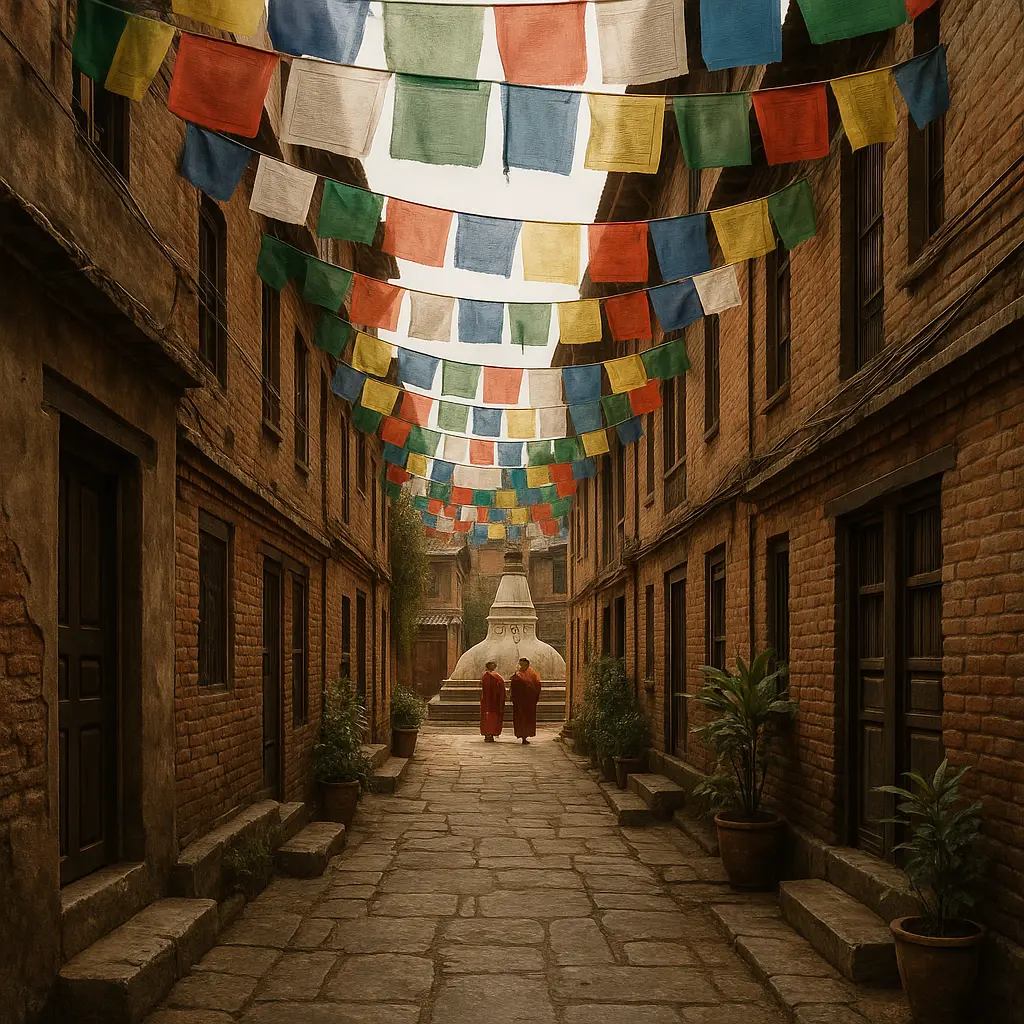
One morning, I followed a monk holding a small bundle of butter lamps into a quiet alley behind Tamang Gompa. What opened before me was a corridor of prayer flags, stretching overhead from rooftop to rooftop, casting colorful shadows on the brick path below.

At the end, I found a tiny courtyard with a stone stupa no taller than my waist. Two nuns were offering incense. One smiled. No words were needed. That moment stayed with me longer than any panoramic photo ever could.

The Left Turn at Lotus Bakery

Everyone knows Lotus Bakery. But few take the left turn just before its entrance.

If you do, you’ll find yourself walking toward a monastery courtyard where birds sing louder than any traffic horn, and the air smells like old wood and saffron robes. On my second visit, I sat there for nearly an hour, not planning to. I had brought a journal, but I didn’t write. I just sat, as bells rang from a nearby puja and a child offered a marigold to a statue.

Sometimes the quietest places say the most.

The Teahouse With No Name

One evening, after a soft rain had washed the dust from the bricks, I wandered into an alley in the northeast corner of the Boudha circle. I was cold, slightly lost, and looking for nothing in particular. That’s when I saw three monks sipping tea inside a small shop with no sign.
The smell of salty butter tea pulled me in. They welcomed me without words, only a nod. The tea was hot, the air was still, and for a moment I forgot I was a traveler. I was just there, present, sipping from a heavy glass mug, sharing space with devotion.

A Secret Rooftop With a Clear View

Not all rooftops in Boudha are listed on TripAdvisor.
One family-run lodge, tucked behind a gift shop near the west side of the stupa, opens its roof only if you ask kindly. I climbed three narrow flights of stairs and emerged onto a small terrace strung with fresh prayer flags. No music, no menu, no crowd.

Just a full, unbroken view of the stupa glowing in the setting sun. Below, the prayer wheels turned with the rhythm of old hands. Beside me, a cat curled up beside a butter lamp. I didn’t take many photos. I didn’t need to.

Wandering as a Spiritual Practice

Boudha is a mandala, not a museum. And just like a mandala, its gifts are found when you let go of structure.

The alleys here don’t follow a plan. Some turn sharply. Some end abruptly. Some open to light, others into shadow. But every corner invites you into deeper presence. To walk with no agenda. To observe without labeling. To feel instead of chase.

It’s a reminder that wandering isn’t the opposite of purpose. Sometimes, it is the purpose.

Why Staying Nearby Changes Everything

To truly uncover the hidden gems of Boudha, you need to stay close. When you stay at a place like Boudha Mandala Hotel, just 10 seconds from the stupa, the entire neighborhood becomes your backyard. You wake with the monastery bells. You wander out barefoot for morning kora. You meet shopkeepers who start to recognize you not as a guest, but as a neighbor.

It’s this sense of belonging that makes the alleys open up. The slower you go, the more they reveal.

Conclusion
Not every traveler will find these side alleys. Not because they’re hard to reach, but because they ask you to slow down, to notice, to be still enough to see.

So take the unknown turn. Linger a little longer by a closed temple gate. Smile at the stranger sweeping the doorway. And walk as if every step might lead to a hidden shrine.

Because in Boudha, it just might.
If you’re looking for a peaceful, soulful stay while exploring the secret side of Boudha, Boudha Mandala Hotel offers stupa-view rooms, long-stay options, and a calm, retreat-like atmosphere just steps from the circle.

Where to Eat in Boudha: Best Restaurants and Cafes Near the Stupa


There’s something sacred about eating in Boudha. Maybe it’s the scent of juniper in the air, the sound of soft mantras drifting from a nearby gompa, or the way time seems to slow down when you’re just a few steps from the great stupa.

Food here isn’t just about filling your belly. It’s about nourishment, presence, and quiet moments in between your journey.

Whether you’re looking for a rooftop cafe to watch the stupa glow at dusk or a hidden garden for morning chai, Boudha welcomes you with meals that feel soulful, not rushed.

What Makes Boudha’s Food Scene Special

Unlike other parts of Kathmandu that cater to fast-moving tourists, Boudha’s cafes and restaurants reflect the rhythm of spiritual life. Here, you’ll find monks sipping tea beside digital nomads with laptops, and long-stay pilgrims sharing vegetarian thalis after a morning of kora.

Many places prioritize clean, mindful eating. Vegetarian and vegan options are abundant. And because of the Tibetan influence, meals are often warm, simple, and made to be savored slowly.

Best Cafes in Boudha for Quiet Moments and Good Coffee

If you’re the kind of traveler who loves writing in a journal over a pot of tea or watching the sky change colors with your espresso, Boudha has the perfect cafe for you.

Boudha Cafe De Mandala: 10 Seconds from the Stupa

This is where guests of Boudha Mandala Hotel and mindful wanderers start their mornings.

Boudha Cafe De Mandala sits quietly just off the stupa’s circle. With its rooftop view, peaceful indoor seating, and a menu that blends local and Western comfort food, it’s the kind of place where you linger without meaning to.

Expect:
• Organic breakfasts with eggs, porridge, or muesli.
• Organic teas and French press coffee.
• Light lunches with fresh greens, momos, and seasonal specials.

The vibe is retreat-like. Monks sometimes pass by below. Writers sip slowly. The staff greet you like an old friend.

Good to know
Free Wi-Fi, long-stay friendly, vegetarian options, and open early for pre-kora tea.

Garden Kitchen Cafe
Tucked near the stupa, this rooftop cafe offers a stunning view of the dome. It’s peaceful, great for digital nomads, and known for its warm banana bread and strong coffee.

Utpala Cafe
Located inside a nunnery compound, this all-vegetarian cafe is a hidden sanctuary. The food is light, affordable, and aligned with Buddhist values. Try the thukpa or the fresh salads.

Roadhouse Cafe Boudha
If you’re missing something a bit more Western, Roadhouse delivers. Their wood-fired pizzas and spacious terrace are perfect for late afternoon meals or group meetups.

Where to Eat for a More Traditional, Heartfelt Meal

After a long walk around the stupa or a morning of meditation, nothing hits like a hot plate of Tibetan food.

Double Dorje Restaurant

Simple seating, rich flavors. Their Tibetan thali includes tingmo bread, dhal, and curried vegetables. Don’t miss the butter tea and hand-folded momos.

Flavors Restaurant

A no-fuss favorite for locals and expats alike. Their rice and curry sets are satisfying, and the quiet atmosphere makes it ideal for slow, mindful eating.

Norling Restaurant
Known for its wholesome soups and stir-fried noodles. Their portions are generous, the prices fair, and the setting calm.

Hidden Gems for eating and reflecting

Sometimes, the best meals aren’t found on a map. They’re discovered while wandering a narrow alley or following the scent of freshly steamed dumplings.

Lhasa Momo
You’ll find it if you follow the locals. Soft, juicy momos with tangy achar in a tiny upstairs room. No frills, just good food and warm energy.

Ananda Treehouse Cafe
A bit off the main road, this garden cafe feels like a retreat within a retreat. Wooden seating, birdsong, and a menu of smoothies and herbal teas.

Stupa View Cafe
Yes, it’s popular. But for good reason. Order a masala tea at sunset and watch the sky blush over the stupa. Worth every rupee.

Eating Respectfully in a Sacred Space

Boudha is home to spiritual practitioners, monks, and retreat centers. Many of the restaurants and cafes are directly connected to these communities. As a visitor, a few quiet gestures of respect go a long way.

• Take off your shoes if eating at a monastery-run cafe
• Avoid loud conversations, especially near shrines or puja halls
• Dress modestly, covering shoulders and knees where possible
• Ask before photographing meals or spaces that feel sacred
• If a place is vegetarian only, honor that choice even if you’re not

Being mindful isn’t just about what’s on your plate, but how you move through the space where you eat.

Staying Nearby Makes Every Meal More Meaningful

One of the best ways to truly enjoy Boudha’s food culture is to stay close. When you’re just steps from the stupa, you don’t need to rush meals or plan your day around long commutes.

Boudha Mandala Hotel offers just that. With its stupa-view rooms and peaceful cafe, you can start your day with a quiet breakfast of oats, fruit, and chai, then return at dusk for lentil soup and herbal tea under prayer flags.

Many long-stay guests say they find their favorite cafes by simply walking, wandering, and letting the energy of the stupa guide them.

A Meal with Meaning
In Boudha, eating is an extension of your presence. Whether you’re sitting on a rooftop watching the sky turn gold or quietly sipping soup in a courtyard surrounded by prayer wheels, food becomes a form of connection.

You’ll remember the meals not just for the taste, but for the stillness you felt between bites.

If you’re looking for somewhere peaceful, nourishing, and deeply rooted in spirit, Boudha is waiting.

And if you want to stay where meals and moments come together effortlessly, Boudha Mandala Hotel is just ten seconds from the stupa gate, and a world away from the noise.

What is the Cost of Living in Kathmandu for Digital Nomads?

Introduction

Kathmandu isn’t just affordable, it’s soulful. Nestled in the Kathmandu Valley and layered in centuries of Buddhist and Hindu history, it offers something rare: a city where ancient rituals blend with modern cafes, and where quiet rooftop mornings can cost less than your daily coffee back home.

But cost is only part of the story. The real value lies in how much you can slow down here, how easily you can find presence. Whether you’re a digital nomad on a sabbatical, a remote worker seeking calm, or a creative soul looking for somewhere sacred to write, Kathmandu, and particularly Boudha, can be your base.

Here’s what life actually costs when you choose to live slowly and meaningfully in Nepal’s capital.

Rent: What You’ll Pay to Stay

If you stay in Boudha, the peaceful, stupa-centered neighborhood favored by monks, writers, and long-stay travelers, prices are surprisingly reasonable.

For a fully furnished apartment in Boudha with reliable Wi-Fi, you can expect to pay:

• $250–400/month for a studio or one-bedroom
• $500–700/month for two bedrooms with more modern amenities

Utilities usually run around $30–50/month, and many places include them in the rent. The key here is knowing your needs. If you’re okay with simpler Nepali-style kitchens and a fan instead of AC, you’ll find long-term living both affordable and fulfilling.

Boudha Mandala Hotel also offers long-stay options with the bonus of housekeeping, security, and a stupa-view cafe, perfect for those easing into Kathmandu without the stress of setting up everything from scratch.

Food: Local Meals, Organic Cafes, and Cooking at Home

Kathmandu’s food scene ranges from momos at roadside stalls to wood-fired pizza and organic quinoa salads. In Boudha, you’ll find everything: Tibetan thalis, Ayurvedic meals, and Western breakfasts served with Himalayan honey.

• eating at local restaurants: $1.50–$4 per meal
• Western cafes or expat-friendly spots: $5–$10 per meal
• Monthly groceries (if cooking yourself): around $120–180, depending on your diet

Places like La Casita, Roadhouse Cafe, and Utpala offer calm spaces where you can eat, work, or journal for hours. The cost feels secondary to the peace they provide.

Internet and Coworking: Staying Connected

Kathmandu’s internet has improved drastically. In Boudha, you’ll find strong, consistent Wi-Fi in most apartments, cafes, and hotels.

• Monthly home internet (for long stays): $15–25

• SIM card with data (Ncell or NTC): $2 for the card, $8–10/month for data

• Coworking spaces (Thamel or Lazimpat): $50–150/month, depending on location and services

Most digital nomads working from Boudha skip coworking spaces and just rotate between calm cafes with reliable Wi-Fi. You’ll rarely feel the need for a formal desk unless your work is highly collaborative or call-heavy.

Transport: Getting Around the Valley

Boudha is walkable. That’s one of the biggest gifts of living there. The stupa is at the center, and everything else, shops, monasteries, cafes, orbits around it.

• Local taxi ride: $2–4 around the area, $6–10 to downtown
• Public bus: Under $0.50, but crowded and not for everyone
• Scooter rental: $60–90/month
• Ride-sharing apps (Pathao or InDrive): growing in popularity, fair rates

If you stay near the stupa, you’ll barely need transport. The slower you live, the less you move.

Daily Life: What Adds Up and What Doesn’t

What surprises most nomads in Kathmandu isn’t how cheap things are, but how much they don’t feel the need to spend.

• Yoga or meditation classes: $5–10/session
• Weekend trips to Nagarkot or Bhaktapur: $10–20, including transport and meals
• Laundry services: $4–6 per load
• SIM top-ups, light shopping, coffee breaks, they rarely dent your wallet

Boudha life isn’t consumption-heavy. There’s little push to buy, no flashing ads, no malls calling your name. You pay for stillness, for tea and time, for space to think and breathe.

Why Boudha is the Ideal Base
Cost is only half the story. Boudha offers something few places do , a quiet spiritual rhythm. It’s not just affordable, it’s nourishing.

• You wake to monastery bells, not traffic
• You work surrounded by monks and prayer flags
• You sleep with a sense of safety and sacredness

At Boudha Mandala Hotel, just 10 seconds from the stupa, you’ll find a space designed for presence. Whether you’re working remotely, taking a sabbatical, or writing your next book, the environment supports your rhythm.

Final Reflection
Kathmandu can be chaotic. But Boudha holds a calm within it. For digital nomads, that balance between affordability and serenity is rare.

If you’re seeking a place where time stretches, where costs are low but value runs deep, then this little corner of Kathmandu might be what you’ve been looking for.

And if you need a place to arrive and settle in, Boudha Mandala Hotel offers more than a room; it offers you a rhythm to come home to.

Digital Nomad Visa Nepal: Everything You Need to Know

The first time I arrived in Boudha, I didn’t come looking for a remote work base. I came seeking stillness.

But like many digital nomads before me, I quickly realized something rare: Nepal, and especially Boudhanath, wasn’t just a place to visit. It was a place where you could build a rhythm. Where mornings began with the hum of mantras instead of notifications. Where your workspace was a rooftop with stupa views. And where slow, meaningful living wasn’t a trend, it was the air itself.

If you’ve felt the call to live more intentionally, while still keeping your remote job or creative work flowing, here’s what you need to know about staying in Nepal as a digital nomad.

Does Nepal offer a Digital Nomad Visa?

Not officially. There is no dedicated “digital nomad visa” in Nepal as of 2025. But that doesn’t mean you can’t stay, work remotely, or immerse yourself in daily life here.

Thousands of writers, designers, developers, spiritual seekers, and remote creatives live in Nepal legally, usually by using a tourist visa, extending it strategically, or affiliating with a local organization.

You just need to understand the options and more importantly, move through them mindfully.

The Tourist Visa: Your Gateway In

For most digital nomads, the tourist visa is the most flexible and accessible entry point.

You can get it on arrival at Tribhuvan International Airport in Kathmandu. Choose from 15, 30, or 90 days, and once you’re here, you can extend your stay up to 150 days per calendar year.

It’s not complicated. But it’s important to remember: this visa is meant for tourism. That means while working remotely for international clients is generally tolerated, you should avoid working for Nepali businesses unless you’re on a different visa type.

Still, if you’re freelancing, consulting, or running your business online, the tourist visa is the path most take. Just make sure your passport has six months of validity left, and carry some passport photos. The immigration office in Kalikasthan handles extensions smoothly, though expect a bit of paperwork and waiting.

What About Long-Term Stay?

If you’re thinking about staying beyond 150 days or returning year after year, you might explore other paths.

Some spiritual travelers affiliate with monasteries or NGOs and apply for non-tourist visas. Others set up consulting arrangements through business visas. These require more effort, local contacts, and paperwork, but they’re viable for those truly committed to making Nepal a long-term spiritual and creative home.

Still, for most nomads, especially those here for a few months of retreat, writing, building, or healing, the 150-day window offers enough time to settle into a beautiful rhythm without overcomplicating things.

Why Boudha is the Perfect Base for Remote Workers
The stupa doesn’t ask questions. It just holds space.
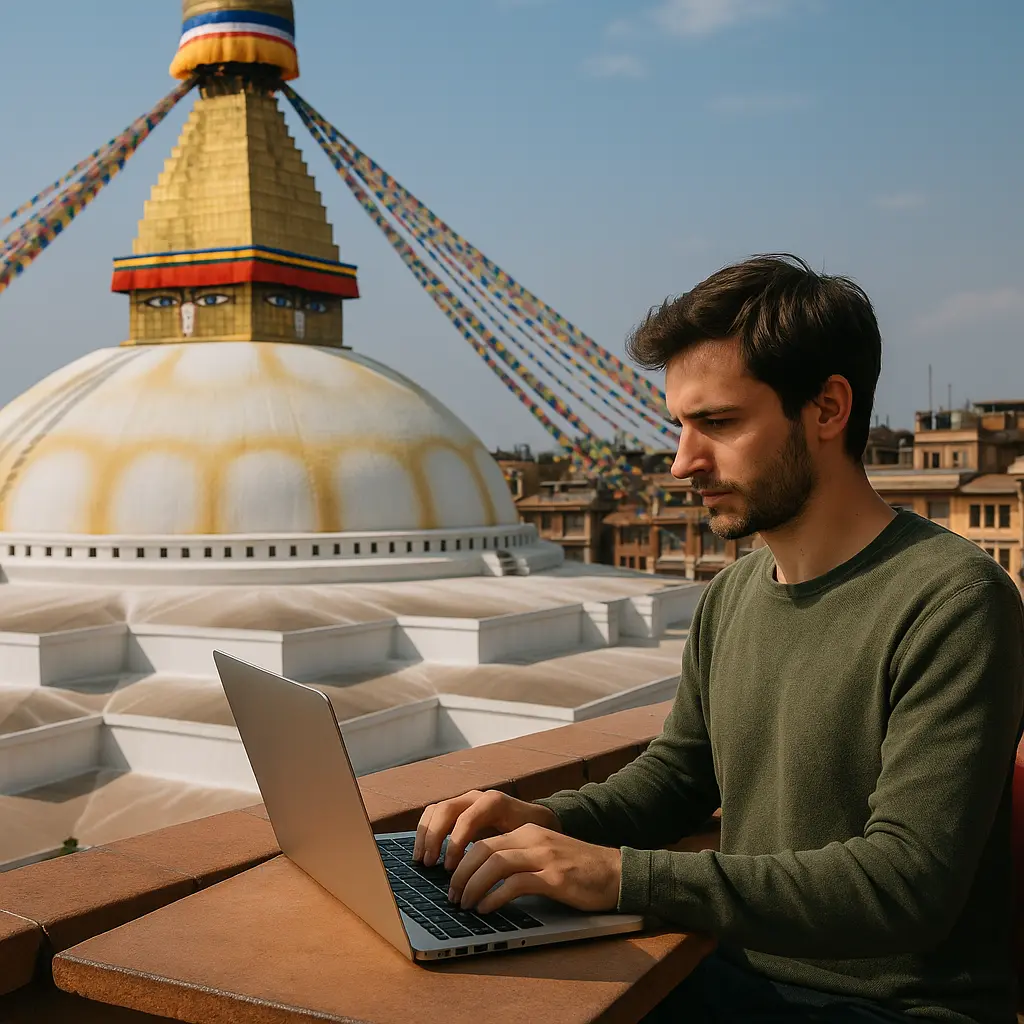
That’s what makes Boudhanath so magnetic to remote workers and mindful nomads. You’re just minutes from strong Wi-Fi cafés and coworking-friendly rooftops, but the atmosphere remains one of silence and reverence.

You’ll see it in small ways:
• Monks walking slowly in early light
• The soft tap of butter lamps being lit before dusk
• Local artists sketching the stupa from a shaded bench
• Freelancers writing books or building apps with incense rising beside their laptop

There’s no rush here. And for digital nomads, that’s a gift.

If you’re used to the hustle of Bali or Lisbon, Boudha feels like a quiet invitation: to work deeply and live fully present.

The Practical Side: Wi-Fi, Cafes, and Coworking

Don’t let the spiritual vibe fool you, Boudha is tech-ready in its own way.

Several rooftop cafés offer strong Wi-Fi and calm, quiet corners. Popular among remote workers are:

• Stupa View Café (great light, power outlets, herbal teas)
• Utpala Garden (vegetarian food, open courtyard, gentle energy)
• La Casita de Boudhanath (Spanish-Nepali fusion and peaceful vibe)

Most nomads simply rotate between these spots, working in the morning, walking kora at lunch, then settling into focus mode again after a pot of masala chai.

You’ll also find affordable SIM cards with 4G data (Ncell or Namaste), and if you stay long enough, it’s easy to get portable routers for backup.

Where to Stay: The Value of Proximity

Living close to the stupa changes everything. You’re not commuting to calm , you’re inside it.

At Boudha Mandala Hotel, you’re just ten seconds from the gate. That means:

• You can join the early morning kora before work
• Hear the evening chants from your room window
• Step into stillness whenever your mind needs a reset

The hotel offers long-stay rooms, strong Wi-Fi, a peaceful breakfast café, and a deeply respectful local team who understands the needs of spiritual travelers and remote workers.

If you’re planning to stay weeks or months, having a space that feels safe, sacred, and work-friendly makes all the difference.

Final Thoughts

Nepal may not yet have a flashy “digital nomad visa,” but it has something far more lasting: space to breathe.

Boudha doesn’t promise productivity hacks. It offers presence. And sometimes, that’s exactly what your work and your life need most.

So if you’re thinking of setting up your next creative season, sabbatical, or soul-led remote work chapter in Nepal, know this:
The visas are possible. The internet works. The community is here.
But more than anything? The stupa is waiting.

If you’re looking for a peaceful, long-stay-friendly hotel just steps from the stupa, Boudha Mandala offers stupa-view rooms, reliable Wi-Fi, and a warm, spiritually supportive welcome.

Packing Guide for Your Spiritual Trip to Boudhanath


Key Takeaways

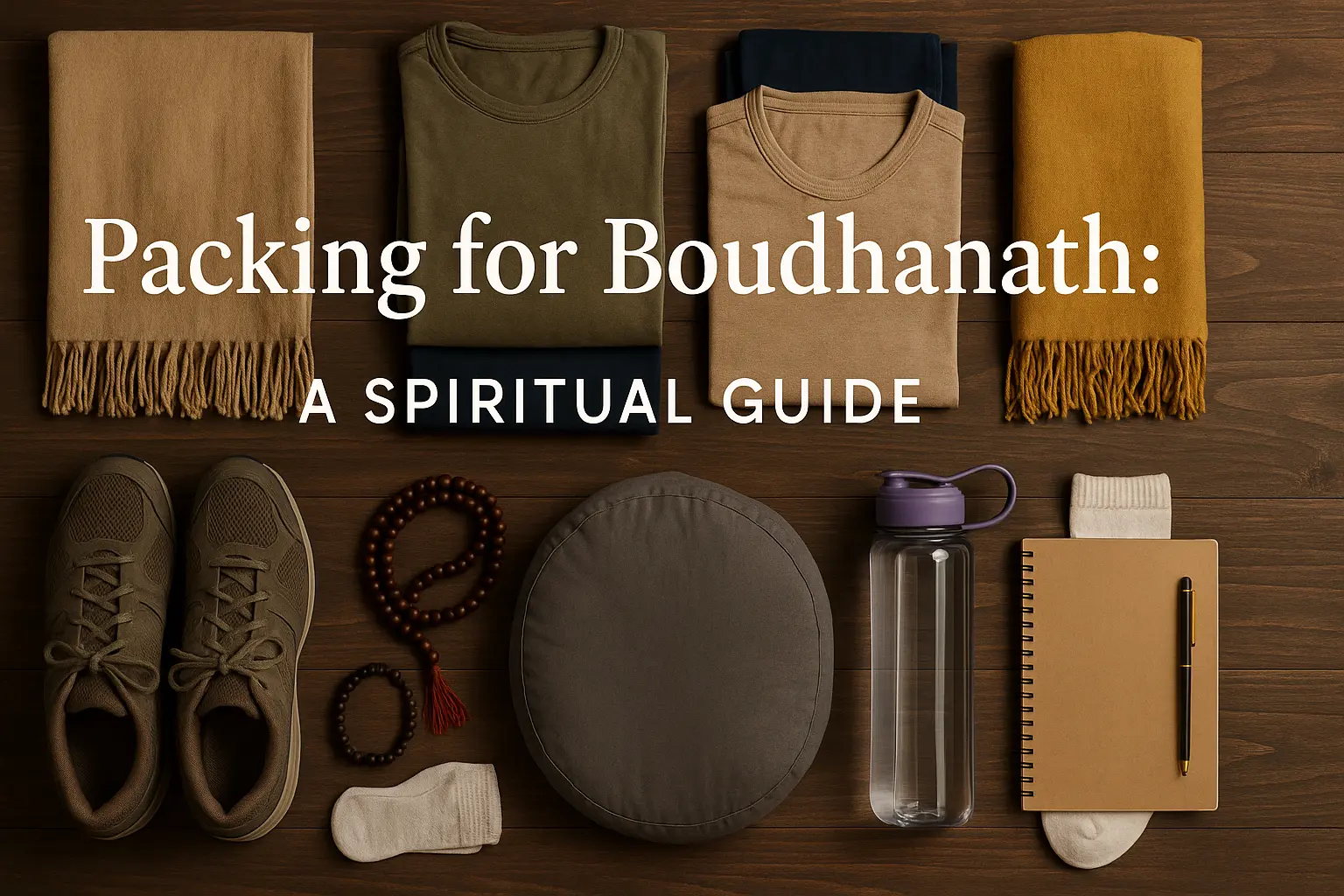
Packing for a spiritual trip to Boudhanath requires thoughtfulness and simplicity. Bring modest clothing that covers shoulders and knees, comfortable walking shoes for circumambulating the stupa, a scarf or shawl for temples, a journal, a meditation cushion (if needed), and weather-appropriate layers. Avoid flashy items, revealing clothes, or disruptive electronics. This guide helps you pack with intention and respect, so your journey begins in alignment with the spirit of Boudha.

Introduction

Packing for Boudhanath isn’t just about fitting things into a suitcase, it’s about preparing your mind and heart. Whether you’re coming for a retreat, a silent meditation, or simply to walk the sacred kora path around the stupa, how you pack will shape the tone of your experience.

Boudha is not just a destination, it’s a spiritual presence. Every scarf, every step, every offering reflects a deeper intention. So let’s begin where every pilgrimage begins, with awareness.

Clothing Essentials
In Boudhanath, the atmosphere is gentle, sacred, and quiet. Your clothing should reflect that.

• Light, breathable long pants or long skirts
• Shirts with sleeves (avoid sleeveless tops)
• Scarf or shawl for temple visits or cool mornings
• Layers for chilly mornings and warm days
• Avoid shorts, tight clothes, and bold graphics

Simple, clean clothing shows respect for the space, and invites calm into your own body.

Footwear for Sacred Ground

You’ll be walking a lot in Boudha, especially along the smooth stone paths of the kora.

• Comfortable walking shoes or sandals
• Easy-to-remove footwear (you’ll be taking them off often)
• Lightweight socks if entering temples barefoot

Heavy boots aren’t needed unless you plan to trek beyond the valley. Simplicity is key.

Meditation and Retreat Items

Many people come to Boudha for inner stillness. If that’s your path, pack with your practice in mind.

• Travel meditation cushion or seat pad
• Shawl or blanket for early morning sessions
• Mala beads (if you use them)
• Journal and pen for reflections
• Eye mask or earplugs if staying near the stupa (early mornings can be lively)

You don’t need much, just the tools that support your stillness.

Health, Safety and Self-Care

Boudha is generally very safe, but having a few basics can make your stay smoother.

• Refillable water bottle
• Natural sunscreen and lip balm
• Basic first aid (plasters, antiseptic, rehydration salts)
• Insect repellent (especially in warmer months)
• Any prescription medications

You’ll find pharmacies and clinics nearby, but it’s wise to bring essentials.

Digital and Practical Gear (Minimal and Mindful)

Your tech should support your peace, not distract from it.

• Unlocked smartphone with Nepali SIM (optional but helpful)
• Portable charger or power bank
• Flashlight or small headlamp (power outages still happen)
• Universal adapter for charging devices

Leave heavy gadgets behind. If possible, even try a digital detox for a day or two.

Items to Avoid

Boudhanath is a sacred space, and many temples are active places of practice.

• Loud tech or Bluetooth speakers
• Flashy jewelry or luxury accessories
• Revealing or tight clothing
• Drones or professional photography gear (unless approved)

When in doubt, ask yourself, “Does this support my spiritual intention?”

Seasonal Considerations

Kathmandu’s weather varies; here’s how to adapt:

Winter (Dec–Feb):
• Thermal base layers
• Wool socks and warm shawl
• Down jacket or puffer

Monsoon (Jun–Aug):
• Rain jacket or poncho
• Waterproof sandals or slip-on shoes
• Travel umbrella

Spring and Fall (Mar–May, Sept–Nov):
• Light sweaters
• Layerable tops
• Cotton pants and scarf

Packing with Purpose: A Spiritual Mindset

Imagine walking the kora at dawn, your backpack light, your steps steady. You’ve brought only what you need, and nothing more. In that quiet simplicity, something shifts.

Packing this way isn’t just practical, it’s spiritual. You make space, inside and out.

Quote:
“Take only what you need. Leave space for the sacred.”

Final Tips

Staying close to the stupa can simplify everything. Boudha Mandala Hotel offers:

• Safe space to store bags or excess luggage
• Peaceful rooms just 10 seconds from the kora path
• Helpful local staff who understand your spiritual needs

Forgot something? You’ll find local shops selling shawls, malas, incense, and travel essentials all around the circle.

When you pack lightly and mindfully, your whole journey feels more sacred.

Top 5 Instagram Spots Around Boudha Stupa


Key Takeaways:

Boudhanath is more than a place to take photos; it’s a sacred atmosphere where the spiritual meets the visual. This guide, written by someone who’s walked the kora many times, takes you to five of the most heartfelt and photogenic corners around Boudha, from early morning rituals to golden hour rooftops designed for mindful travelers who want their images to reflect reverence.

1. Introduction

Every time I circle the stupa, camera slung across my shoulder, I’m reminded you don’t capture Boudha, you receive it. There’s something in the air here: the scent of incense, the flutter of prayer flags, the rhythm of quiet footsteps. This isn’t just a place to pose, it’s a place to pause. A place where your photo is just a whisper of something much deeper.

This guide isn’t about trending spots, it’s about the places that moved me, and might move you too.

2. Rooftop Cafes at Golden Hour

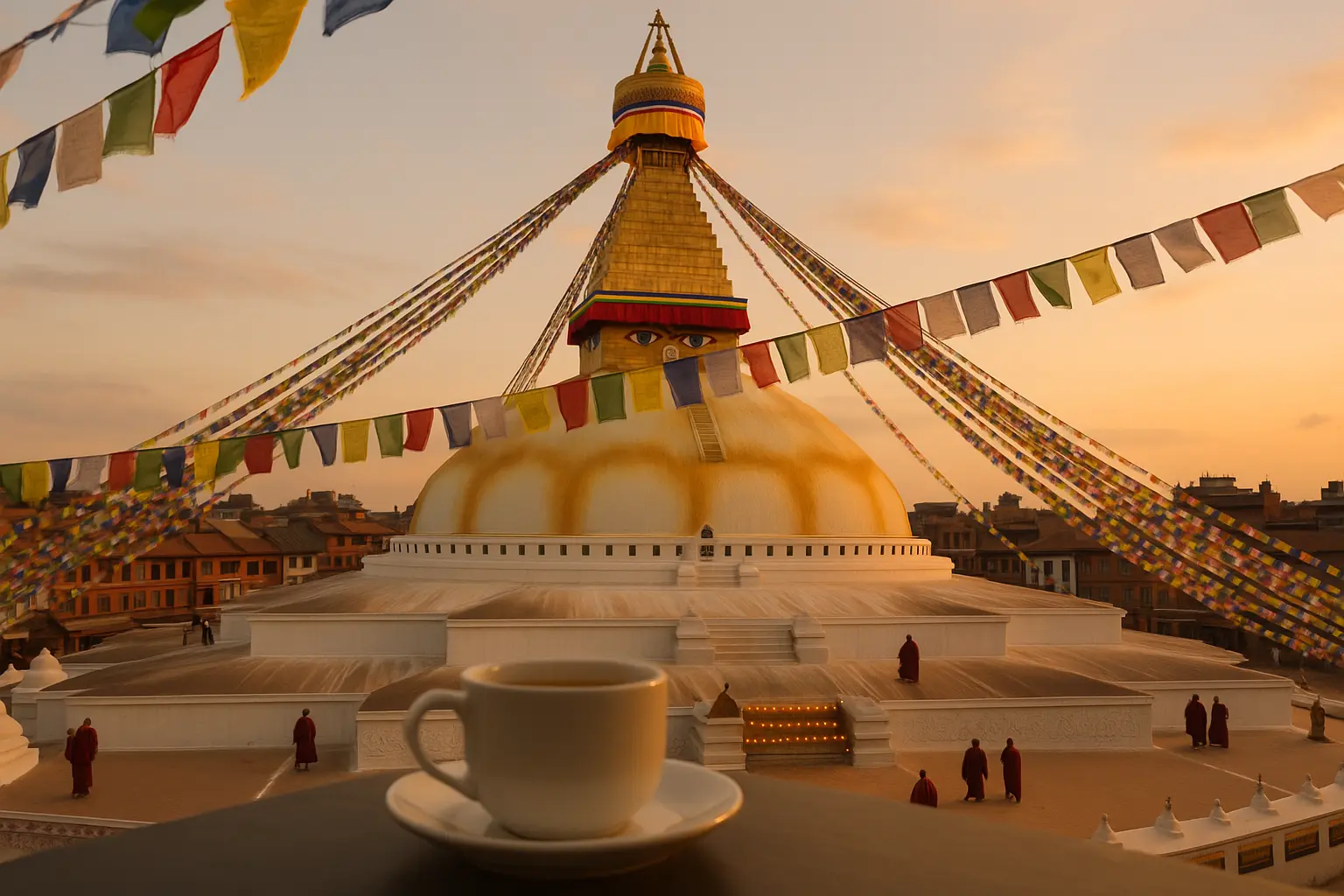
There’s a certain hush that falls over Boudha in the late afternoon. The stupa glows gold, the prayer flags cast soft shadows, and from rooftops like Garden Kitchen or Stupa View Cafe, you feel like you’re inside a living thangka painting.

You don’t need a professional camera. Just sit with a warm cup of tea, and wait for the light to touch the dome. That’s when the photo comes to you.

Tip: Best around 4:30–6 PM. Use a foreground element like your tea, a candle, or a silhouette for a frame that tells a story.

3. Morning Kora with the Devout

There’s something about Boudha in the morning that feels ancient. The air is cool. The chants echo softly. Monks, elders, and travelers like you and me walk the path in silence.

That’s when I like to walk with my camera low, almost forgotten in my hand. Because here, it’s not about snapping, it’s about sensing. The golden spire catching first light, the gentle hands spinning a prayer wheel, these are the photos that feel alive.
Tip: Go between 5:30–7:00 AM. Walk slowly, don’t rush. Let the frame come together as it happens.

4. Butter Lamps Behind the Stupa

You’ll find it if you linger. In the evenings, behind the stupa or near Tamang Gompa, someone always lights the lamps. Hundreds of small flames flickering in the breeze, prayers rising with the smoke.

I once spent an hour just watching one woman light them one by one. I didn’t even lift my camera until the last row. That’s when I realized the photo wasn’t about the fire; it was about her stillness.

Tip: Arrive just after sunset. Keep your settings low-light. No flash lets the lamps light your subject.

5. Prayer Flag Alleys That Catch the Sky

Tucked between courtyards and rooftops, there are little-known alleys where the flags stretch from home to home, dancing in the wind.

I discovered one after a local monk smiled and waved me down a quiet lane. The flags above me, the stupa peeking through, and children playing below it were the kind of beauty you don’t find unless you wander.

Tip: Try near Shechen Monastery or Ka-Nying alleyways. Aim your camera up, follow the lines of the flags, and capture the movement.

If You’re Serious About Catching the Moment…

Stay close. You can’t predict when the light, the chants, or the monks will align in just the right way. Boudha Mandala Hotel is just 10 seconds from the stupa.

Final Thought

You might leave Boudha with a hundred photos. But I hope you leave with something else too: a quieter way of seeing.

Not every shot will be perfect. Some will be blurry, some too dark. But if even one of them carries the stillness, the devotion, the sky full of flags, then you’ve done more than take a picture.
You’ve listened.

“The stupa doesn’t pose for your camera, it waits for your presence”.