
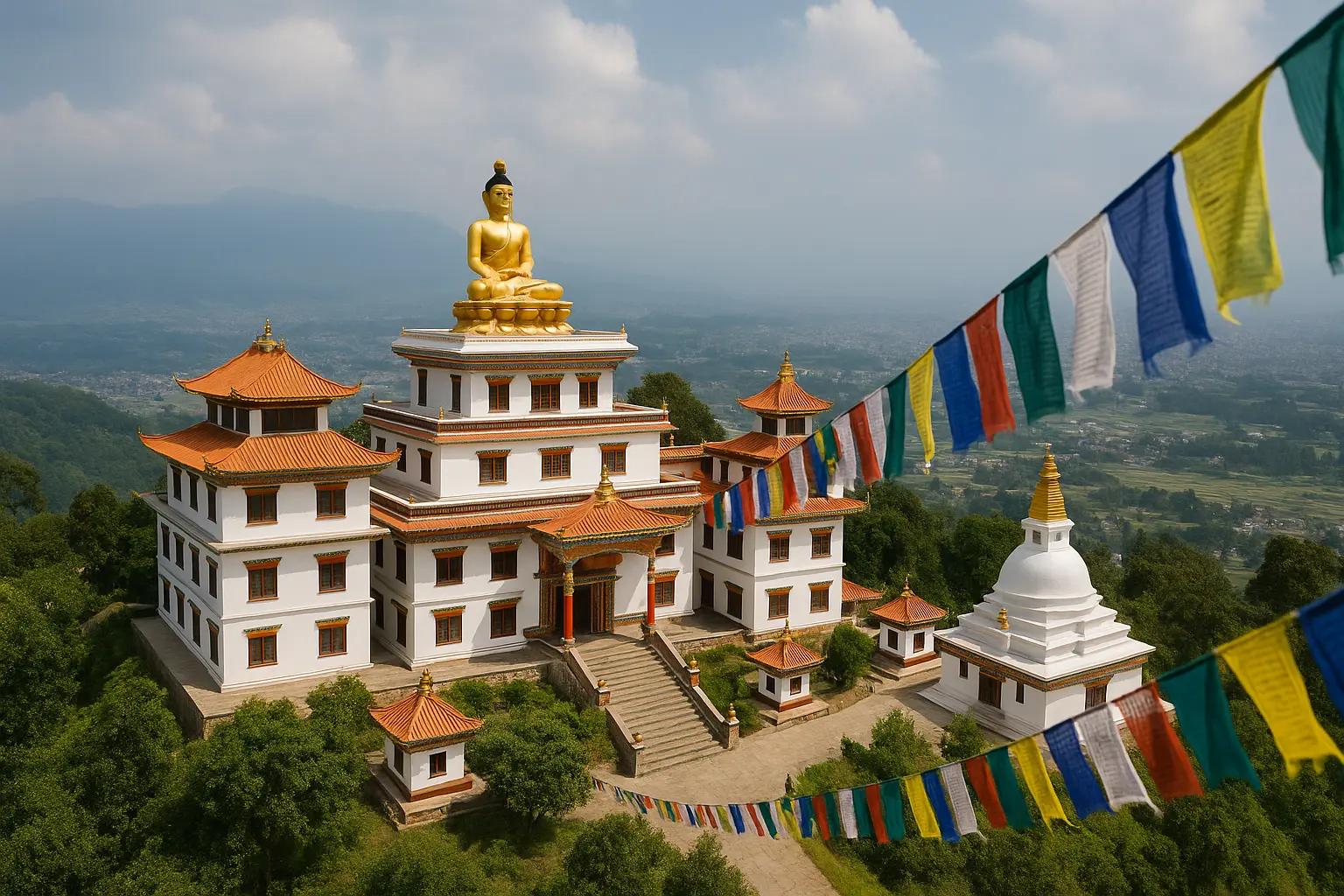
There’s a place above the Kathmandu Valley where silence feels sacred. Where prayer flags dance freely in the mountain air, and the city’s noise becomes a distant hum. Locals call it Seto Gumba, but travelers know it as White Gumba, the white monastery.
If you’ve walked the circle at Boudhanath, sat with the monkeys at Swayambhunath, and now yearn for a quieter space away from the crowds, White Gumba is your next step.
This is not a tourist attraction. It’s a spiritual pause.
What is White Gumba?
White Gumba, or Seto Gumba, is a Tibetan Buddhist monastery nestled on a peaceful ridge to the northwest of Kathmandu. The name comes from its stunning white walls, which glow in the sunlight and offer a striking contrast against the green hillside.
What sets it apart is not just its location, but its energy. It’s not just quiet, it’s reverent. You feel it the moment you arrive, as if even your thoughts begin to soften.
A Brief History of Seto Gumba
Seto Gumba is officially known as Druk Amitabha Mountain. It is part of the Drukpa lineage of Tibetan Buddhism, under the spiritual guidance of His Holiness the Gyalwang Drukpa.
The monastery was originally established in the early 2000s and has since grown into one of the most beautifully maintained monastic centers in Nepal. It’s not ancient in age, but its spirit is timeless.
The complex includes meditation halls, prayer rooms, gardens, and even eco-conscious living quarters for nuns and practitioners. While not as famous as Boudha or Swayambhu, it holds deep meaning for those who discover it.
Why Spiritual Travelers Are Drawn Here
White Gumba is not for the hurried tourist. It’s for the seeker.
Here’s why many travelers choose to visit:
• Peace and Space: Unlike the busier Buddhist sites, White Gumba feels open. You can walk, sit, breathe, and not feel watched.
• Scenic Overlook: From its height, you can see the entire Kathmandu Valley stretching beneath you. At sunset, the view turns golden.
• Presence of Monastic Life: You’ll often see nuns chanting, sweeping, or walking in silence. There are no staged rituals here, only real devotion.
• Art and Architecture: Murals, statues, and sacred motifs line the corridors. The colors are vivid, the symbolism rich.
It’s a place that meets you where you are, whether you need reflection, stillness, or simply a break from the noise of the world.
Getting There: How to Reach White Gumba
The monastery sits in the Nagarjun area, about 6–7 km northwest of Thamel or 4–5 km from Swayambhunath.
Here are your best options:
• By Taxi: Easiest and most direct. Ask for “Seto Gumba” or “White Monastery near Ramkot”. Cost is around NPR 800–1000 from Thamel.
• By Hike: If you’re up for a meditative walk, you can hike from Swayambhunath or Ichangu Narayan. It’s a gentle 1.5–2 hour trek through pine forests and village roads.
• By Public Transport: Take a microbus from Balaju to Ramkot, then walk 30–40 minutes uphill.
Tip: Bring water, a light jacket, and maybe some fruit for offering. There’s a small shop at the top, but it’s best to come prepared.
Best Times to Visit and Entry Info
Opening Days: White Gumba is usually open to the public on Saturdays and public holidays. Other days may be restricted or require permission.
Hours: 9 AM to 4 PM (best to go early for a quieter atmosphere and clearer views)
Entry Fee: There’s typically no fee, but donations are welcome. Dress modestly and speak softly.
Before visiting, it’s wise to confirm the open day with locals or your hotel staff. Schedules can change based on rituals or internal monastic events.
What You’ll Experience: Atmosphere, Views, and Rituals
The first thing you notice is the stillness.
Then come the views, which stretch as far as the eye can see, interrupted only by prayer flags or temple roofs. The buildings themselves are beautifully maintained, with crimson and gold trim, carved wooden eaves, and stone walkways that invite bare feet.
Inside the main gompa, you’ll see a towering statue of Amitabha Buddha, surrounded by butter lamps and murals of fierce and peaceful deities. Occasionally, you may hear the soft echo of a drum or bell from inside.
This is a place for:
• Silent meditation.
• Gentle walks around the stupa.
• Sitting in gardens beneath Bodhi trees.
• Watching the clouds shift above the city.
It’s less about sightseeing, more about soul seeing.
Combining a Visit with Boudha or Swayambhu
If you’re staying in Boudha, you can visit White Gumba as a half-day excursion. It pairs beautifully with a spiritual itinerary that includes:
• Boudhanath Stupa in the early morning.
• Lunch at a peaceful rooftop cafe.
• Taxi to Swayambhunath, then hike to White Gumba in the afternoon.
Many travelers prefer this over day trips that require long hours in traffic. It keeps you connected to the spiritual pulse of the valley without overwhelming your senses.
Meditation, Art, and Silence: The Gifts of the Gumba
Seto Gumba isn’t just a pretty place. It’s a space of real spiritual activity.
Many of the nuns here are engaged in long-term retreat or daily study. The murals reflect the teachings of Mahayana Buddhism. The entire architecture is a mandala, built to support inner stillness and clarity.
Some travelers come here and end up staying in nearby guesthouses, using the space for personal retreats. Others return week after week, using the climb as a form of walking meditation.
You don’t need to have a religious affiliation to benefit. Just come with respect and a willingness to slow down.
Final Thoughts
White Gumba is not the most famous monastery in Nepal. But for many who find it, it becomes the most remembered.
It’s the kind of place that stays with you. In a photo, in a memory, or maybe just in the way you exhale a little more gently after leaving.
If you’re looking for a quiet refuge above the city, a space to walk barefoot and feel sky above your head, White Gumba is waiting.
And if you’re staying nearby in Boudha, the journey is short. But the effect, you’ll find, is lasting.
If you’re staying in Boudha and seeking peaceful spiritual experiences nearby, White Gumba is a must-visit. And just 10 seconds from the stupa gate, Boudha Mandala Hotel offers stupa-view rooms and a quiet retreat for travelers like you.