
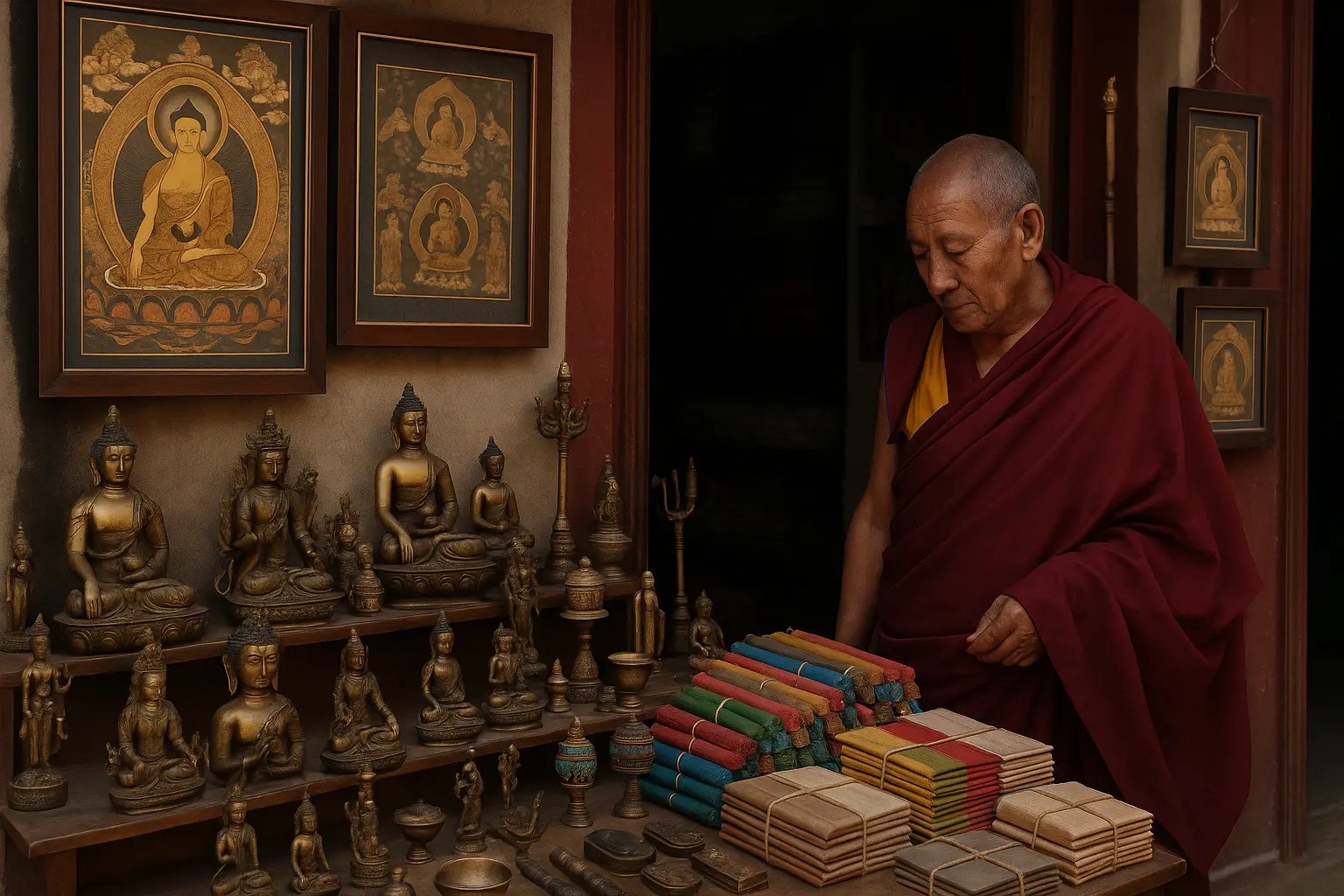
Boudha Beyond the Souvenir Stalls
Most travelers arrive at Boudhanath Stupa expecting beauty. And they find it. But nestled between the prayer wheels and maroon robes is something quieter,a sense that what you take home should mean more than a souvenir.
Plastic trinkets and “Made in China” magnets line the outer circle, but if you pause, step into a side alley, or duck into a quiet monastery shop, you’ll find something else: soul. The kind of art born from devotion, not just design.
This guide is for the traveler who wants to carry something real.
Why Authentic Matters: Souvenirs with Soul
In Boudha, souvenirs are more than objects. They are carriers of lineage, memory, and presence.
When you choose a thangka painted by a local artist or incense wrapped by monastery hands, you’re not just shopping, you’re supporting the living traditions of the Himalayas. You’re helping a young monk attend school, preserving a family art form, or sustaining a lineage of teachers through your offering.
Ethical shopping in Boudha is a quiet practice of reverence.
Boudha Café De Mandala Gift Corner (if applicable)
If you’re staying at Boudha Mandala Hotel, don’t miss the small gift nook in our in-house café. We often carry curated local items,monk-made incense, prayer flags blessed in pujas, and handmade journals from Nepali women’s cooperatives.
Perfect for mindful gifting, or simply something to remember the stillness of your stay.
The Himalayan Art Council: Sacred Art with Integrity
For truly exceptional Himalayan art, the Himalayan Art Council stands as a cultural landmark. Located near the Boudha circle, this nonprofit institution preserves and promotes Himalayan art as a living tradition.
Here you’ll find:
• Museum-quality thangkas and paubha paintings.
• Sculptures and sacred items created by master artists.
• Digital certification and provenance, protecting both artist and buyer.
• Rotating exhibitions, lectures, and artist residencies
The Council is committed to honoring spiritual integrity. When you purchase here, you’re not just supporting artists,you’re participating in a movement to safeguard Nepal’s cultural soul.
Explore certified Himalayan art with integrity at the Himalayan Art Council.
Monastery Shops: Offerings from the Devoted
Some of the most heartfelt items can be found in monastery shops:
• Ka-Nying Shedrub Ling Monastery Gift Shop
Handmade incense, practice books, blessed prayer flags, and puja items. All proceeds support the monastery’s education and retreat programs.
• Shechen Monastery Store
Books on Tibetan Buddhism, CDs of chants by Dilgo Khyentse Rinpoche’s lineage, simple thangkas, and ritual tools used in teachings and ceremonies.
Buying from these shops is a direct way to support the daily life of monks and nuns.
Local Artisan Studios in Hidden Alleys
Wander a few steps away from the stupa and you’ll discover family-run studios, some no bigger than a single room, where thangka painters, paubha artists, and woodcarvers work quietly.
Ask if the artist is present. Many are happy to talk about their craft. You may even catch a painter mid-stroke or a silversmith setting a turquoise stone.
Look especially near:
• Alleyways leading toward Shechen Monastery.
• The northeast path beyond the stupa toward Pashmina Galli.
• Small shops with hand-painted signage (a good sign it’s not mass-produced).
Tibetan Handicraft Boutiques That Care
Not all stores are traps. A few boutiques on the outer circle and Mandala Street work with fair-trade cooperatives and Tibetan refugee artisans.
Look for:
• Yak wool shawls handwoven in Mustang.
• Copper and silver jewelry made by local Tibetan smiths.
• Meditation tools like singing bowls that are actually hand-hammered
Always ask: Who made this? Where does the money go? Ethical stores will answer proudly.
What Not to Buy (and Why)
Even in a sacred space like Boudha, not every stall respects the tradition. Be mindful of:
• Cheap thangkas printed or made by factory artists with no lineage
• “Antique” items with no clear provenance
• Religious icons (like tsa-tsas or Buddha heads) being sold casually on the street
These items, especially if they’re sacred or old, may be inappropriate to purchase or display without knowing their origin. When in doubt, choose something handmade and local.
Final Reflection
The best souvenirs don’t come from a checklist. They come from a feeling.
Maybe it’s the scent of juniper incense rising from your altar at home. A thangka that reminds you of stillness. A piece of jewelry that carries the weight of mountains.
In Boudha, the sacred is everywhere, but only if you walk slowly enough to notice.
And if you’re staying at Boudha Mandala Hotel, just ask our team. We’ll point you toward artists we know, monks we trust, and shops that respect the spirit of this sacred circle.
Because in the end, what you carry home should carry the peace you felt here.