Key Takeaways:
Boudha is more than a stupa. It’s a living mandala of devotion, where the walls breathe prayer and the alleys hum with sacred color. One of its quiet treasures is the presence of Thangka painting, sacred scroll art that tells the stories of the Buddha, bodhisattvas, and protectors through intricate brushwork, devotion, and lineage.
This guide walks you through where to witness, learn, and support authentic Thangka art in Boudha, with a special spotlight on the Himalayan Art Council, a guardian of this sacred heritage.
Why Thangka Painting Matters in Boudha.
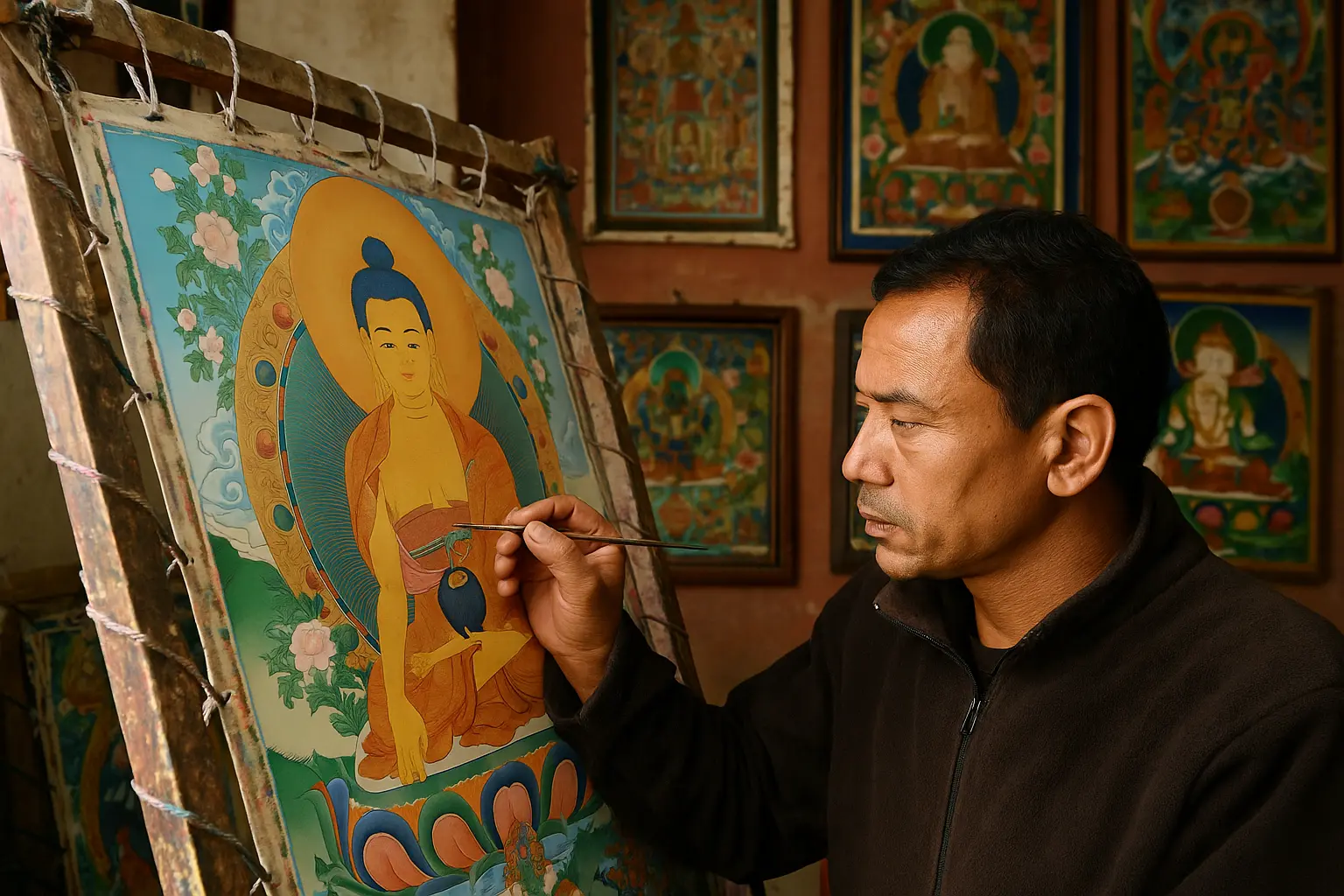
If you’ve walked the kora around Boudhanath Stupa, you’ve likely passed Thangka shops glowing with reds, golds, and blues. But these aren’t just souvenirs. A true Thangka is a meditation in paint,a visual scripture born of sacred geometry, iconographic precision, and often months of devotion.
Originally used as aids for meditation or teaching, Thangkas are part of a deeper ritual life in Vajrayana Buddhism. They must be painted with care, following exact proportions handed down through the centuries. And Boudha remains one of the rare places on earth where this tradition is still alive, not just preserved, but practiced.
Where to See Masterpieces Up Close
Himalayan Art Council: A Living Archive of Himalayan Art
If you want to understand Himalayan painting beyond its surface beauty, this is where you begin.
The Himalayan Art Council is more than a gallery. It’s a cultural institution rooted in preservation, education, and living practice. Their collection spans ancient paubhas, rare deity Thangkas, and modern interpretations from contemporary Himalayan artists.
Step inside and you’ll find:
• Rarely-seen pieces from private collections and remote monasteries
• Exhibitions that connect traditional art with modern expressions
• Guided insights into the symbolism, technique, and lineage behind each work
The Council also protects artistic integrity through digital provenance systems, allowing artists to certify their original work and ensure it’s not lost to imitation or overseas commodification.
Visit the Himalayan Art Council to explore current exhibits, artist residencies, or join a guided tour.
Where to Learn the Sacred Craft
Local Thangka Studios and Workshops
For travelers who want to go beyond looking and begin creating, Boudha offers several studios where you can take short or long-term Thangka painting courses.
1. The Norling Art School
Tucked down a quiet alley near Shechen Monastery, Norling offers traditional training under lineage artists. They focus on authentic technique: gold detailing, brush prep, hand-ground pigments, and iconometric drawing.
• Great for: Serious learners or those staying in Boudha for a few weeks
• Tip: They often host beginner workshops during Losar or special retreats
2. Tibetan Thanka Art School
A family-run space that’s open to walk-ins. Students can observe painters in process or join half-day sketching sessions.
• Great for: Curious travelers with little background
• Bonus: Their master painter has done commissions for local monasteries
Before signing up, always ask whether the teacher has direct training under a lama or certified art lineage, this ensures the practice is spiritually rooted, not just decorative.
Where to Buy Authentic Thangka Paintings in Boudha
Buying a Thangka is like adopting a sacred mirror. If done respectfully, it becomes a blessing in your home or altar.
Here’s how to do it mindfully:
• Avoid tourist traps with factory-made copies
• Ask about the artist. Where did they train? Which lineage? What deity or symbolism is depicted?
• Visit verified spaces like the Himalayan Art Council, where pieces are certified, ethically sourced, and accompanied by artist bios
Most reputable shops in Boudha will wrap your Thangka carefully and explain how to treat it with respect (don’t place it on the ground, avoid display in bathrooms or casual spaces).
Why the Himalayan Art Council Matters Now More Than Ever
In a world where sacred art is often commercialized or stripped of context, the Himalayan Art Council acts as a cultural shield. Their mission is to protect Himalayan art as a living national treasure, not just relics in glass cases.
They preserve endangered paubhas, support new artists, and use AI and private blockchain to ensure artwork remains authentic, traceable, and connected to its source culture.
Every certified Thangka in their collection is:
• Digitally recorded for provenance
• Connected to the artist’s lineage and method
• Part of a larger public archive for future generations
When you buy or support art through the Council, you’re not just collecting,you’re participating in the protection of Himalayan identity, history, and spiritual integrity.
Explore available artworks or artist collaborations at the Himalayan Art Council
Final Reflection
To truly understand Thangka painting, you don’t need a textbook. You need to slow down.
Sit inside a quiet atelier. Watch the steady hand lay gold leaf on a Bodhisattva’s crown. Ask the artist why they chose that particular shade of blue. Feel how reverence travels from hand to brush to canvas.
And maybe, as you carry your own Thangka home, you’ll realize it’s not just pigment and cloth. Its presence.
A reminder that in Boudha, art is not decoration. It’s devotion, made visible.
Planning to Explore Sacred Art in Boudha?
If you’re staying in Boudha to explore its artistic and spiritual depth, Boudha Mandala Hotel offers long-stay apartments and peaceful stupa-view rooms just steps away from workshops, studios, and galleries.
Our staff can help you connect with local artists or visit current Himalayan Art Council exhibitions.