
Key Takeaways:
Near Boudhanath Stupa in Kathmandu, several revered monasteries and temples welcome visitors seeking deeper spiritual connection. From the massive Shechen Monastery to the peaceful Guru Lhakhang, these sacred sites offer glimpses into Tibetan Buddhist practice, art, and daily devotion. Whether you’re on pilgrimage or simply curious, each location offers a space for reflection, prayer, or simply sitting with presence, all within walking distance of the great stupa.
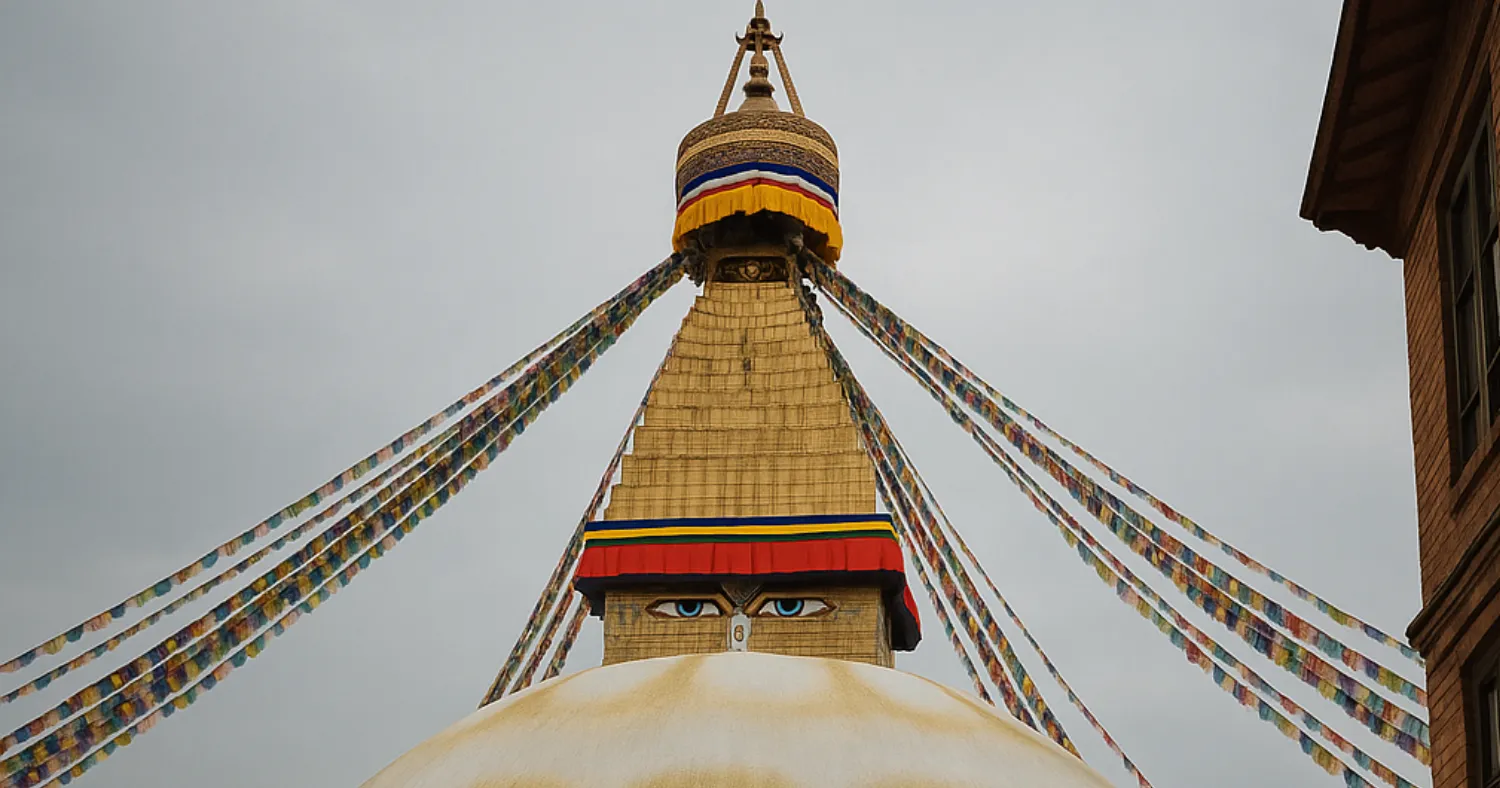
There’s something magnetic about Boudhanath. The way people walk clockwise in the early light, prayer wheels turning in rhythm with their breath. But beyond the main stupa, hidden in alleys or down quiet side roads, a whole world of spiritual depth awaits.
If you pause for a moment, step outside the circle, and follow the soft hum of chants or the faint aroma of incense, you’ll find living monasteries, gompas, and temples that have been part of this sacred neighborhood for generations.
These aren’t just sites to visit. They’re sanctuaries to enter with your whole heart.
Shechen Monastery (Shechen Tennyi Dargyeling)
Just a short walk northeast of the stupa lies Shechen Monastery, one of the six great Nyingma monasteries established outside Tibet. Founded by the great Dilgo Khyentse Rinpoche, Shechen is known for its beautiful architecture, extensive mural paintings, and peaceful inner courtyard.
This monastery doesn’t just preserve tradition, it lives it. Monks engage in daily study and ritual, and many teachings are open to the public, especially during special events or retreats. The atmosphere here feels timeless, respectful, spacious, and quietly welcoming.
Walk inside and you’ll hear the low murmur of chanting, the flutter of prayer flags above the garden, and maybe, if you’re lucky, a soft puja bell echoing through the halls.
Ka-Nying Shedrub Ling Monastery
To the west of the stupa lies Ka-Nying Shedrub Ling, a monastery steeped in both scholarship and deep spiritual practice. It was founded by Tulku Urgyen Rinpoche and is currently led by his son, Chökyi Nyima Rinpoche, a beloved teacher in both Tibetan and Western communities.
The monastery combines shedra (monastic college) and drubdra (meditation center), creating a balanced path for monks and lay practitioners alike. There’s a warm garden café nearby, and visitors often pause to reflect or attend one of the Sunday public teachings.
It’s a space of learning, but also of listening. You don’t need to understand Tibetan to feel the clarity in the air.
Thrangu Tashi Yangtse Monastery
A little further from the central stupa, near the banks of the Bagmati River, sits Thrangu Monastery, founded by Khenchen Thrangu Rinpoche. This Kagyu lineage monastery has a strong focus on education, hosting a full monk training program and a monastic school.
Visitors are welcome during daylight hours, especially on lunar calendar puja days. The setting is serene, a mix of rustling leaves and slow, purposeful footsteps.
If you’re seeking a quiet moment of reflection, the temple courtyard offers a view of open sky, golden prayer wheels, and the soft footfalls of maroon-robed monks returning from morning chants.
Guru Lhakhang
It’s easy to miss. But if you look closely while walking the outer kora around Boudhanath, you’ll find a narrow entrance tucked between two shops. Step inside and the sounds of the street dissolve.
Guru Lhakhang is a small temple dedicated to Guru Rinpoche (Padmasambhava), and it holds one of the oldest and most revered statues in the area. Butter lamps flicker at all hours. The scent of juniper and incense lingers.
Locals stop by quietly, leaving offerings or simply bowing for a moment. There are no signs or tours here. It’s just devotion, alive in its purest form.
Palyul Namdroling Monastery
This Nyingma lineage monastery sits slightly off the main road, but it welcomes visitors warmly. Namdroling offers regular tsok offerings, public events during Losar and other major festivals, and a peaceful prayer hall painted in vivid color.
There’s a sense of openness here, of practice being lived, not performed. If you sit quietly long enough, the chants might carry you into their rhythm.
It’s places like this where the line between observer and participant begins to blur.
How to Visit Respectfully
As you step into these sacred spaces, keep a few things in heart:
• Always remove your shoes before entering temple halls
• Walk clockwise around stupas or prayer wheels
• Speak softly, especially inside gompas
• Avoid pointing feet toward altars or statues
• Don’t photograph during pujas unless clearly permitted
When in doubt, pause. Watch how others move. The most respectful way is often the most still.
Why Staying Nearby Deepens the Experience
Staying near Boudhanath allows you to witness the daily rhythm of Tibetan life:
- Monks sweeping courtyards at dawn
- Nuns chanting prayers behind low wooden doors
- Pilgrims lighting butter lamps in early light
It’s more than a visit. It’s an invitation to live alongside devotion, even for a few days.
If you’re seeking a peaceful, spiritual base, Boudha Mandala Hotel offers stupa-view rooms, long-stay options, and a deeply quiet atmosphere just ten seconds from the circle.
Conclusion
Each monastery or temple around Boudhanath is a presence, alive with prayer, shaped by generations, quietly luminous.
You don’t need a guidebook to feel their power. You just need to walk slowly, stay open, and listen.
Somewhere between the incense, the turning wheels, and the soft chants behind walls, you’ll begin to sense it: this is not just a neighborhood, it’s a mandala in motion.