
Key Takeaways
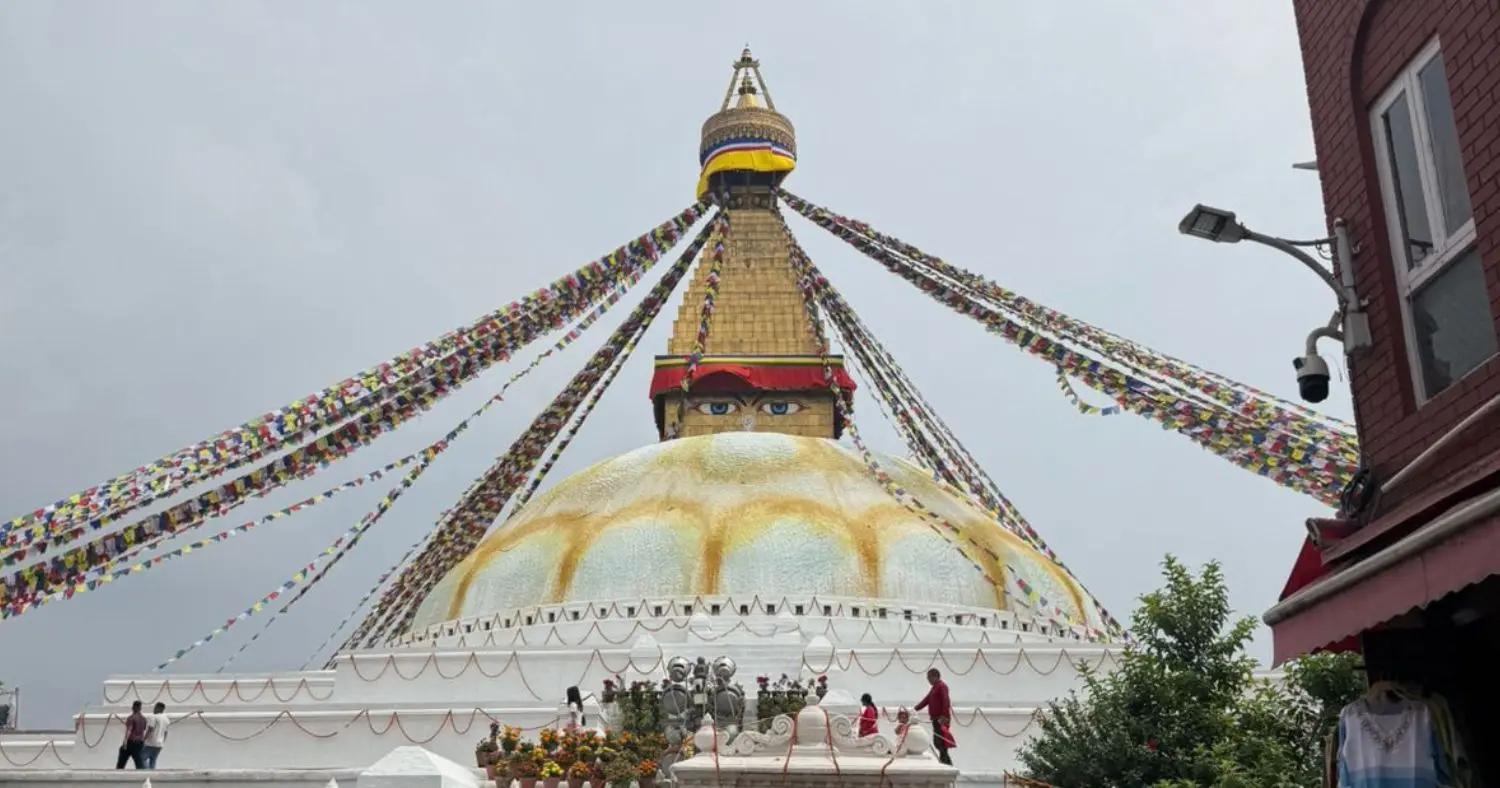
Kora around Boudhanath Stupa is a meditative ritual rooted in Tibetan Buddhist tradition. It involves circumambulating the stupa clockwise while spinning prayer wheels, chanting quietly, and walking with full presence. To do it respectfully, one must dress modestly, avoid loud speech or intrusive photography, and observe the behavior of locals. The early morning and dusk are ideal times to experience the stillness and devotion this practice embodies. More than a ritual, kora is a quiet act of connection to yourself, the community, and something timeless.
Introduction
You arrive in Boudha and pause at the entrance of the kora path. Around you, the stupa rises with gentle power, prayer flags flicker above, and the hum of spinning wheels wraps the space in a sacred rhythm. No one tells you what to do, yet something in you understands: walk, slowly, clockwise, with care.
Kora at Boudhanath is a silent invitation to join a centuries-old practice of healing, devotion, and inner stillness. This guide shares how to do a kora respectfully and meaningfully, whether you’re a first-time visitor or a spiritual seeker.
What is Kora and Why It Matter
In Tibetan Buddhism, kora (བསྐོར་བ་) means circumambulation, walking clockwise around a sacred site like a stupa, temple, or monastery while focusing on mantras or intentions. Each step is part of a prayer. Each round is an offering.
At Boudhanath, this act isn’t symbolic. It’s lived. Elders walk dozens of koras a day. Nuns with malas chant under their breath. Children learn the flow of clockwise footsteps early.
Kora is believed to purify negative karma, accumulate merit, and stabilize the mind. It’s meditation in movement.
When to Do Kora at Boudhanath
The beauty of Boudha is that it never sleeps. The kora path is alive from sunrise to well after dusk, but these are the most resonant times:
Early Morning (5:30 to 7:00 am): The stillness is almost otherworldly. Monks chant, the light is golden, and local practitioners begin their day in quiet rhythm.
Dusk (5:00 to 7:00 pm): Butter lamps are lit. The stupa glows. It’s the most emotionally powerful time to join the circle.
On Holy Days: During festivals like Lhabab Duchen or Buddha Jayanti, thousands of people move in prayerful silence. The atmosphere is electrifying.
How to Do Kora with Respect
If you’re new, start by watching. Observe the body language, pace, and gestures of those around you. Then, join in with humility.
Walk Clockwise: Always circle the stupa in a clockwise direction, keeping it to your right.
Spin Prayer Wheels Gently: Use your right hand, moving each wheel as you pass. It’s not about speed.
Keep a Peaceful Pace: Walk slowly and mindfully. This isn’t a hike, it’s sacred ground.
Dress Modestly: Cover shoulders and knees. Avoid flashy outfits.
Stay Quiet: Speak softly or not at all. Listen to the space. Let silence guide you.
Avoid Photography Mid-Kora: Don’t snap selfies while walking. It disrupts the atmosphere.
Offer a Lamp or Prayer: You can light a butter lamp before or after your walk, or recite the mantra Om Mani Padme Hum.
What You’ll Notice Along the Path
Kora isn’t just a motion. It’s full of presence. As you walk, the scent of juniper incense follows you. Pigeons flap overhead, settling and lifting like breath. The low murmur of prayers creates an unbroken sound current. Children walk with grandparents, passing this ritual down gently.
There’s something deeply human about this circle. You are alone, yet surrounded. Anonymous, yet connected.
Common Mistakes to Avoid
Even well-meaning visitors sometimes misstep. Here’s what to be mindful of:
- Don’t walk against the flow , it disturbs the energy and practice.
- Don’t interrupt others , especially those prostrating or praying intently.
- Don’t touch monks or nuns , respect their boundaries.
- Don’t point feet at the stupa , in Buddhist etiquette, feet are seen as unclean.
- Don’t treat it like a spectacle , Boudha is not a performance. It’s devotion in motion.
Deepen the Experience: Stay Nearby
To truly understand kora, stay in Boudha for a few days. The rhythm sinks in. You begin to notice the same faces each day, quietly circling. The shifting sky above the dome. Your own breath syncing with the flow.
Boudha Mandala Hotel, just 10 seconds from the stupa, is ideal for this. You can step into the circle before dawn, return for tea, and feel part of the sacred village life.
Final Reflection
One morning, I passed a man in his 70s, eyes half-closed, mala beads worn smooth. He walked barefoot, one hand on the prayer wheel, the other resting gently on his chest.
We didn’t speak. But for a moment, our pace aligned. It felt like a transmission, not of words, but of presence.
That’s what Kora offers. Not just movement, but meaning.
In this sacred circle, you don’t just walk around the stupa, the stupa walks you.