
Key Takeaways
If you’re looking to experience the real Boudha, not just see it, immerse yourself in local life. Walk the morning kora alongside Tibetan grandmothers. Light a butter lamp with intention. Taste fresh thukpa made by families who’ve lived here for generations. True cultural immersion in Boudha begins when you slow down, listen deeply, and let the stupa’s rhythm shape your days.
Arriving in Boudha: First Impressions That Stay With You
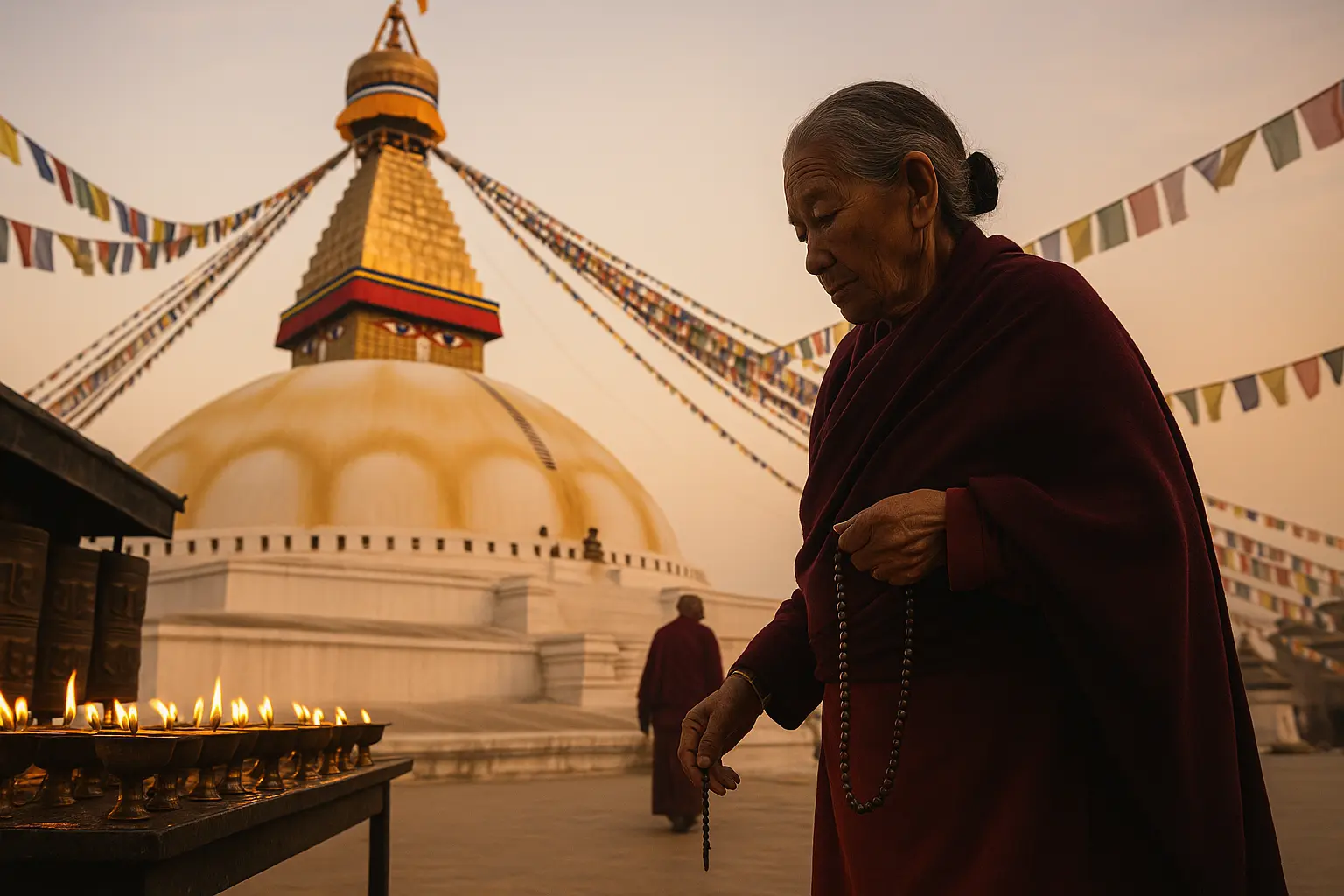
The first time I stepped into Boudha, it wasn’t the scale of the stupa that struck me. It was the sound. The deep, low hum of mantras swirling in the air, carried by pilgrims circling clockwise in quiet devotion. Prayer wheels turned with well-worn palms. Butter lamps flickered along the stupa’s base. Something about it all, so ordinary, so sacred, made me want to stay.
Unlike Thamel’s tourist energy, Boudha feels slower, rooted, and protective. It’s not performative culture; it’s lived culture. To truly experience it, you have to meet Boudha on its terms.
1. Start with the Kora: The Spiritual Pulse of Boudha
Every morning and evening, the local community walks the kora, the clockwise circuit around the stupa. Some carry prayer beads, others walk in silence. Some whisper mantras, others listen.
Join them, not as a spectator, but as a fellow traveler. Walk slowly. Notice the rhythm. Spin the prayer wheels if it feels right. Don’t rush. This isn’t a performance, it’s a spiritual practice, and being part of it, even quietly, is the first step toward understanding Boudha.
Tip: Arrive around 6:00 AM. The first light over the stupa, mixed with soft chanting and the smell of incense, is unforgettable.
2. Visit the Monasteries, But Stay for the Moments
Boudha is home to dozens of monasteries representing different schools of Tibetan Buddhism. You can visit the grand Shechen Monastery with its vivid murals or the tucked-away Ka-Nying Shedrub Ling Monastery near the east gate.
But the real moments? They’re often unplanned:
– Sitting quietly during a prayer session and feeling the chants resonate through your chest.
– Watching young monks laugh as they sweep the courtyard.
– Lighting a butter lamp in memory of someone you love.
You don’t need to understand the rituals. Just be present.
3. Eat Where the Locals Eat: A Taste of Tibetan-Nepali Life
Food is a powerful entry point into any culture, and in Boudha, it’s deeply comforting. Skip the Western cafés (though there are good ones) and try the spots hidden in alleyways where aunties serve steaming bowls of thukpa and hand-folded momos.
Some favorites:
– Tsangpo Restaurant – homestyle Tibetan dishes in a no-frills setting.
– La Casita de Boudhanath – rooftop views with a mix of Nepali and Spanish-inspired dishes.
– Stupa View Cafe – a peaceful spot for butter tea or lemon ginger honey.
Groceries are also a cultural experience here. Walk through Boudha’s Saturday organic market to find local honey, buckwheat, or handmade incense.
4. Learn the Language of Butter Lamps and Prayer Flags
Culture in Boudha isn’t always spoken. It’s symbolized through offerings, color, gesture, and ritual.
– Butter lamps: Lighting one is an act of remembrance, aspiration, or prayer. You can do this yourself for a small donation at most temples.
– Prayer flags: Each color and mantra has meaning. When strung across rooftops, they bless the winds and the beings they touch.
– Mala beads: Often seen in the hands of older Tibetans walking kora, they aren’t jewelry; they’re spiritual tools.
Ask before photographing these moments. Better yet, participate when appropriate.
5. Shop Mindfully: Support Local Artisans and Keep the Culture Alive
Boudha has its share of souvenir stalls, but look deeper. There are families who’ve painted thangkas for generations, young women learning metalwork from their grandfathers, and shopkeepers who can tell you the story behind each piece.
When you:
– Buy a hand-painted thangka
– Commission a custom mala
– Support an NGO-run handicraft store
…you’re not just shopping. You’re sustaining a living tradition.
Ask how things are made. Be curious. Choose handmade over mass-produced.
6. Participate in a Local Festival or Puja
If you’re in Boudha during Losar (Tibetan New Year) or Buddha Jayanti, don’t just watch, participate. You’ll witness:
– Giant sand mandalas being created, then ritually dissolved.
– Monks chanting for days in preparation.
– Community feasts where you may be warmly invited to sit and eat.
These festivals are vibrant, sacred, and grounded in devotion. Bring an open heart, dress modestly, and ask your host or hotel how to participate respectfully.
7. Stay in a Place That Reflects the Spirit of Boudha
Where you stay shapes how you experience a place. In Boudha, staying at a mindful hotel like Boudha Mandala Hotel means waking up to the stupa’s morning chants, sipping tea on a stupa-view balcony, and being cared for by staff who understand why you came.
The hotel is just 10 seconds from the stupa, close enough to feel its energy, but tucked away enough to offer peace. With multilingual staff, spiritual travelers in mind, and long-stay rooms for remote workers or sabbatical-goers, it supports your inner journey too.
It’s not just a hotel, it’s a gentle space to arrive and belong.
8. Let Boudha Change Your Rhythm
Perhaps the biggest shift when you truly engage with Boudha’s culture is not what you do, but how you do it.
You learn to:
– Walk slower
– Listen more
– Eat without multitasking
– Sit in silence without filling it
Local culture isn’t something to “check off.” It’s something that seeps in when you let go of rushing and lean into presence. Boudha teaches that without words.
Final Reflection
I came to Boudha thinking I’d stay a few days. I stayed three months. Not because there was a checklist of things to do, but because it felt like home in a way few places ever have.
To experience the authentic culture of Boudha, don’t try to consume it. Instead, be in a relationship with it. Walk the stupa path every morning. Make friends with a momo vendor. Sit quietly in a monastery courtyard. Let the prayer flags do their work above you.
If you’re looking for the best stupa view hotel in Boudha, Boudha Mandala offers more than a room; it offers a welcome into the spirit of this place.