
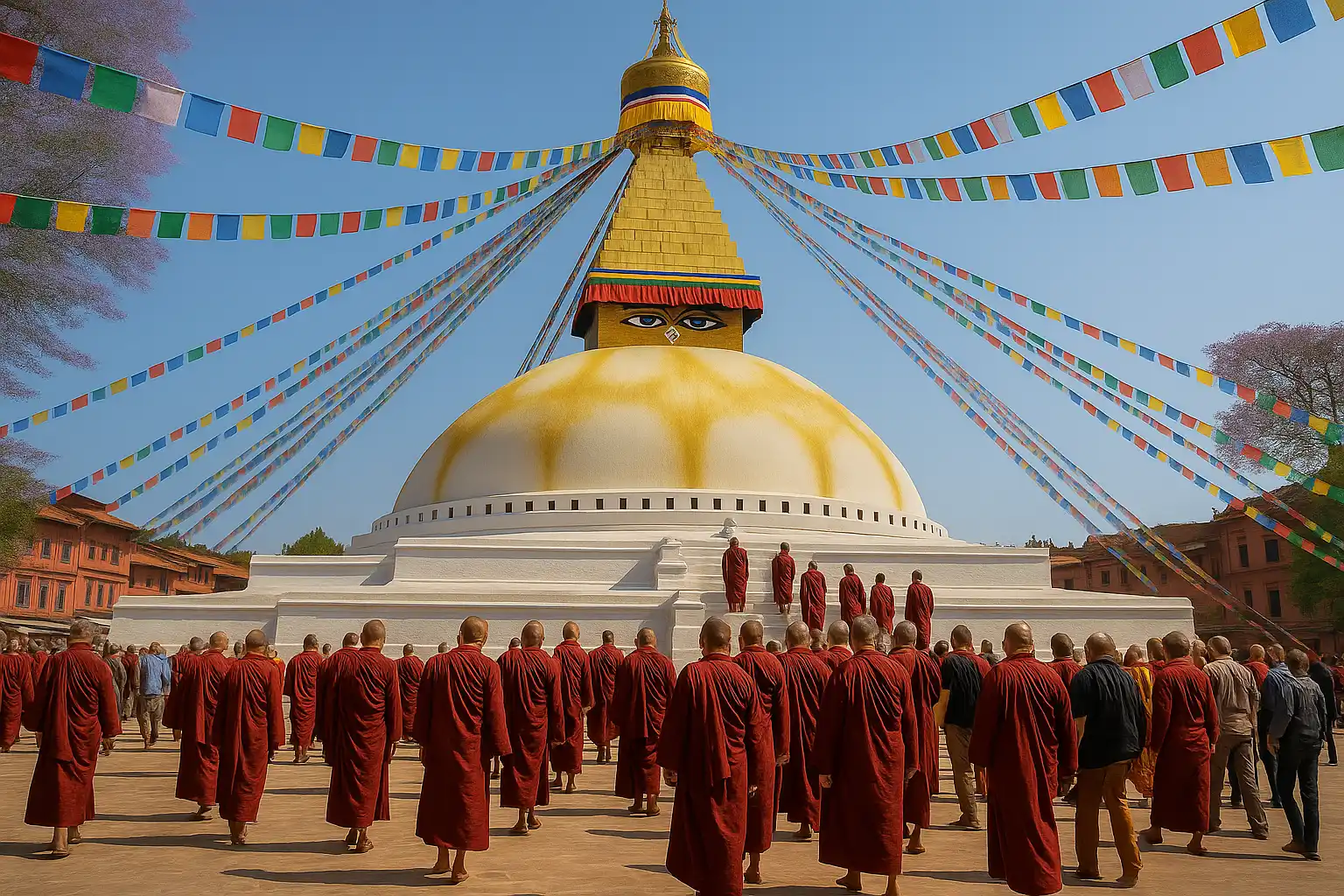
If you want to experience the deeper rhythms of life in Kathmandu, visiting Boudhanath during one of its sacred festivals can feel magical. But when exactly should you go?
The answer depends on what kind of experience you’re seeking: quiet reflection, cultural immersion, or high-energy celebration.
This guide is for spiritual travelers, solo seekers, and remote workers who want more than sightseeing. Here’s everything you need to know about the best time to visit Boudhanath for festivals.
Understanding the Spiritual Calendar at Boudhanath
Boudhanath follows both the Tibetan and Nepali lunar calendars, so festival dates shift each year. However, the seasonal rhythm remains predictable. If you time your visit right, you can witness age-old rituals, masked dances, and butter-lamp ceremonies that offer a window into Tibetan Buddhist life.
The most spiritually significant festivals include:
– Losar (Tibetan New Year) – Feb or March
– Buddha Jayanti (Vesak) – Full moon in May
– Mohani/Dashain – Late September to mid-October
– Tihar (Festival of Lights) – October to early November
– Monthly Full Moon Days (Purnima) – All year round
Spring (March to May): Clear Skies & Sacred Celebrations
Spring is arguably the best time to visit Boudhanath. The sky is clear and the stupa pulses with life during Losar and Buddha Jayanti. Flowers bloom along the kora path, monks chant in the courtyards, and the whole area feels vibrantly awake. Days are comfortably warm (15–25 °C), perfect for long, peaceful walks or outdoor rituals.
Ideal for: Spiritual immersion, mild weather, high-energy rituals.
Festivals: Losar (Feb–Mar), Buddha Jayanti (May).
Travel tip: Book accommodation early, monks and pilgrims arrive in waves.
Autumn (Mid-September to November)
Autumn is another best time to visit Boudhanath, especially for culture lovers. Mohani (Newar Dashain) and Tihar light up the stupa with sword dances, butter lamps, and ancestral rituals. The skies are crystal clear, and the weather is cool but pleasant (10–22 °C). It’s the perfect time to blend spiritual depth with rich local culture.
– Ideal for: Cultural travelers, photography, festive atmosphere
– Festivals: Mohani (Sept–Oct), Tihar (Oct–Nov)
– Travel tip: Arrive a few days before Tihar to experience the buildup of lights and energy.
Winter (December to February)
Winter at Boudhanath is quiet and soul-stirring. Cold mornings (as low as 5 °C) give way to bright, clear afternoons ideal for reflection and ritual. Losar often falls at the end of February, bringing the Tibetan New Year energy to life. This is a peaceful time for long-stay travelers or anyone seeking retreat-like calm.
– Ideal for: Meditators, long-stay guests, spiritual solitude.
– Festivals: Full Moon Pujas, Losar (late Feb).
– Travel tip: Book a room with a stupa view to watch morning kora from your balcony.
Monthly Full Moon Days
Every full moon, Boudhanath becomes quietly electric. Devotees circle the stupa at dusk, butter lamps line the base, and the energy shifts. Many locals say this is the most auspicious day to offer prayers.
– Ideal for: Solo travelers, spiritual seekers, retreat guests.
– Vibe: Intimate, candlelit, communal.
– Travel tip: Time your stay to include at least one full moon evening.
Planning Tips for a Festival-Season Visit
– Stay close to the stupa: Being within walking distance makes all the difference. Boudha Mandala Hotel is just 10 seconds from the stupa, offering peaceful rooms and long-stay options.
– Respect the space: Dress modestly, walk clockwise, and avoid photography during ceremonies.
– Book early: Especially in spring and autumn, accommodation near the stupa fills quickly.
– Carry cash: Offerings and local shops around the stupa often prefer it.
The best time to visit Boudhanath depends on the experience you’re seeking. Each season at Boudhanath offers its own rhythm. Whenever you come, come with intention and if you need a peaceful retreat just steps from the stupa, Boudha Mandala Hotel offers long-stay comfort and stupa view rooms with a deeply warm welcome.